
When Deep Jaw Release May Help TMD Pain
Deep jaw release lacks a standard protocol, but related manual therapies may ease muscle-led TMD pain. Learn when treatment fits and when to avoid it.
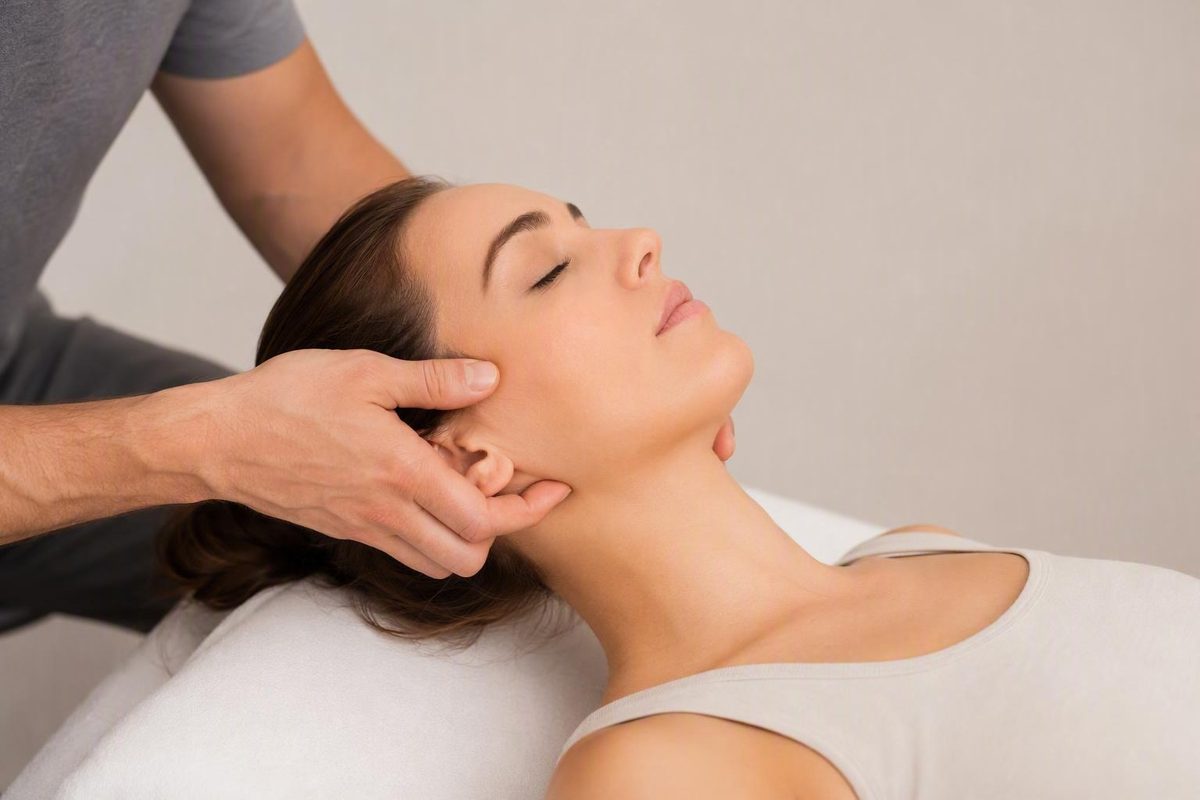
Deep jaw release therapy may help some people with muscle-dominant or chronic temporomandibular disorder (TMD) pain, but the branded treatment itself has not been tested as a standardized protocol. Evidence supports selected techniques such as therapist-assisted jaw mobilisation, manual trigger-point therapy, massage, and myofascial work—not forceful pressure, permanent jaw realignment, or attempts to massage away locking or structural joint problems.
Select your symptoms; the tool identifies whether manual release is a plausible fit or whether assessment should come first.
Choose every statement that applies. This sorts the pattern for treatment planning; it does not diagnose a TMD subtype.
Select the statements that fit, then use the result to decide whether manual treatment is a plausible trial or assessment should come first.
Track if you try treatment: pain with chewing, comfortable opening, headache frequency, and daily function.
A measured trial of gentle massage, trigger-point treatment, mobilisation, or exercise may fit. Aim for less pain and easier movement—not permanent realignment.
Assessment is more useful than choosing treatment from a “deep release” label. Manual care may address secondary muscle guarding but is not proven to repair discs, arthritis, or instability.
Manual therapy may help the muscular component, while catching, painful clicking, or focal joint pain needs separate consideration.
Skip forceful release when there is locking, trauma, fever, swelling, severe eating impairment, progressive restriction, or possible hypermobility.
| Intervention | Population | Measured Finding | What It Does Not Prove |
|---|---|---|---|
| Therapist-assisted jaw mobilisation | Chronic TMD pain | 36% risk difference for reaching a meaningful pain-relief threshold; 95% CI 31%–40% | A cure, structural repair, or a result from every branded release |
| Manual trigger-point therapy | Chronic TMD pain | 32% risk difference; 95% CI 29%–34% | That painful or deeper pressure works better |
| Myofascial release and chewing-muscle massage | Participants in eight randomized trials | Better pain and mouth-opening outcomes than controls; low-to-moderate certainty | Reliable correction of clicking, locking, or disc displacement |
| Manual therapy versus deep dry needling | Myofascial TMD | No statistically significant difference in an indirect pain comparison | Equivalence or superiority; evidence was low quality |
Sources: systematic reviews indexed in PubMed (PMID 38101924, 26059857, and 37924127). This decision aid uses symptom patterns described in the article and is not a validated diagnostic instrument.
The distinction between TMJ and TMD matters here. TMJ means the temporomandibular joint in front of each ear. TMD is the broader category covering pain or dysfunction involving that joint, the chewing muscles, or both. Manual treatment is more plausible when pain is driven largely by tender, overworked muscles than when the jaw is locking, unstable, injured, or affected by an internal joint problem.
Deep Jaw Release Is a Marketing Label, Not One Treatment
The viral “deep jaw release” associated with Human Garage is generally presented as intraoral fascia work, sometimes combined with treatment of the face, neck, breathing, or other areas. The wider marketplace uses the same label for substantially different procedures.
The clinical reviews considered here did not identify a standardized treatment called deep jaw release therapy. There is no agreed pressure level, treatment sequence, session length, set of muscles, or required professional qualification attached to the name.
A provider might use the term for:
- External massage of the masseter at the cheek or temporalis at the temple
- Sustained pressure on tender or trigger-point areas
- Myofascial treatment intended to reduce pain and guarding
- Therapist-assisted movement of the lower jaw
- Stretching and movement retraining
- Intraoral work performed inside the mouth
- A larger program involving exercises, breathing, relaxation, posture, or habit modification
These treatments are not interchangeable. Evidence that a defined mobilisation or massage protocol helped trial participants does not validate every branded fascia treatment, forceful technique, or intraoral manoeuvre.
Manual treatment is also not the same as deep dry needling. Dry needling inserts needles into selected tissues. A review comparing manual therapy with deep dry needling for myofascial TMD found no statistically significant difference in an indirect pain comparison, but only eight trials entered the network analysis, the protocols varied, and the evidence was low quality. The analysis does not establish that either treatment is superior.
Selected Manual Therapies Can Improve Chronic TMD Pain
The strongest relevant evidence comes from a systematic review and network meta-analysis of treatments for chronic TMD pain. It included 233 randomized trials. Of those, 153 trials involving 8,713 participants and 59 interventions or intervention combinations entered the network analyses.
Two hands-on treatments produced notable results against placebo or sham treatment:
- Therapist-assisted jaw mobilisation: a 36% risk difference for reaching the review’s minimally important pain-relief threshold, with a 95% confidence interval of 31% to 40%.
- Manual trigger-point therapy: a 32% risk difference, with a 95% confidence interval of 29% to 34%.
These selected pain findings had moderate- or high-certainty support. Supervised jaw exercise and stretching, with or without manual trigger-point treatment, also performed better than placebo for pain, although their reported effects were smaller. PubMed lists an erratum for the article. The review record provides the trial counts, estimates, certainty ratings, and erratum.
A risk difference is not a cure rate or the percentage by which every participant’s pain decreased. The 36% result means that the proportion reaching the review’s defined pain-relief threshold was 36 percentage points higher with mobilisation than with placebo or sham within that analysis. It does not mean mobilisation cured 36% of participants, repaired joint damage, or guaranteed lasting relief.
The findings concern chronic TMD pain. They should not be extended automatically to tooth pain, infection, acute trauma, inflammatory disease, arthritis, recurrent locking, or every service advertised as deep jaw release.
The defensible verdict is narrower: selected manual interventions can increase the chance of meaningful pain relief in appropriately assessed people with chronic TMD pain. The evidence does not prove the Human Garage manoeuvre or any other branded protocol as a distinct treatment.
Massage And Myofascial Work May Ease Pain And Guarding
A separate systematic review included eight randomized controlled trials, seven rated as methodologically high quality. Myofascial release and massage applied to the chewing muscles performed better than control treatments for pain and mouth-opening outcomes. Certainty ranged from low to moderate. The review also found substantial variation among the treatment protocols.
Seven high-quality trials out of eight does not make every jaw-release service evidence-based. The studies differed in their techniques, treatment locations, schedules, comparison groups, participants, and outcome measurements. The review also found that thoracic manipulation was not effective, showing why a favorable result for one hands-on method cannot be transferred to every technique or body area.
The most plausible benefits are reduced muscle pain, less tenderness, and easier movement where discomfort or guarding limits opening. This does not mean treatment physically unlocks every jaw or moves a displaced disc back into place.
The research does not show that manual therapy reliably:
- Eliminates clicking or popping
- Corrects disc displacement
- Resolves recurrent or fixed locking
- Reverses arthritis
- Repairs structural joint damage
- Prevents symptoms from returning
A temporary improvement after massage can be consistent with a muscular contribution, but it does not confirm a diagnosis or exclude dental and joint disease.
Muscle-Dominant Symptoms Are The Best Fit
Manual release is most plausible for chronic or myofascial TMD marked by tender chewing muscles, aching through the cheek or temple, fatigue with chewing, clenching-related soreness, or movement limited partly by pain and guarding. Pain during chewing can occur in this pattern, although it can also have dental or joint causes.
Clenching, grinding, and repeated muscle use can contribute to soreness. Conservative massage may help when muscle tension is part of the problem, but injury, arthritis, dental disease, inflammation, and internal joint disorders can produce overlapping symptoms. Cleveland Clinic presents massage and exercises as conservative options rather than universal treatments.
Clicking by itself does not show that fascia or a tight muscle needs to be released. A click may occur with or without pain, and the evidence does not show that massage reliably corrects its structural cause. A useful treatment target is improved comfort and function, not necessarily silence from the joint.
Locking is different. A jaw that becomes stuck or cannot open or close normally needs clinical assessment rather than deeper pressure. The same caution applies to symptoms beginning after significant trauma, an unusually mobile or unstable jaw, progressive restriction, swelling, fever, or severe pain that interferes with eating.
A mixed pattern is common. Someone may have tender muscles alongside painful clicking or catching. Manual treatment might still address the muscular component, but it should not be presented as a way to repair the joint. A dentist, physician, or TMD-informed physical therapist can help determine which component appears dominant.
No home checklist can diagnose a TMD subtype. Tenderness, clenching, headaches, clicking, and restricted movement provide context, but they do not establish the cause by themselves.
A Session May Include External Or Intraoral Work
External treatment commonly targets the masseter at the side of the cheek and the temporalis at the temple. A practitioner may use circular kneading, sustained tolerable pressure, or gentle movement while the person opens and closes the mouth.
Trigger-point or myofascial work applies pressure or movement to tender tissues associated with local or referred pain. It does not have to be intensely painful. Joint mobilisation is different: the clinician guides movement of the lower jaw rather than only rubbing the muscle or skin over it.
Intraoral treatment is performed inside the mouth to reach tissues that are harder to approach externally. Before it begins, the practitioner should explain why it is being proposed, where contact will occur, what sensations to expect, and how the procedure can be stopped immediately. Clear consent and appropriate hygiene are essential, and consent can be withdrawn during the session.
A responsible provider should also explain the exact technique instead of relying on a trademarked name. Ask whether treatment will be external, intraoral, or both; what condition the provider thinks is being treated; what TMD-specific training they have; and what findings would cause them to stop or refer you.
Progress should be measured against symptoms that matter: pain while chewing a typical meal, comfortable mouth opening, jaw-related headache frequency, and the ability to speak, yawn, sleep, or complete dental hygiene comfortably. The evidence does not establish an ideal session frequency, total number of sessions, or duration of benefit for something called deep jaw release.
Deeper Pressure Has Not Been Shown To Work Better
The available evidence does not show that unusually deep, forceful, or painful pressure produces better outcomes than gentler massage or the manual techniques used in clinical trials. “Deep” may describe the location, the amount of pressure, or simply the branding. None of those meanings establishes greater therapeutic power.
Pressure is better treated as a dose and safety variable. Pain during treatment does not prove that a practitioner has located the true cause, broken an adhesion, or reached an effective depth. Excessive pressure can simply hurt.
Immediate relaxation can be genuine without proving that fascia was permanently altered, the jaw was realigned, or the nervous system was reset. An LA Times feature presented bodywork practitioner Garry Lineham’s theory that clenching may reflect physical bracing and reinforce a sense of threat. The feature identified this as a working theory, not a finding from a TMD trial, and noted uncertainty about whether changes came from jaw release, breathing, sleep, or another factor.
The reviewed clinical evidence does not demonstrate that jaw release removes stored trauma or toxins, breaks up adhesions, permanently realigns the jaw, restores circulation through a proven mechanism, or resets the nervous system. Trials primarily measured outcomes such as pain and mouth opening.
If pressure sharply increases pain, worsens movement, or makes the jaw harder to open or close, escalating the force is not appropriate.
Manual Release Works Best As Part Of Conservative Care
Manual therapy is best treated as one possible part of conservative care, not a stand-alone cure. The broader evidence for chronic TMD favors approaches that support coping, comfortable movement, and activity rather than long-term dependence on passive treatment.
A clinician may combine mobilisation or muscle treatment with supervised jaw exercises, stretching, individualized neck work, relaxation, and changes to clenching or other aggravating habits. If that program helps, the result cannot automatically be credited to manual release alone.
The evidence does not support a sweeping claim that manual release is equivalent or superior to medication, exercise, usual care, botulinum toxin, splints, or night guards. The appropriate choice depends partly on whether the dominant problem is muscle pain, tooth grinding, joint disease, inflammation, injury, or another condition.
Use a time-limited, measurable trial rather than buying a package based on a guaranteed session count. Record pain with chewing, comfortable movement, headache frequency, and daily interference before treatment. Continue only if improvement is meaningful enough to justify it. Repeated symptom flares, no change, or worsening symptoms should prompt reconsideration of the technique or working diagnosis.
Gentle External Self-Massage Is The Lower-Risk Option
For mild muscle tension, the conservative self-care option is gentle external massage over an accessible chewing muscle such as the masseter. The masseter is the broad muscle at the side of the cheek that firms when the teeth are lightly clenched. Relax the jaw before applying gentle circular pressure with two or three fingers.
Do not force the mouth farther open or attempt professional intraoral manoeuvres on yourself. More force is not known to provide more benefit.
Stop massage and seek guidance if pain meaningfully increases, swelling develops, the jaw begins locking, or opening and closing become more difficult. Arrange an assessment when symptoms persist for weeks or months, progressively worsen, substantially affect eating, or fail to respond as expected to gentle care.
Seek prompt care for inability to open or close the mouth, recurrent jaw locking, significant trauma, severe pain that interferes with eating, or jaw pain accompanied by fever. Adverse-event evidence across TMD interventions was rated low or very low certainty in the large review, so reliable complication rates cannot be calculated from the available research. Limited harm data should not be mistaken for proof that every manual technique is safe.
Common Questions About Deep Jaw Release
How Long Does It Take To Work?
There is no evidence-based timetable because deep jaw release is not a standardized protocol. Studies of related manual techniques use different procedures, schedules, populations, and follow-up periods.
Some people notice short-term relaxation or easier movement during or after treatment. That response does not establish how long the effect will last. A limited trial with recorded pain and function is more useful than expecting improvement after a guaranteed number of sessions.
Is Professional Treatment Better Than Self-Massage?
The evidence does not provide a reliable direct comparison. Gentle external self-massage may be reasonable for mild muscular tension. A qualified professional can assess the symptom pattern, control mobilisation, adjust treatment, and combine hands-on care with exercises or habit changes.
Professional treatment is not automatically better because it is deeper, intraoral, or more complex. Its value depends on the practitioner’s training, the technique, whether it fits the likely source of symptoms, and whether progress is measured.
Can It Fix Clicking Or Locking?
Evidence supports pain relief more clearly than correction of clicking, locking, or structural joint abnormalities. Manual treatment may make movement more comfortable, but it has not been shown to consistently correct the internal cause of joint sounds.
Do not try to force or deeply massage a locked jaw. If it becomes stuck or cannot open or close normally, seek prompt clinical assessment.
Can It Permanently Realign The Jaw?
No evidence reviewed here shows that deep jaw release permanently realigns the jaw or repairs damaged joint structures. A session may reduce guarding or make movement feel easier without changing the underlying anatomy.