
What Chewing Pain May Be Telling You About Your Teeth and Jaw
Pain on one side does not distinguish dental disease from TMD because both can be one-sided. Tooth, joint and muscle patterns guide next steps.
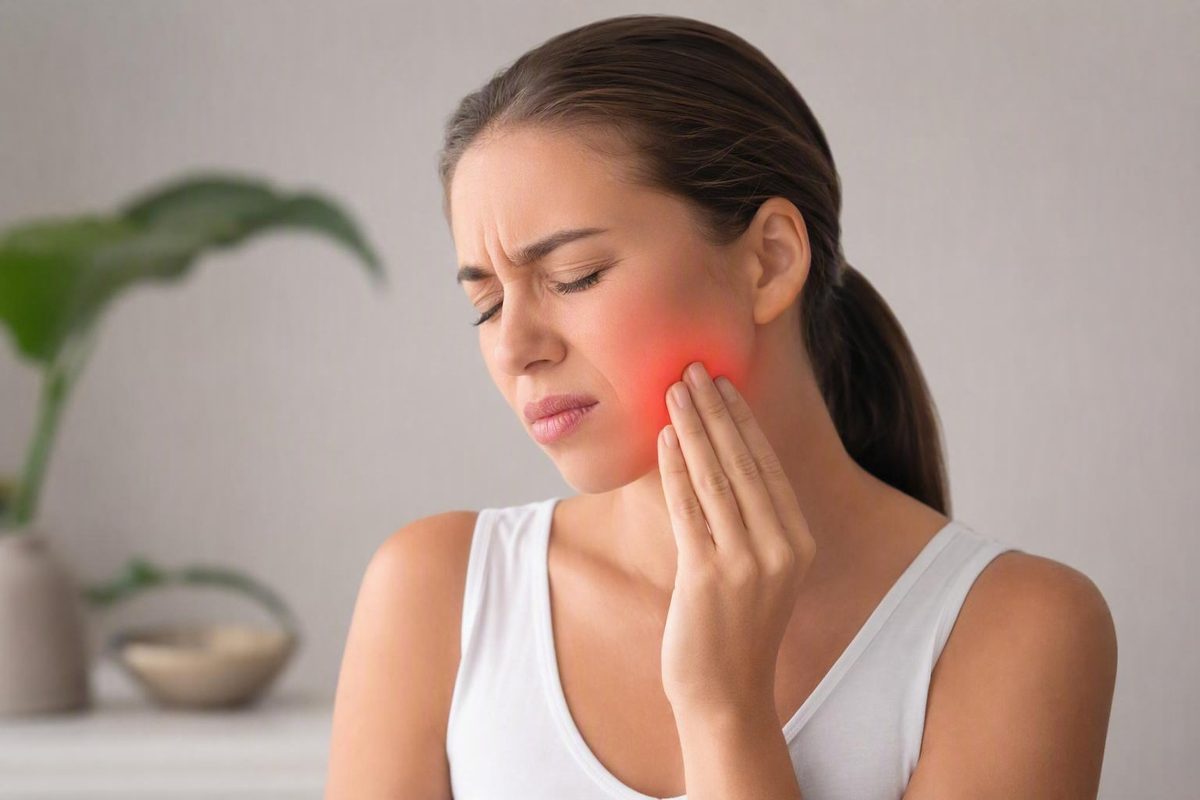
If your jaw hurts when you chew, possible causes include a cavity, cracked tooth, dental infection, gum disease, temporomandibular disorder (TMD), overworked chewing muscles, clenching or grinding, arthritis, sinus pressure, recent dental work, or an injury. The symptom alone cannot identify the cause.
Chewing repeatedly moves the jaw joints, contracts the surrounding muscles, and places pressure through the teeth. Pain can therefore arise from several structures, and the resulting symptoms often overlap.
This article provides general education, not an individual diagnosis. Use it to recognize warning signs, reduce strain safely, and decide where to seek care.
First, check for signs that need emergency or prompt care
Seek emergency care now if jaw pain occurs with:
- Chest or shoulder pain that spreads toward the jaw
- Major facial or jaw trauma with severe pain, deformity, or loss of function
- A suspected broken or dislocated jaw
- An inability to open or close your jaw
Jaw pain associated with chest or shoulder symptoms can signal a medical emergency. Suspected jaw fractures and dislocations also require immediate treatment. Cleveland Clinic outlines these emergency warning signs for jaw pain.
Arrange prompt professional assessment if you have:
- Swelling of the face, gums, or jaw
- Fever
- Pus or drainage near a tooth or gum
- A foul or salty taste in your mouth
- Severe or rapidly worsening pain
- Jaw locking
- Marked difficulty eating, opening your mouth, or moving your jaw normally
- Sudden or constant jaw pain or significant tenderness
Swelling, fever, pus, taste changes, and worsening constant pain can accompany a dental infection. Locking or substantial loss of movement may indicate a joint or structural problem requiring assessment. Dentist-reviewed guidance describes these dental infection and jaw-function warning signs.
Warning signs override any general advice to wait. Trauma, infection symptoms, pain severity, and loss of function matter more than a fixed timeline.
Why does my jaw hurt specifically when I chew?
You have two temporomandibular joints, one on each side of your face near the ears. They connect the lower jaw to the skull and allow the jaw to open, close, slide, and move from side to side.
A useful terminology distinction is:
- TMJ means the temporomandibular joint itself.
- TMD means temporomandibular disorders—a group of conditions affecting a jaw joint, the chewing muscles, or related structures.
Chewing combines three actions:
- Repeated joint movement: Each bite moves the jaw joints.
- Muscle contraction: Muscles in the cheeks, temples, and jaw repeatedly tighten to position the jaw and break down food.
- Pressure through the teeth: Biting transfers force through the teeth, roots, gums, and supporting bone.
These actions can provoke different problems. Repeated movement may aggravate an irritated joint. Sustained chewing can make an overworked muscle ache or tire. Biting pressure can trigger pain from decay, a crack, an abscess, or inflamed tissue around a tooth.
Food texture and size may also matter. Tough, sticky, crunchy, or large foods require more muscular effort, repeated movement, or wider opening than softer foods.
TMD is a common cause of jaw pain, and pain or difficulty while chewing is one possible symptom. But jaw or facial pain is not necessarily caused by TMD, and chewing pain alone cannot confirm the diagnosis. The National Institute of Dental and Craniofacial Research explains that TMD can affect the joints or chewing muscles and must be distinguished from other causes of facial pain.
Common causes of jaw pain during chewing
Rather than treating every case as “TMJ,” it helps to consider which structure may be generating the pain.
Teeth and gums
Possible dental causes include:
- Tooth decay: A cavity can make a tooth sensitive to pressure, sweets, heat, or cold.
- A cracked or fractured tooth: A crack may produce sharp pain as you bite or release pressure.
-
Dental abscess: An infection in or around a tooth may cause persistent or throbbing pain, marked biting tenderness, swelling, pus, fever, or an unpleasant taste.
-
Recent dental treatment: Fillings, crowns, extractions, or other procedures are relevant context, especially when pain is new, worsening, or accompanied by a change in how the teeth meet.
Dental pain does not always stay confined to one tooth. It may spread into the jaw, ear region, or face. Conversely, pain from a jaw joint or muscle can feel as though it comes from a tooth.
A cracked tooth can be difficult to identify at home. The tooth may look normal yet produce a sharp, repeatable twinge during chewing. A dental examination—and sometimes imaging or other clinical tests—may be needed to investigate dental causes.
Jaw joints and chewing muscles
TMD can involve a joint, the muscles that move the jaw, or both. Compatible symptoms include:
- Pain or tenderness in the jaw or near the ear
- Chewing-muscle soreness
- Stiffness
- Painful clicking, popping, or grating
- Restricted mouth opening
- Locking
- A change in jaw movement or how the teeth meet
- Pain aggravated by chewing, talking, or yawning
The exact cause is not always clear. Potential contributors include joint injury, arthritis, muscle strain, clenching, grinding, and repetitive jaw habits. TMD discomfort may be temporary, but persistent, recurring, or function-limiting symptoms warrant evaluation. Mayo Clinic describes these TMD patterns and notes that several factors may contribute.
Clenching and grinding
Clenching means holding the teeth together with force; grinding involves moving them against one another. Either habit may strain chewing muscles and jaw joints, but jaw pain does not prove that you clench or grind.
Relevant observations include waking with jaw fatigue, noticing forceful tooth contact while concentrating, or being told that you grind during sleep. Report these patterns to a dentist rather than treating them as a self-diagnosis.
Repetitive overuse
A jaw can become sore after an unusual workload, and repetitive use can aggravate an existing tooth, muscle, or joint problem. Potential sources of added strain include:
- Frequent gum chewing
- Hard or chewy foods
- Nail biting
- Repeatedly taking very large bites
- Forceful or prolonged yawning
- Holding the mouth open widely
- Consistently chewing on one side
Favoring one side may be a response to pain rather than its original cause. It can also increase the workload on the side doing most of the chewing.
Arthritis, sinus pressure, and injury
Arthritis can affect the jaw joints.
Sinus congestion or inflammation can create pressure in the face or upper-tooth region that feels like jaw or dental pain. Nasal congestion and facial pressure provide useful context, but they do not exclude a tooth problem.
An impact, fall, sports injury, or other facial trauma can affect the joint, muscles, teeth, or jawbone. An altered bite, visible deformity, severe swelling, or inability to move the jaw normally after substantial trauma requires urgent assessment.
Pain on only one side does not settle the question because dental disease and TMD can both be one-sided. For related coverage, Pain Catalog’s articles index lists its guide to one-sided jaw pain.
Tooth pain, joint pain, or muscle pain? Clues to compare
The following patterns are clues, not a home diagnostic test. More than one pattern can occur at the same time.
| Pattern | Possible clues | What the clues cannot establish |
|---|---|---|
| Tooth-centered | Sharp or highly localized pain; pain when biting on or pressing a particular area; sensitivity to hot, cold, sweets, or pressure | Whether the cause is decay, a crack, infection, an inflamed ligament, gum disease, or another dental condition |
| Joint-centered | Pain in front of or around the ear; painful clicking or grating; stiffness; locking; reduced opening; altered movement; pain with chewing, speaking, or yawning | Whether a particular TMD subtype or structural change is present |
| Muscle-centered | A diffuse, dull ache; cheek or temple fatigue; tenderness over the chewing muscles; symptoms that build after repeated use or clenching | Whether muscle overuse is the primary problem or a response to tooth or joint pain |
Clues that point toward a tooth
A dental source becomes more concerning when pain is repeatedly triggered by one tooth or one small area. Temperature or sweet sensitivity, pain under pressure, and a sharp chewing twinge can also indicate that the tooth or its supporting tissues need examination.
Possible infection clues include:
- Localized gum or facial swelling
- Worsening constant or throbbing pain
- Fever
- Pus
- A foul or salty taste
- Gum redness, bleeding, or a drainage point
- Tooth discoloration
- Marked tenderness when biting
Do not wait for every sign to appear. Dental infections can present in different ways, and swelling, fever, pus, or worsening pain justifies prompt care. Dentist-reviewed guidance also notes that cracked teeth may produce sharp chewing pain and that shared sensory pathways can make dental and jaw pain difficult to distinguish. These tooth-centered and infection patterns are summarized here.
Clues that point toward a joint
Joint-centered symptoms are often felt near the ear, although the ear itself may not be the source. Pain may increase with chewing, speaking, yawning, or opening widely. Painful joint sounds, stiffness, catching, locking, and reduced or altered movement make a joint problem more plausible.
Painless clicking is different. Clicking or popping without pain, locking, or restricted movement is common and generally does not need treatment. Clicking accompanied by pain or impaired movement deserves assessment. Mayo Clinic distinguishes painless clicking from joint sounds associated with pain or movement limitations.
Clues that point toward muscle pain
Overworked chewing muscles tend to produce a broader ache rather than a pinpoint tooth sensation. The cheek or temple may feel tired, tight, or tender. Symptoms may build after a long meal, prolonged talking, gum chewing, clenching, or other sustained jaw use.
Muscle pain can still be felt near the teeth, ear, or joint. It may also occur alongside a dental or joint problem.
Why the source can be hard to locate
TMD-related pain may spread into the face, ear area, temple, neck, or teeth. Dental pain can radiate in the opposite direction. Shared sensory pathways and referred pain mean that the place where pain is felt is not always where it begins.
A symptom diary to take to your appointment
Record the following for several meals or episodes:
- Onset: When did the pain begin—suddenly or gradually?
- Location: Is it in one tooth, the gum, in front of the ear, cheek, temple, or the whole jaw?
- Quality: Is it sharp, dull, throbbing, burning, tight, or fatigued?
- Triggers: Does it occur with biting, releasing a bite, hard food, temperature, sweets, talking, yawning, or wide opening?
- Timing: Does it occur only while chewing, afterward, on waking, or continuously?
- Tooth sensitivity: Is there a reaction to hot, cold, sweets, or pressure?
- Infection clues: Is there swelling, fever, pus, gum change, an unusual taste, or tooth discoloration?
- Joint clues: Do you notice clicking, popping, grating, catching, locking, or altered movement?
- Opening: Can you open and close normally, or has the range changed?
- Context: Was there recent trauma, dental treatment, prolonged mouth opening, illness, or sinus congestion?
- Habits: Have you noticed possible clenching, grinding, gum chewing, nail biting, or one-sided chewing?
This record can help a clinician identify patterns, but it cannot replace an examination.
What to do for mild pain while arranging care
The following measures are appropriate only for mild pain without trauma, fever, swelling, pus, severe or rapidly worsening pain, locking, or major difficulty eating or moving the jaw. Self-care is temporary symptom management, not a cure or a reason to delay necessary evaluation.
Temporarily reduce the jaw’s workload
Choose softer foods that require less force and repetitive chewing. Options may include eggs, yogurt, soups, soft-cooked vegetables, pasta, or other foods suitable for your dietary needs. Cut food into small pieces and take smaller bites so that you do not need to open widely.
Temporarily avoid:
- Gum
- Hard, crunchy, sticky, or very chewy foods
- Foods requiring a wide bite
- Chewing ice
- Nail biting
- Forceful yawning
- Repeatedly chewing on one side
If pain returns when you resume your usual foods, arrange an assessment. Penn Medicine recommends temporary soft foods and reducing repetitive jaw habits for possible TMD symptoms, while advising professional care if symptoms persist when returning to a normal diet. Its guidance also cautions against exercises that worsen pain.
Notice daytime clenching
Your upper and lower teeth do not need to remain forcefully pressed together while the jaw is at rest. Periodically notice whether you are clenching while working, driving, exercising, or concentrating, and allow the jaw to relax without forcing it into a stretched position.
Reducing a clenching habit may lower muscle or joint strain, but it will not treat a crack, infection, arthritis, or another underlying condition.
Try heat or cold cautiously
Neither heat nor cold is universally better. Wrapped warmth may feel soothing for diffuse tightness or a dull muscle ache, while a wrapped cold pack may be more comfortable for a sharp or irritated area. Individual responses vary.
Whichever you try:
- Keep a clean cloth between the pack and your skin.
- Use it only briefly.
- Avoid extreme temperatures.
- Check the skin regularly.
- Stop if you develop burning, marked numbness, unusual skin color, other skin changes, or increased pain.
Excessive heat can burn the skin, and prolonged cold can cause cold injury. The TMJ Association’s self-care guidance emphasizes wrapping cold packs and avoiding burns or prolonged cold exposure.
Be cautious with pain medicine
Over-the-counter pain medicine may help some people, but it is not appropriate for everyone. Follow the product label. Ask a clinician or pharmacist about suitability if you have health conditions, take other medicines, or are otherwise uncertain whether a product is appropriate for you.
Individual medication selection, dose, and duration should come from the label or a qualified professional familiar with your health history.
Do not force exercises through pain
These activities are especially inappropriate after trauma, during severe pain, or when the jaw is catching or locking.
If a movement increases your pain, stop rather than pushing through it. A dentist, doctor, or physical therapist familiar with jaw disorders can determine whether guided movement is appropriate after more serious causes have been considered.
When to see a dentist, a doctor, or emergency services
The right starting point depends on the symptom pattern, but you do not need to identify the diagnosis before seeking help.
Call emergency services
Seek emergency help for:
- Chest or shoulder pain spreading toward the jaw
- A suspected broken or dislocated jaw
- Major trauma with severe pain, deformity, or loss of function
- Inability to open or close the jaw
Do not attempt to reposition a suspected dislocation yourself.
See a dentist
A dentist is a practical first evaluator when you have:
- Pain centered on one tooth
- Pain triggered by biting, hot or cold temperatures, sweets, or pressure
- Gum swelling or other gum changes
- Pus or a foul taste
- A damaged or discolored tooth
- New pain following dental treatment
- Chewing-triggered pain with an uncertain source
Seek prompt dental care when infection signs, swelling, severe pain, or rapid worsening are present.
A dentist can examine the teeth, gums, bite, jaw movement, joints, and muscles. Because these pain sources overlap, dental evaluation can still be useful when you are unsure whether the problem is a tooth or TMD. The dentist can refer you onward if the findings suggest a non-dental cause.
See a medical clinician
A primary care or other medical clinician may be an appropriate starting point when symptoms include:
- Broader illness symptoms
- Non-dental facial pain
- Suspected arthritis
- Sinus or nasal symptoms
- Pain elsewhere in the body
- A medical condition that may affect joints or infection risk
These are not rigid boundaries. If the source is unclear, either a dentist or medical clinician can begin the assessment and redirect care as needed.
Seek prompt assessment for impaired function
Do not wait through jaw locking, sudden or constant pain, significant tenderness, inability to move the jaw normally, or pain that makes eating difficult. Functional changes deserve earlier assessment even without fever or swelling.
For otherwise mild pain, arrange an evaluation if it:
- Lasts more than a few days
- Repeatedly returns
- Worsens
- Prevents a return to normal eating
- Interferes with sleep or daily activities
Sources use different timelines because urgency depends on the accompanying symptoms. One dental source recommends evaluation when discomfort lasts more than a few days or repeatedly returns, while Cleveland Clinic advises assessment when jaw pain persists beyond one week. Severe, worsening, recurring, or function-limiting symptoms warrant earlier care. The shorter dental timeline is described here, and the one-week threshold appears in Cleveland Clinic’s jaw-pain guidance.
How a clinician finds the source of chewing pain
There is no single widely accepted test that confirms every TMD case. Evaluation generally starts with a detailed history and focused examination rather than automatically ordering a scan.
Expect questions about:
- When and how the pain began
- Whether it followed trauma or dental work
- Whether it is intermittent or constant
- Which foods, movements, or temperatures trigger it
- Tooth sensitivity
- Swelling, fever, drainage, or taste changes
- Clicking, grating, catching, or locking
- Changes in mouth opening or bite
- Possible clenching or grinding
- Relevant dental and medical history
The clinician may examine the teeth and gums, look for decay or evidence of damage, check for swelling or drainage, and assess whether pressure on a particular tooth reproduces the pain. They may also examine the face, head, neck, jaw joints, and chewing muscles, observe how the jaw opens and closes, and evaluate range of motion.
Dental X-rays may help identify some forms of decay, infection, bone change, or other dental disease.
CT or MRI may be considered selectively when the history and examination suggest a joint, bone, disc, or other structural problem. NIDCR notes that TMD evaluation may include a clinical examination and, when appropriate, X-ray, CT, or MRI rather than one universal diagnostic test. Its diagnostic overview explains this selective approach.
The overlap among tooth, joint, and muscle pain is precisely why an in-person examination is more reliable than an online symptom comparison.
Treatment after the cause is clearer: start conservatively
Treatment should match the cause. A cracked tooth or infection requires a different approach from muscle overuse, arthritis, or TMD. Symptom relief alone should not replace treatment of identified dental disease or another underlying condition.
For suspected TMD, the general first-line principle is conservative, reversible care. Depending on the findings, that may include temporarily reducing jaw workload, addressing aggravating habits, or receiving professionally guided physical therapy.
A dentist-assessed mouth guard or oral appliance may be considered in selected cases, particularly when clenching or grinding appears to contribute.
Evidence is limited for many TMD medicines, oral appliances, and invasive interventions. Benefits, uncertainties, costs, and risks should be discussed with a qualified clinician. Research summarized by NIDCR does not support treating a “bad bite” or previous orthodontic treatment as a general cause of TMD. The agency recommends starting with simple care and avoiding treatment that permanently changes the teeth, bite, or jaw joints unless clearly warranted.
Be cautious about early recommendations to:
- Grind down or reshape healthy teeth
- Permanently change the bite
- Pursue orthodontic treatment solely to correct presumed TMD
- Undergo invasive joint treatment before conservative options
- Treat surgery as routine care for chewing pain
Surgery may be appropriate for selected, thoroughly evaluated cases, but it is generally considered only after conservative measures have failed—not as a standard response to pain during meals. Cleveland Clinic likewise describes TMD treatment as usually beginning with noninvasive options and reserves surgery for cases not helped by other approaches. Its clinically reviewed TMD overview explains this stepped approach.
Some TMD-related discomfort lasts for a limited time and improves with conservative management. Recurring, worsening, or disabling pain still deserves reassessment rather than repeated self-treatment.
Frequently asked questions
How long should I wait before getting jaw pain checked?
Do not wait if you have chest-related symptoms, major trauma, a suspected fracture or dislocation, inability to move the jaw, fever, facial swelling, pus, a foul taste, severe worsening pain, or locking.
For mild symptoms without warning signs, briefly reducing the jaw’s workload while monitoring the pattern may be reasonable. Arrange an evaluation if pain lasts more than a few days, repeatedly returns, worsens, or interferes with eating. Pain persisting beyond one week should not continue to be self-managed without assessment.
Does jaw clicking mean I have a TMJ disorder?
No. A click by itself does not confirm TMD. Painless clicking or popping with normal, unrestricted movement is common and usually does not require treatment.
Clicking becomes more concerning when accompanied by pain, locking, catching, stiffness, reduced opening, or altered jaw movement. Those symptoms justify professional evaluation, but they still do not establish a specific diagnosis by themselves.
Should I see a dentist or a doctor if my jaw hurts when I chew?
A dentist is often a practical first choice, especially when pain is focused on a tooth, triggered by biting or temperature, associated with gum changes, or otherwise difficult to distinguish from a dental problem.
A medical clinician may be a better starting point for broader illness, non-dental facial symptoms, suspected arthritis, sinus symptoms, or other medical concerns. If the origin is unclear, either can begin the evaluation and refer you onward. Use emergency services for chest-related jaw pain, major trauma, suspected fracture or dislocation, or inability to open or close the jaw.
Should I use heat or ice for chewing-related jaw pain?
Neither is best for everyone. Wrapped warmth may feel better for a dull, tight muscle ache, while a wrapped cold pack may be more comfortable for a sharper or irritated area.
Use either only briefly, keep a cloth between the pack and your skin, and stop if you develop burning, marked numbness, skin changes, or worse pain. Do not use temperature therapy to postpone assessment of swelling, fever, trauma, severe pain, or locking.
Will a night guard help if chewing hurts?
Possibly, but only in selected cases. A guard may be considered when a dentist finds that clenching or grinding is likely to be contributing to muscle or joint strain. It will not treat every possible cause of chewing pain, including a cavity, cracked tooth, abscess, gum disease, arthritis, or injury.
Do not assume that an over-the-counter guard is the right solution. Have the teeth, gums, bite, joints, and muscles assessed, then discuss the possible benefits and limitations of an appliance with a dentist.
The practical pathway is straightforward: seek emergency help for chest-related pain, major trauma, a suspected fracture or dislocation, or inability to move the jaw. Obtain prompt assessment for swelling, fever, pus, a foul taste, severe worsening pain, or locking. Arrange a dental evaluation when pain is focused on a tooth, persists, recurs, or interferes with eating. For mild pain without warning signs, temporarily reduce the jaw’s workload, use wrapped heat or cold cautiously, avoid painful exercises, and treat symptom patterns as clues—not a diagnosis.