
Before You Try a Splint for Jaw Pain, Know Its Goal and Its Limits
The TMJ Association warns that repositioning splints used over six weeks may raise the risk of permanent bite changes, joint damage or pain. Limits vary by design.
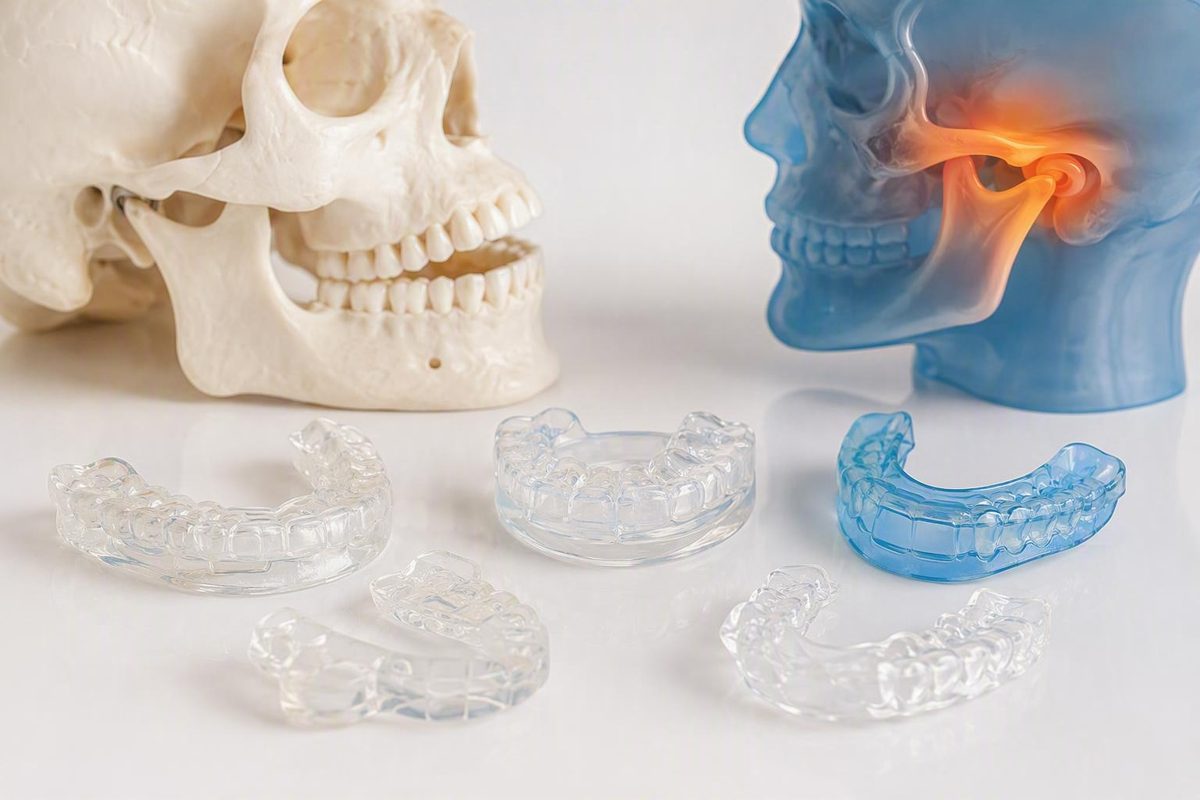
A temporomandibular joint dysfunction splint is not one standardized treatment. The label may refer to an appliance intended to protect teeth, reduce pain, improve jaw function, redistribute contacts or temporarily guide the lower jaw. Those goals involve different designs, expected outcomes and risks.
Success in one area does not prove success in another. A guard may protect vulnerable teeth while leaving jaw pain unchanged. Pain may temporarily improve without the joint “healing” or the bite being corrected. An appliance that changes how the teeth meet may also create problems even if it initially feels comfortable.
The safest general approach is to treat a splint as a reversible, diagnosis-specific and monitored trial—not as a cure or an automatic first step toward permanent dental changes. This article provides general education, not a diagnosis or individualized treatment advice.
What is a temporomandibular joint dysfunction splint?
A dental splint is a removable oral appliance that covers several or all of the upper or lower teeth. Follow-up may be needed because the fit, tooth contacts and response to treatment can change over time. Designs and wear schedules vary substantially, according to The TMJ Association’s guide to dental splints.
The terminology can be confusing:
- TMJ means the temporomandibular joint, the anatomical joint connecting the lower jaw to the skull.
- TMD means temporomandibular disorder or disorders, a category of conditions involving the jaw joints, chewing muscles or related structures.
- Bruxism refers to clenching or grinding, which may occur with or without a diagnosed TMD.
Jaw pain, clicking, headache, ear discomfort, locking and restricted opening may occur in people with TMD, but no single symptom establishes a diagnosis or proves that a splint is needed.
Names such as occlusal appliance, bite splint, stabilization splint, night guard, TMJ splint and orthotic are used inconsistently. Two clinicians may use the same name for materially different devices, while differently named appliances may have similar coverage and purposes.
Instead of relying on the label, ask four concrete questions:
- Which teeth does it cover? Is it full coverage, partial coverage or limited to a few front teeth?
- What does it make the jaw do? Does it provide a flat contact surface, or does it guide or restrict the lower jaw?
- When and how long will it be worn? Nighttime-only use and extended daytime wear create different exposures.
- What measurable outcome is it intended to change?
That final question should separate four possible objectives:
- Protecting teeth or restorations
- Reducing pain
- Improving jaw movement, chewing or other function
- Temporarily guiding jaw position
These outcomes should not be blended together. Wear marks on an appliance do not prove that TMD pain is improving. A change in pain does not demonstrate that the bite needs permanent correction. Better opening does not necessarily mean grinding has stopped.
Proposed explanations for splint effects include separating the teeth, changing contact patterns and distributing forces more evenly across the teeth, muscles or joints. These are biomechanical explanations, not proof that an appliance will produce meaningful pain relief or functional improvement. A peer-reviewed narrative review describes these proposed mechanisms while also calling for examination and differential diagnosis before appliance selection.1
TMJ splint, night guard, or sports mouth guard: the goal matters most
A night guard is a type of dental splint in broad terminology, so night guards and TMD splints are not always categorically separate. The useful distinction is usually the appliance’s principal objective, coverage and design.
| Appliance | Primary purpose | Typical design | Professional oversight | What it may accomplish | What it should not be assumed to accomplish |
|---|---|---|---|---|---|
| Night guard | Create a barrier between the teeth during clenching or grinding | Soft, hard or layered material covering one dental arch | Ranges from self-fitted retail products to dentist-made and adjusted appliances | Reduce direct tooth-to-tooth contact and help protect teeth or restorations | Diagnose TMD, stop the cause of clenching, relieve jaw pain or permanently change jaw behavior |
| TMD-directed splint | Pursue a diagnosis-specific pain, function, loading or jaw-position objective | May be full coverage, flat plane, repositioning or partial coverage | Clinical selection, fitting and monitoring are particularly important | Provide a reversible way to test a defined treatment objective | Cure TMD, heal the joint, create an objectively ideal jaw position or justify permanent dental work |
| Sports mouth guard | Protect the mouth and teeth from impact | Usually thicker and designed to absorb athletic blows | Custom and non-custom options exist | Reduce impact-related dental injury risk during sport | Treat grinding, jaw pain or TMD |
A night guard’s central purpose is protection: it separates the upper and lower teeth and limits direct contact associated with grinding or clenching. A TMD-directed splint is selected and adjusted for a more specific objective involving pain, function, loading or temporary jaw guidance. A sports mouth guard is an impact-protection device, not a grinding or TMD treatment. Healthcare-provider guidance similarly distinguishes these uses and warns that the wrong type or an improperly fitted device can worsen symptoms.2
Protecting enamel or restorations is not the same as treating TMD pain, and neither necessarily addresses why someone clenches. A guard can therefore have a legitimate protective purpose even if jaw pain remains unchanged.
Claims that splints are proven to prevent bruxism-related tooth wear deserve caution. The strongest systematic review in the supplied evidence found that none of its included bruxism trials measured tooth wear. It also did not establish that custom appliances produce better clinical outcomes than prefabricated appliances.3
If you have isolated grinding without pain or dysfunction, a tooth-protection discussion may be appropriate. If you have locking, increasingly restricted opening, worsening pain or a changing bite, seek an assessment rather than selecting an appliance from an online symptom list.
The main splint designs and their distinct risks
“Splint” is a category, not a complete design description. Tooth coverage, thickness, retention and whether the appliance directs the jaw can materially change its intended action and risk profile.
| Design | Coverage and action | Typical objective | Important limitations or risks |
|---|---|---|---|
| Full-coverage stabilization or flat-plane splint | Covers an entire upper or lower arch and provides an adjusted contact surface | Stabilize contacts or distribute loading without necessarily holding the jaw in a permanently altered position | Pain relief is not guaranteed; poor fit, excessive thickness or unsuitable contacts may affect comfort or function |
| Repositioning splint | Uses contours or indentations to guide or restrict the lower jaw toward a specified relationship | Temporarily test or maintain a selected jaw position | Extended wear may alter the bite or tooth position; the intended duration and exit plan must be clear |
| Anterior bite plane | Contacts only the front teeth, leaving posterior teeth uncovered | Disengage back-tooth contacts or change clenching mechanics | Continuous partial coverage may permit uncovered teeth to shift |
| NTI-style device | Fits over a small number of front teeth | Reduce posterior contact or limit clenching forces | Source-reported concerns include concentrated stress on a few teeth and swallowing or aspiration if a small device dislodges |
| Over-the-counter full-coverage guard | Standardized or heat-molded over one arch, including the back teeth when properly designed | Usually a short-term tooth barrier or exploratory trial | Fit and contact patterns may be imprecise; an unsuitable design may aggravate symptoms |
| One-size or partial-coverage retail device | Offers limited adaptation or limited tooth coverage | Convenience or basic tooth separation | Retention, uneven pressure and tooth-movement concerns make prolonged unsupervised use questionable |
Full-coverage stabilization splints
A stabilization splint—sometimes called a flat-plane or Michigan-style splint—generally provides an adjusted bite surface across a full dental arch. It need not force the lower jaw into a permanently altered position.
The proposed rationale is that a controlled surface may reduce selected contacts or distribute loading differently. That rationale should not be converted into a promise of muscle relaxation, joint unloading or pain relief. An appliance can alter contacts as designed without producing a clinically meaningful improvement.
Thickness matters. The narrative review reports that an excessively thick Michigan-style appliance may interfere with swallowing, lip closure or speech.1 More material should not automatically be equated with greater protection or better therapy.
Repositioning splints
A repositioning appliance guides or restricts the lower jaw toward a selected relationship. Before accepting one, ask:
- Is this position intended to be temporary?
- Is the appliance expected to change how my teeth meet?
- What happens if my original bite no longer feels normal?
- How will tooth position and bite contacts be monitored?
- Would improvement be used to recommend orthodontics, crowns or surgery?
The TMJ Association warns that using a repositioning appliance for more than six weeks may increase the risk of permanent bite changes, joint damage or pain. It also reports concerns about tooth movement with partial coverage and swallowing or aspiration if a small appliance dislodges. These are source-specific patient-advocacy warnings, not universally validated risk rates or duration limits for every appliance and diagnosis.4
A temporary reduction in symptoms while the jaw is guided somewhere else does not establish that the new position is anatomically ideal, that the joint has healed or that permanent bite alteration is necessary.
Anterior bite planes and NTI-style appliances
An anterior bite plane contacts only the front teeth. Because the back teeth remain uncovered, continuous wear may permit relative tooth movement. The likelihood and extent of change cannot be quantified from the supplied trials, but partial coverage warrants a specific monitoring plan.
An NTI-style device fits over a small number of front teeth. Source-reported concerns include concentrated stress on those teeth and swallowing or aspiration if the appliance dislodges. Retention should therefore be checked rather than assumed, and a loosened device should be reviewed by the treating clinician.
Over-the-counter guards
Over-the-counter options range from one-size products to heat-molded “boil-and-bite” guards. Kaiser Permanente’s clinical education suggests that a full-coverage boil-and-bite guard extending over the molars may be considered for a short-term trial in some circumstances. It also warns that an improperly fitted device can worsen symptoms.2
These points are not contradictory. A full-coverage retail guard used briefly for uncomplicated tooth protection is not equivalent to prolonged self-treatment of locking, restricted movement or a changing bite.
The supplied evidence does not establish that custom fabrication produces better pain or function outcomes than prefabricated appliances.
The practical rule is simple: ask which teeth the appliance covers, whether it stabilizes or guides the jaw, and what risks arise from that coverage and wear schedule.
Do splints work for TMD pain? What the evidence actually says
The strongest supplied evidence is a 2020 systematic review and economic evaluation that included 52 randomized trials identified through searches ending October 1, 2018. For TMD pain measured at up to three months, the pooled standardized mean difference was −0.18, with a 95% confidence interval from −0.42 to 0.06, compared with no splint or minimal intervention. That result did not establish a pain benefit.3
In plain language, the confidence interval crossed the point of no difference. The studies also varied substantially, so the pooled estimate should not be treated as a precise answer for every appliance, diagnosis or patient.
The review found no evidence of improvement in:
- Temporomandibular joint noises
- Reduced mouth opening
- Quality of life
The overall evidence was rated very low quality. Diagnoses, appliance types, study methods and outcome measures varied, while TMD subtypes were often unclear. Pooling different muscle and joint disorders may conceal a benefit—or a harm—limited to a particular, rigorously diagnosed subgroup.
Two statements can therefore be true at the same time:
- The review did not demonstrate a clear pooled benefit.
- It did not prove that no individual patient or specific TMD subtype can benefit.
That uncertainty should lead to more disciplined treatment trials, not stronger promises. A clinician recommending a splint should be able to explain why the working diagnosis and selected design might reasonably differ from the broad, mixed populations represented in the review.
A 2022 narrative literature review concluded that splints were not clearly superior to physiotherapy and that long-term outcomes appeared similar to those of other therapies. However, it was not a formal systematic review with a stated risk-of-bias process and included relevant articles regardless of study design or quality. Its therapeutic conclusions therefore deserve less weight than the systematic review’s cautious finding.5
Safety evidence is also incomplete. Adverse events were generally unreported in the systematic review. Sparse reporting does not justify claiming that complications are rare or well quantified.
The principal systematic review’s search ended in 2018, so it does not represent every study available through 2026. An up-to-date clinical decision should consider newer independent reviews and current professional guidance where available.
The defensible conclusion from the supplied evidence is that a splint may be reasonable for selected patients when the objective is specific and the intervention remains reversible. It should not be presented as a proven standalone solution for broad TMD pain.
How a clinician should evaluate you before selecting an appliance
Jaw pain, clicking, headache, ear discomfort, locking, restricted opening and bruxism can overlap. They do not independently establish a TMD diagnosis, identify a subtype or show that a splint is appropriate.
A focused evaluation may include:
- When symptoms started and whether they followed dental work, injury or another event
- Pain location, quality, timing, triggers and pattern
- Comfortable and maximum jaw opening
- Deviation, limitation, catching or locking during movement
- Joint sounds and other examination findings
- Tenderness in the jaw and related muscles
- The condition of teeth, restorations and supporting tissues
- Existing tooth wear, cracks or sensitivity
- How the upper and lower teeth meet
- Reported or observed clenching and grinding
- Trauma history
- Sleep, behavioral or situational factors associated with clenching
- Plausible dental, muscular, joint-related or other alternative causes
The purpose is not merely to decide whether you “have TMJ.” It is to develop a working diagnosis detailed enough to support a particular objective. The 2022 review specifically calls for thorough examination and differential diagnosis before choosing splint therapy.5
Ask the clinician to complete this sentence:
“This appliance is being recommended to , and we will judge whether it works by measuring .”
The first blank should state something concrete, such as protecting a damaged restoration, reducing morning muscle pain, improving chewing tolerance or temporarily guiding the jaw. The second should identify an outcome that can be assessed consistently.
Selection should not be based solely on a broad symptom cluster, a product name or the fact that an appliance is custom-made. Imaging may sometimes be considered in clinical care, but the supplied evidence does not support a universal rule about who should be imaged.
Avoid relying on self-treatment when your bite is changing, opening is becoming more restricted, pain is worsening or trauma is involved. Pain Catalog’s own educational safety policy says jaw locking, trauma or jaw pain accompanied by fever warrants prompt clinical attention. That statement is a site notice, not an independently sourced clinical triage guideline.6
Use a splint as a monitored, reversible trial
A splint trial should have a beginning, a measurement plan and an exit. Without those elements, a temporary experiment can quietly become indefinite treatment.
Before starting, consider recording:
- Average and worst jaw pain
- Comfortable mouth opening
- Foods or chewing tasks that are difficult
- Frequency of catching or locking
- Headache frequency or severity
- Sleep disruption
- Tooth or restoration sensitivity
- Morning stiffness or fatigue
- Your perception of how the teeth meet
These are practical tracking ideas, not validated universal outcome standards. Their purpose is to help you and the clinician compare the same outcomes over time.
Monitored splint-trial template
| Item | Fill in before use |
|---|---|
| Working diagnosis | |
| Appliance name | |
| Design | Full coverage, stabilization, repositioning, anterior, NTI-style, retail guard or other |
| Tooth coverage | |
| Treatment objective | Tooth protection, pain reduction, improved function, temporary jaw guidance or other |
| Baseline measures | Pain, opening, chewing, locking, headaches, sleep, tooth sensitivity and perceived bite |
| Wear instructions | Which hours, how many days per week and whether use is during sleep or wakefulness |
| First review date | |
| Adjustment plan | What will be checked and who will make adjustments |
| Success criteria | The specific improvement needed to continue |
| Stopping rules | Symptoms, fit or bite changes that require stopping and review |
| Exit plan | What happens if the appliance works, fails or cannot be tolerated |
Wear schedules vary by diagnosis and design. One provider source suggests a four-to-six-week trial in a particular night-guard pathway, but that should not become a universal duration for stabilization, repositioning, partial-coverage and tooth-protection appliances.7
The TMJ Association quotes US National Institutes of Health advice favoring short-term use that does not cause permanent bite changes. It also advises stopping and contacting the provider if an appliance causes or increases pain, clenching or grinding.4
Both night guards and TMD splints generally exert their intended effect while being worn. They should not be promised to permanently retrain the jaw or bite. If temporary relief from a repositioning appliance is used to support orthodontic, restorative or surgical treatment, ask for independent diagnostic justification for that irreversible proposal.
Follow-up may require more than one visit. Questions for review include:
- Does the appliance remain fully seated?
- Has retention changed?
- Are there cracks, distortion or rough areas?
- Is one tooth receiving unusual pressure?
- Have contact patterns changed?
- Has jaw movement improved or worsened?
- Does the bite feel different after removal?
This is a conservative monitoring framework rather than a validated universal stopping protocol.
The supplied evidence does not establish a universal maximum duration, review interval or threshold for clinically meaningful improvement. Those decisions should be stated explicitly for the individual trial rather than left open-ended.
Risks, warning signs, and claims that deserve scrutiny
Its risk profile depends on coverage, fit, thickness, retention, intended jaw position, wear schedule and follow-up—not merely whether it is called a guard or orthotic.
The matrix below separates source-reported concerns from practical questions to discuss with the treating clinician.
| Risk factor | What could go wrong | What to monitor or ask |
|---|---|---|
| Poor fit | Provider and clinic guidance warns that an unsuitable or improperly fitted appliance may worsen symptoms or alter force distribution.8 | Does it seat fully without force? Which changes require stopping and review? |
| Partial tooth coverage | Patient-advocacy guidance warns that uncovered teeth may shift during continuous wear, changing how the teeth meet.4 | Which teeth are uncovered, and how will tooth position and bite be monitored? |
| Jaw-repositioning intent | Extended exposure may produce an unwanted or persistent bite change; reliable complication rates are not available. | Is the position temporary? What is the planned duration and exit strategy? |
| Small-device retention | A dislodged small appliance presents a source-reported swallowing or aspiration concern. | How secure is it, and what should happen if retention changes? |
| Appliance thickness | An excessively thick Michigan-style appliance may interfere with speech, swallowing or lip closure.1 | Is the thickness necessary, and can comfort or function be improved through professional adjustment? |
| Long wear duration | Longer exposure may increase opportunities for tooth movement, altered contacts or reliance on the appliance. | Why is continued use necessary, and when will it be reassessed? |
| Inadequate follow-up | Fit, retention, symptoms or bite changes may continue without review. | Are scheduled checks and professional adjustments included? |
Partial-coverage and prolonged repositioning appliances deserve particular attention because of source-reported concerns about tooth movement and persistent bite changes. Small anterior devices add retention and concentrated-tooth-stress concerns. The supplied clinical trials do not allow reliable estimates of how frequently these events occur.
Claims to question
Be skeptical when marketing or treatment proposals promise:
- Permanent jaw retraining
- An objectively optimal jaw position for every patient
- Joint healing caused by the appliance
- Guaranteed or rapid pain relief
- Permanent bite correction
- Elimination of the cause of clenching
- Inherent superiority because the device is custom-made
- A necessary progression from splint use to crowns, orthodontics or surgery
Custom fabrication may allow more control over fit and adjustment, but it does not prove a better pain or function outcome. Likewise, a plausible biomechanical mechanism is not demonstrated clinical benefit.
A temporary response should not automatically justify irreversible treatment. Before agreeing to permanent changes, ask whether the proposed treatment has an independent diagnosis and rationale that would remain valid if the splint response were uncertain.
Do not assume that every click, headache, ear symptom or sore morning indicates joint damage. These findings can have different causes and do not, by themselves, establish a need for an appliance.
If you experience a device problem, contact the treating clinician. The TMJ Association also advises reporting appliance problems through the FDA MedWatch system.4
Alternatives, appliance care, and the full cost of treatment
Splints belong within conservative care; they are not automatically the first or only option. Depending on the working diagnosis and individual medical or dental circumstances, alternatives or complementary measures may include:
- Education about the condition and its expected course
- Awareness and modification of daytime jaw habits
- Physical therapy
- Temporary diet modification
- Heat or cold
- Sleep and lifestyle measures
- Individually appropriate medication
- Management of relevant dental or other contributing conditions
The supplied evidence does not show that splints are clearly superior to physiotherapy. That does not make physical therapy universally better. Each option has different objectives, burdens, risks, access issues and costs. Combined care may be reasonable when each component has a defined role.
Keeping those goals separate makes improvement—or lack of improvement—easier to interpret.
Caring for the appliance
Follow the provider’s material-specific instructions. Kaiser Permanente’s clinical education recommends the following general care steps:7
- Rinse the appliance after use.
- Brush it lightly without toothpaste, which may be abrasive.
- Allow it to dry before placing it in its storage case.
- Use an appropriate denture cleaner periodically if it is compatible with the appliance and the provider’s instructions.
Inspect the appliance for cracks, distortion, rough areas, visible wear or reduced retention. Rather than trimming, bending, heating or grinding it at home, ask the treating clinician whether it needs professional adjustment.
If dental work changes the shape of a tooth or restoration, ask whether the appliance’s fit and contacts should be checked.
Understand the full cost
The purchase price may not represent the total cost of treatment. Potential expenses include:
- Examination and diagnostic records
- Impressions or scans
- Fabrication
- Initial fitting
- Adjustments
- Follow-up visits
- Repairs
- Replacement
- Insurance documentation
- Treatment proposed after the trial
Charges and insurance coverage vary widely. Confirm costs directly with the provider and insurer rather than treating a commercial price range as a universal estimate.
Before paying, ask:
- Is the examination included?
- Are fitting and follow-up adjustments included?
- How many review visits are covered?
- What does repair or replacement cost?
- What happens if I cannot tolerate the appliance?
- Is there a cancellation or refund policy?
- Will the office provide the diagnosis and documentation requested by my insurer?
- Is preauthorization required?
- Will I own the appliance and records if I change clinicians?
- Is later dental work already being presented as part of the plan?
Questions to ask the clinician
Use this checklist before agreeing to treatment:
- What is my specific working diagnosis?
- Is the objective tooth protection, pain reduction, improved function or temporary jaw guidance?
- What is the exact name and design of the appliance?
- Which teeth will it cover?
- Will it stabilize contacts or guide the lower jaw?
- Is any bite change intended?
- What conservative alternatives should I compare?
- What benefit is realistically expected?
- How uncertain is the evidence for my diagnosis?
- What risks follow from this design and wear schedule?
- When and how should I wear it?
- What baseline outcomes should I record?
- When is my first review?
- Are adjustments included?
- What counts as success?
- What findings mean I should stop?
- What is the total expected cost?
- What is the exit plan if it fails?
- Would any later permanent treatment require separate diagnostic justification?
The decision pathway is straightforward: identify the diagnosis and treatment objective; ask exactly what the appliance covers and does; compare it with other conservative options; and agree on measurable goals, follow-up and stopping rules before use.
A temporomandibular joint dysfunction splint may be reasonable for a selected patient, but the evidence for broad TMD pain relief remains very uncertain. Stop and seek review if the appliance worsens symptoms, function, fit, retention or bite. Most importantly, do not treat a temporary response as proof that permanent dental changes are necessary.
Frequently asked questions
Is a TMJ splint the same as a night guard?
Not always, although the terms overlap. A night guard is broadly a type of dental splint and is usually intended to separate and protect teeth during clenching or grinding. A TMD-directed splint is selected for a diagnosis-specific pain, function, loading or temporary jaw-position objective.
Do not rely on the label. Ask about tooth coverage, material, contact pattern, whether the appliance guides the jaw and how success will be measured.
Can a temporomandibular joint dysfunction splint permanently fix my bite or retrain my jaw?
It should not be promised to do so. Splints generally exert their intended effects while being worn. Claims that an appliance permanently retrains the jaw, heals the joint or establishes an objectively ideal bite are not supported by the supplied evidence.
An appliance that changes tooth contacts or guides the lower jaw may also cause unwanted bite changes. Temporary symptom improvement is not proof that permanent orthodontic, restorative or surgical treatment is needed.
Is a custom splint proven to work better than an over-the-counter guard?
No comparative superiority was established in the supplied systematic review. The review did not first establish a difference between splints and no splints, so its planned comparison of custom and prefabricated appliances could not provide a useful clinical answer.
A custom appliance may allow more precise control over coverage, fit, retention and adjustment. Those practical features may matter during monitoring, but they do not prove better pain or function outcomes.
How long should I wear a TMD splint?
There is no evidence-based universal duration for every diagnosis and design. Wear should be prescribed for the particular appliance, with a first review date, measurable objectives and stopping rules.
Short-term use that avoids permanent bite changes is the safer general framing. A duration suggested in one source should not automatically be applied to stabilization, repositioning, partial-coverage and tooth-protection appliances alike.
What should I do if a splint increases pain, clenching, or changes my bite?
Stop wearing it and contact the treating clinician. Provider and patient-advocacy guidance specifically recommends stopping when pain, clenching or grinding increases. A cautious monitoring plan should also treat worsening fit, retention, jaw movement or bite as reasons for prompt review.
Bring the device to the appointment, explain when the change began and avoid modifying it yourself.
-
Peer-reviewed narrative review of occlusal-splint types and proposed mechanisms ↩↩↩
-
Kaiser Permanente guidance on night guards and TMD splints ↩↩
-
Systematic review and economic evaluation of oral splints ↩↩
-
TMJ Association guidance on splint risks, monitoring and device reporting ↩↩↩↩
-
Pain Catalog’s educational-use and clinical-attention notice ↩
-
Clinical discussion of unsuitable guards and symptom aggravation ↩