
Can a Mouthguard Help Your Jaw Pain? A Diagnosis-First Guide
Some people notice a change quickly, some receive dental protection without meaningful pain relief, and some worsen.
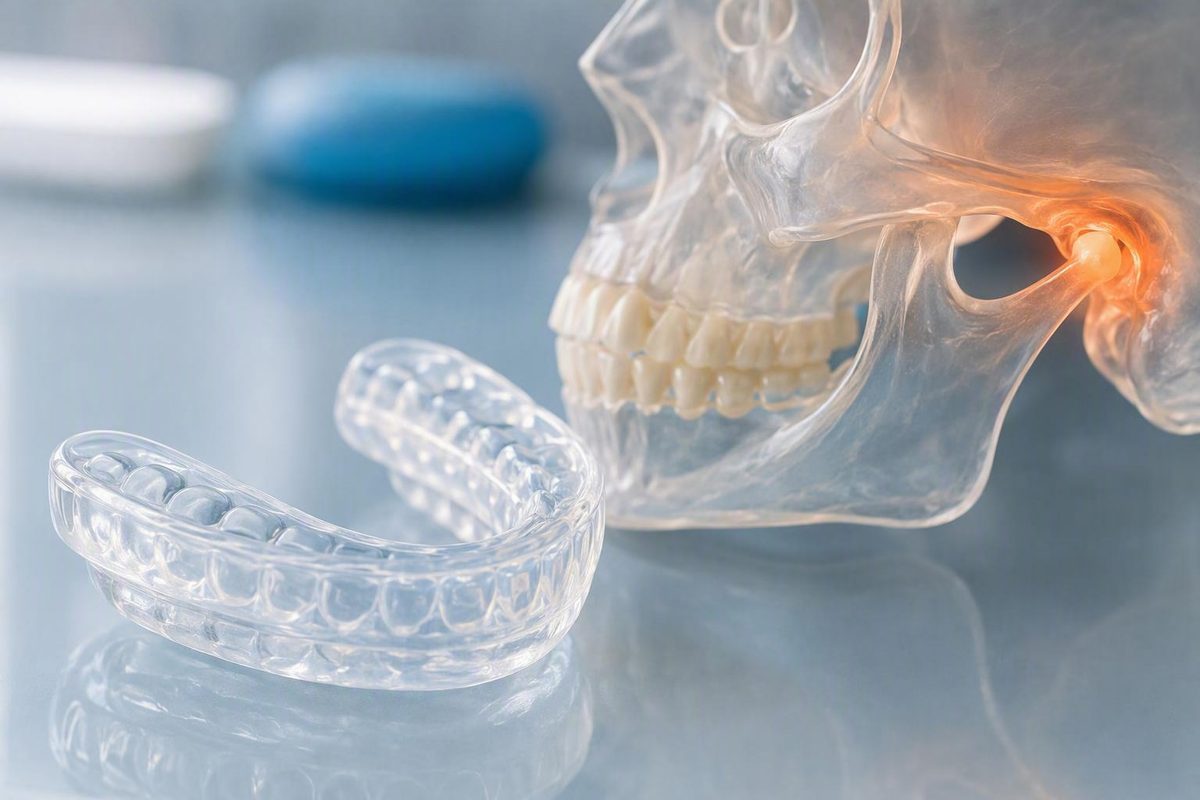
The short answer: a mouthguard may help, but not every type of TMD
A mouthguard may help when teeth grinding or clenching contributes to tooth damage, morning jaw soreness or strain on the chewing muscles and jaw joints. But a temporomandibular joint dysfunction mouthguard is not a universal cure, and an unsuitable or poorly fitting appliance can aggravate symptoms.
The terminology matters:
The clinical question is whether pain or impaired function comes primarily from the muscles, the joint, a mechanical problem, bruxism-related strain, a dental condition or another cause.
When nighttime grinding or clenching contributes, a properly selected occlusal guard may protect teeth, reduce muscular strain and limit overload on the jaw joint. It does not stop the nervous-system reflex responsible for sleep bruxism; a person can continue clenching against the appliance even though the teeth are no longer contacting each other directly, according to Cleveland Clinic’s guidance on mouthguards and jaw pain.
It helps to separate three outcomes that are often conflated:
- Preventing tooth damage. A guard places material between the upper and lower teeth, reducing direct tooth-to-tooth contact and potentially protecting enamel, restorations and teeth from grinding forces.
- Reducing pain or muscle strain. Some people experience less morning soreness or tension, particularly when clenching or grinding contributes. Others do not.
- Changing jaw mechanics. Some therapeutic splints alter tooth contacts or guide the lower jaw toward a prescribed position. These are not simply protective barriers and require more careful selection and monitoring.
Success in one category does not guarantee success in the others. A guard may protect worn teeth without relieving facial pain. A therapeutic splint may instead be chosen to change muscle or joint loading when visible tooth wear is not the main concern.
A mouthguard does not cure the broad group of conditions called TMD. It cannot be expected to resolve every joint disorder, inflammatory condition, dental problem, injury or source of facial pain. The evidence supplied for this guide does not establish one universally effective design, prove that custom guards relieve pain better for everyone or provide a predictable improvement rate.
This article is general education, not a diagnosis. It also cannot safely determine which therapeutic splint—or which wear schedule—is appropriate.
When a guard is most relevant—and when jaw symptoms may point elsewhere
A guard is most relevant when there is evidence that bruxism is exposing the teeth and jaw structures to repeated force. Possible clues include:
- A sore, tired or tense jaw on waking
- Morning headaches
- Tooth sensitivity
- Flattened, chipped or visibly worn teeth
- Cracked or repeatedly damaged dental work
- A sleep partner reporting grinding sounds
- Awareness of daytime or nighttime clenching
These signs can accompany bruxism, but they do not prove that grinding explains all the pain.
A dental examination may identify wear or damage that is difficult to assess at home. The examination can also help establish whether the immediate goal is tooth protection, symptom management or investigation of another cause.
Clinicians may broadly consider whether symptoms appear more closely related to muscles, the joint or jaw mechanics:
- Muscle-related symptoms can include diffuse aching, tightness, fatigue or tenderness around the cheeks, temples or jaw.
- Joint-related symptoms may be felt close to the ear or worsen when the jaw moves or bears load.
- Mechanical concerns can include catching, locking or difficulty opening or closing the mouth.
These are broad clinical patterns, not instructions for self-diagnosis. Categories can overlap: muscle guarding may develop around a painful joint, while joint symptoms and clenching can occur together.
Clicking or popping is similarly inconclusive. A sound alone does not identify its cause, prove that tissue is being damaged or establish that a splint is needed. A click accompanied by pain, locking or impaired opening warrants professional assessment; Cleveland Clinic advises consulting a dental professional when the jaw clicks, locks or hurts in its mouthguard and TMD overview.
Do not rely on an unsupervised mouthguard trial when the jaw locks, there has been recent trauma or pain occurs with fever. Those warning signs need prompt clinical attention under Pain Catalog’s educational-use and jaw-pain notice.
The main therapeutic splint designs and why they are not interchangeable
“Splint,” “night guard,” “bite guard” and “mouthguard” are sometimes used as if they mean the same thing. In practice, design matters more than the generic label. Appliances differ in tooth coverage, which teeth contact the appliance and whether the device permits or intentionally guides jaw movement.
The descriptions below explain how commonly marketed designs differ mechanically. They do not establish that a particular design is effective or appropriate for an individual diagnosis.
| Design | Tooth coverage or contact | Intended clinical purpose | Principal limitation | Level of supervision |
|---|---|---|---|---|
| Stabilization or flat-plane splint | Generally covers a full arch and provides a relatively even biting surface | Protect teeth and distribute contacts while allowing jaw movement; may be considered when bruxism or muscle-related strain contributes | Pain relief is not guaranteed, and contacts may require adjustment | Professional selection and follow-up are preferable for persistent or complex symptoms |
| Anterior-contact appliance | Contacts a limited number of front teeth while keeping posterior teeth out of contact | Temporarily alters tooth contact and loading in selected cases | Load is concentrated on fewer teeth; prolonged continuous use may permit tooth movement | Close supervision is important, particularly beyond brief use |
| Repositioning splint | Covers teeth while guiding the lower jaw toward a prescribed position | Considered by clinicians for selected joint or disc-related presentations | Inappropriate or extended use may produce lasting bite changes | Requires diagnosis, adjustment and ongoing oversight |
| Modified Hawley-type design | Uses an anterior-contact configuration that prevents posterior contact | Another method of altering posterior tooth contact | Shares the limitations of other restricted-contact designs | Should not be treated as a universal self-care appliance |
The force concentration and bite-change concerns summarized in the table are described in a dental practice’s overview of stabilization, NTI, modified Hawley and repositioning appliances. That page is commercial practice content rather than an independent clinical guideline.
Stabilization or flat-plane splints
A stabilization splint generally covers the teeth of one arch and provides a biting surface intended to distribute opposing contacts while permitting jaw movement. It may be used to protect teeth and manage selected muscle- or joint-related symptoms.
“Even contact” cannot be judged reliably from appearance alone. A professionally supplied appliance can be checked for stability and adjusted chairside if pressure is concentrated in one area. Tooth position, dental treatment and appliance wear may also change how it contacts the opposing teeth.
Broad coverage does not make a stabilization appliance appropriate for every case. It may protect teeth without relieving pain if bruxism is not a major contributor or if symptoms primarily come from another condition.
Anterior-contact appliances
Anterior-contact appliances—including NTI-style devices and anterior bite planes—contact a limited number of front teeth while leaving the back teeth out of contact. A modified Hawley-type splint is another configuration that prevents posterior contact.
Because fewer teeth carry the load, force may be concentrated at the front of the mouth. Prolonged continuous use may also permit changes in tooth position. These characteristics make fit, duration and monitoring especially important.
Some manufacturers recommend anterior bite-plane appliances for acute jaw pain. That is vendor guidance, not proof that an anterior-contact device is the preferred treatment for every person with new pain. New symptoms may instead reflect dental disease, injury or a joint problem that requires examination.
Repositioning splints
A repositioning splint guides the lower jaw toward a position prescribed by a clinician. Commercial and dental-practice sources describe these devices as options for selected joint or disc-related conditions, but clicking or generalized jaw pain alone is not enough to establish that one is appropriate.
This design deliberately changes jaw position and tooth contact, giving it a different risk profile from a passive protective guard. Lasting bite changes are possible, particularly with inappropriate or extended use.
A commercial manufacturer recommends different designs for acute pain, chronic muscle-related symptoms and selected disc disorders. It also warns that prolonged anterior bite-plane use may permit tooth movement and that an incorrectly selected appliance can worsen symptoms in its comparison of TMD splint designs. Those recommendations should not be treated as independently validated guidance for every patient.
The practical lesson is not that one design is inherently good and another bad. Changing coverage, contact or jaw position changes what an appliance does—and how closely it should be supervised.
Therapeutic splints, night guards, sports guards, and sleep appliances serve different purposes
The word “mouthguard” describes a broad category, not a single treatment. Purpose should come before price, material or marketing terminology.
Bruxism guards
A bruxism guard is primarily intended to separate and protect the teeth from direct grinding contact. Depending on its design and adjustment, it may also reduce strain on muscles or jaw joints. Its central purpose is protection from the consequences of grinding and clenching, not elimination of the behavior.
Therapeutic occlusal splints
A therapeutic splint is selected for a particular clinical presentation. It may be intended to distribute contacts, alter loading or guide the jaw. Tooth coverage, contact pattern and wear schedule are part of the treatment decision.
A basic protective night guard and a therapeutic repositioning splint are therefore not interchangeable, even if both are clear plastic appliances worn over the teeth.
Sports mouthguards
Sports guards are designed primarily to reduce oral injury during impacts. They should not be assumed to treat an established temporomandibular disorder.
A 2023 observational study of 86 contact-sport athletes found an association between mouthguard use and fewer reported TMJ-related findings. Participants with prior TMJ problems were excluded, use was not randomized and all mouthguard users wore ready-made guards. The small study therefore concerns possible injury prevention and cannot demonstrate treatment effectiveness for existing TMD, as the published contact-sport study shows.
Snoring and sleep-apnea appliances
Mandibular-advancement appliances reposition the lower jaw to address snoring or obstructive sleep apnea. That is a different objective from protecting teeth against grinding.
A grinding or sports guard should not be substituted for sleep-apnea assessment or a prescribed sleep appliance. Conversely, a jaw-repositioning sleep appliance should not be selected solely because someone has morning soreness. Cleveland Clinic distinguishes sports, grinding and snoring or sleep-apnea devices by purpose in its medical overview of mouthguard types.
Custom versus over-the-counter: compare fit and oversight, not marketing labels
The most useful comparison is not “cheap versus premium.” It is how the device is fitted, whether its contacts can be adjusted and whether follow-up is available.
| Option | How it is fitted | Professional adjustment | Follow-up access | Likely fit consistency | Price context |
|---|---|---|---|---|---|
| Stock guard | Worn as sold in a standard size | Usually none | Generally none | Variable; it may feel bulky or loose | Usually the least expensive |
| Boil-and-bite guard | Softened in hot water and molded at home | Usually none unless a clinician separately reviews it | Usually not included | Depends on the product and molding technique | Generally low-cost |
| Online custom-fit guard | A home impression is sent to a laboratory or seller | Remakes or remote support may be available, but chairside bite adjustment is generally absent | Varies by seller | More individualized than stock products, but impression accuracy can vary | Usually between store-bought and dentist-supplied options |
| Dentist-made appliance | Made from physical or digital impressions after an examination | Can be inspected and adjusted chairside | Follow-up may be included in treatment | Individually fabricated and clinically checked | Usually the highest initial cost |
A stock guard is worn in its manufactured form. A boil-and-bite device is softened and shaped at home. An online custom guard generally uses a home impression kit, while a dentist-made appliance is fabricated from an impression or digital scan obtained through professional care.
The principal advantage of a dentist-supplied appliance is not guaranteed pain relief. It is access to clinical selection, inspection, chairside adjustment and monitoring. A clinician can assess whether the appliance seats fully, whether it rocks, which teeth contact it and whether symptoms or the bite change.
Over-the-counter products should not all be declared unsafe. A stock or boil-and-bite guard may provide an accessible barrier for some people seeking tooth protection. They are a less suitable experiment when symptoms are persistent, worsening, mechanically complex or associated with locking.
A poorly fitting appliance can cause soreness in the teeth, gums or jaw. Cleveland Clinic notes these fit-related risks and explains how stock, boil-and-bite and custom devices differ in its mouthguard health guide.
Material labels should also be interpreted cautiously. Common descriptions include:
- Soft or flexible
- Hard acrylic or rigid resin
- Dual-laminate or hybrid
- Thin or low-profile
These are construction choices, not evidence that a material is best for a particular reader. Material interacts with appliance design, thickness, retention, grinding force and intended use. The supplied evidence does not establish that one material is universally superior.
How to approach an appliance trial safely
Whether a device is store-bought or professionally supplied, treat its use as a defined trial with a stated purpose—not an indefinite habit without review.
Before wearing a therapeutic splint, ask:
- What diagnosis or suspected problem is this appliance targeting?
- Is the goal to protect teeth, reduce morning muscle strain or change jaw position?
- Why was this design chosen over a full-coverage or limited-contact alternative?
- Which teeth should contact the appliance?
- How will uneven contact or an unstable fit be corrected?
- Is the device intended for sleep, limited daytime use or another schedule?
- When will its fit and contact pattern be checked?
- Who should I contact if symptoms or tooth contacts change?
- What would count as success?
- What would require stopping the trial?
There is no universal wear schedule. “Every night,” “day and night” and “only during a symptom flare” are not interchangeable instructions. The schedule should depend on the suspected problem, appliance design and intended effect. Continuous use is especially consequential when a device contacts only a few teeth or guides the lower jaw.
Set observable goals before beginning. Depending on the purpose, these might include:
- Less morning jaw soreness
- Less morning muscle fatigue
- Prevention of additional tooth wear
- Prevention of further restoration damage
- Improved comfort during a defined activity
If tooth protection improves while pain does not, those are two different outcomes and should be reviewed separately.
Stop using the appliance and contact the provider if you develop:
- Worsening jaw pain
- Focal pressure or pain in one or more teeth
- Gum soreness, cuts or pinching
- A loose, unstable or rocking fit
- New clicking, catching or other symptoms
- A bite that remains different after the appliance is removed
- Visible distortion or an inability to seat the appliance fully
The supplied evidence does not define a universal “normal adjustment period” for bite changes or discomfort. Follow the instructions for the specific appliance and seek review rather than assuming persistent symptoms will resolve on their own. Dental-practice guidance likewise advises stopping a guard and contacting the dentist when it causes pain or new symptoms.
New locking, marked difficulty opening or progressive loss of function calls for clinical reassessment rather than simply buying a softer guard, remolding the same device or switching arches.
There is also no responsible fixed deadline by which improvement must occur. Some people notice a change quickly, some receive dental protection without meaningful pain relief, and some worsen. The review point should reflect the appliance, treatment goal and severity of symptoms—not a product advertisement.
A mouthguard is usually one part of conservative care
When a splint is indicated, it is generally one component of management rather than a stand-alone cure. Other measures may address activities, habits or contributors that an appliance cannot correct.
Ways to reduce unnecessary jaw strain can include:
- Limiting gum chewing
- Avoiding repeatedly testing a click or pop
- Reducing prolonged or repeated wide opening
- Temporarily modifying foods when chewing clearly aggravates symptoms
- Avoiding habits such as chewing pens or biting nails
- Taking breaks from activities that require prolonged clenching
Clinician-approved heat or cold may be considered in some situations. Physical therapy may address movement, muscle function or activity-related aggravation. These options should be matched to the presentation rather than applied aggressively to a painful or recently injured jaw.
There is no universal medication regimen suitable for every person with jaw pain.
Bruxism may be influenced by factors beyond the teeth and jaw, including stress, disrupted sleep, sleep disorders, caffeine and certain medications. A guard may limit resulting dental damage without correcting those contributors. A dentist-authored practice guide similarly distinguishes creating a barrier between the teeth from treating the causes of grinding in its comparison of night guards and over-the-counter guards.
That distinction changes the questions worth asking:
- Has grinding or clenching been identified?
- Did the symptoms begin after a medication or sleep change?
- Does daytime clenching occur during concentration or stress?
- Is the appliance reducing damage while another contributor remains unaddressed?
- Could a dental problem, injury or another condition better explain the symptoms?
Selected severe or persistent cases may require other clinician-directed treatment. That does not make injections, irreversible dental procedures or surgery routine next steps when a guard fails.
Failure to improve may mean the diagnosis, goal, fit, design or contributing factors need to be reconsidered. An appliance that protects teeth may still be worth using even if it does not relieve pain, but that should be an explicit decision rather than an assumption that wearing it longer will eventually cure the problem.
Cost, cleaning, storage, and long-term checks
Prices vary widely and should be treated as source-attributed commercial examples rather than standard fees. One commercial clinic guide quotes approximately $10 to $30 for some over-the-counter guards and $500 to $3,500 or more for professionally supplied appliances in its mouthguard cost overview. Another retailer quotes around $100 to $200 for some online custom-fit products and lower prices for certain store-bought options in its commercial mouthguard guide.
Actual cost can depend on:
- Appliance purpose and design
- Material and laboratory process
- Provider and location
- Physical impressions or digital scans
- Examination and diagnostic work
- Chairside fitting and adjustments
- Follow-up visits
- Repairs or replacement
- Insurance coverage and plan rules
Before agreeing to a professionally supplied appliance, ask whether the quoted fee includes fitting, adjustments, follow-up visits, repairs or remakes. Also ask what happens if later dental treatment changes the fit.
Custom guards may last longer than some store-bought products, but no fixed lifespan can be promised.
For routine care:
- Rinse the appliance after use.
- Brush it gently with cool, soapy water.
- Allow it to air-dry.
- Store it in a sturdy, ventilated case.
- Avoid hot water, direct sunlight and other extreme heat that could distort it.
Inspect the appliance regularly for:
- Cracks or splits
- Rough or sharp edges
- Heavy wear or thin spots
- Looseness or rocking
- Warping or distortion
- A change in how it seats
- A change in which teeth contact it
Arrange professional inspection if these changes occur. Do not continue wearing an unstable or distorted appliance merely because it was expensive.
Cost should ultimately be judged against purpose, fit and support. An inexpensive guard is not good value if it fits poorly or causes symptoms. A high-priced appliance is not automatically appropriate and does not guarantee pain relief.
A diagnosis-first decision rule
A mouthguard is most plausible when grinding or clenching contributes to tooth damage or jaw strain. Symptoms alone, however, cannot safely identify the correct design or wear schedule.
Define the appliance’s goal before using it. Seek assessment for persistent, worsening or mechanically complex symptoms. Agree on follow-up and stopping rules, and obtain prompt care for locking, trauma, pain with fever, marked difficulty opening, swelling or severe progressive pain.
Frequently asked questions
Can a mouthguard make TMD symptoms worse?
Yes. A poorly fitting or incorrectly selected appliance may create uneven pressure, concentrate force on a few teeth or guide the jaw inappropriately. That can aggravate tooth, gum, muscle or joint symptoms. Anterior-contact and repositioning designs require particular caution because prolonged or inappropriate use may allow tooth movement or lasting bite changes.
Stop using the appliance and contact the provider if pain worsens, the guard becomes unstable, one tooth feels overloaded, new symptoms develop or the bite remains different after removal.
Does a night guard stop teeth grinding?
No. A night guard does not switch off the neurological reflex involved in sleep bruxism. Its narrower general purpose is to separate and protect the teeth. A properly designed and adjusted appliance may also distribute contact or reduce muscle and joint strain, but that effect should not be assumed for every generic guard.
Someone may therefore continue clenching or grinding while wearing one. Visible appliance wear can show that the guard is receiving contact, but it does not prove that the underlying behavior has improved.
Should a TMD mouthguard be worn every night?
Not necessarily. Wear instructions should match the suspected diagnosis, appliance design and treatment goal. A full-coverage bruxism guard may have a different schedule from an anterior-contact appliance or a repositioning splint.
Do not assume nighttime-only or continuous use is appropriate for every design. Ask when the appliance will be checked and what symptoms should trigger earlier review.
Is jaw clicking a reason to buy a mouthguard?
Clicking alone does not reveal the cause or establish that a splint is needed. A painless click may not require an appliance, while clicking with pain, locking or impaired opening should be assessed.
A repositioning splint should not be self-selected simply because the jaw clicks. It deliberately alters jaw position and tooth contact, so its use requires a more specific evaluation and monitoring.
When should jaw pain be assessed promptly instead of treated with a store-bought guard?
Seek prompt assessment for jaw locking, recent trauma or jaw pain accompanied by fever. Marked difficulty opening, swelling, severe or progressively worsening pain, or rapidly changing function should also be evaluated rather than managed through repeated unsupervised guard trials.
Stop an existing trial and seek advice if the guard causes focal tooth pressure, worsening pain, gum injury, an unstable fit, persistent bite changes or new symptoms. A store-bought guard may separate the teeth, but it cannot diagnose a dental problem, injury, joint disorder or another cause of facial pain.