
A Safety-First Guide to Choosing and Using a Jaw Appliance
Partial tooth coverage, poor adjustment, prolonged use and repositioning designs can move teeth or change how your teeth meet.
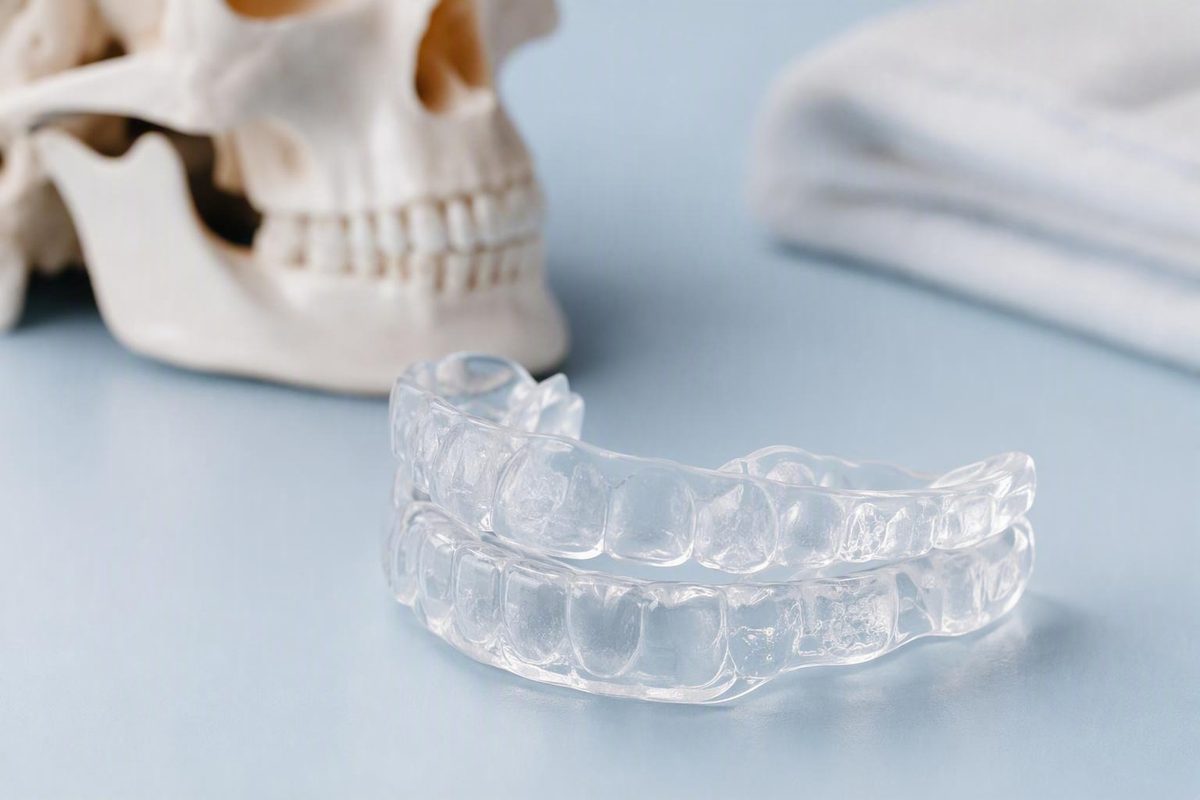
A TMJ mouth splint may protect teeth or help manage selected jaw symptoms, but “splint” does not describe one standard product. The diagnosis, treatment goal, tooth coverage, fit, bite adjustment, wear schedule, and follow-up all affect whether an appliance is appropriate—and whether it creates avoidable problems.
The safest approach is goal-first and reversible: establish what is being treated, select an appliance designed for that purpose, define how improvement will be measured, and agree in advance when to adjust or stop. Tooth protection, pain relief, and better jaw function are separate outcomes; success in one does not prove success in the others.
What a TMJ mouth splint is—and what it is not
TMJ stands for temporomandibular joint, which connects the lower jaw to the skull. TMD, or temporomandibular disorder, is the more precise term for a disorder involving that joint, the muscles used for chewing, or both. In everyday conversation, however, people often use “TMJ” to mean the disorder.
A TMJ mouth splint is generally a removable appliance covering several or all of the upper or lower teeth. Custom versions are commonly made from hard acrylic using a physical impression or digital scan. After fabrication, the appliance is fitted in the mouth and its contacts with the opposing teeth can be adjusted. Follow-up adjustments may also be necessary, according to The TMJ Association’s patient guide to splints.
You may hear names such as:
- Occlusal splint
- Bite splint
- Stabilization appliance
- Flat-plane splint
- Intraoral appliance
- Interocclusal appliance
- Night guard
- Repositioning splint
The name alone does not reveal exactly what an appliance covers or does. Two providers may use “bite splint” for different designs, while a retail product labeled “TMJ guard” may simply be a generic night guard. Ask about tooth coverage, material, contact pattern, intended jaw position, and treatment goal.
| Appliance | Primary purpose | What distinguishes it |
|---|---|---|
| Therapeutic TMD splint | Manage a diagnosed jaw-joint or chewing-muscle problem | Selected according to the diagnosis and adjusted to produce a particular contact pattern or jaw relationship |
| Bruxism night guard | Separate and protect teeth from direct grinding or clenching damage | Primarily functions as a barrier between the upper and lower teeth |
| Sports mouthguard | Protect teeth and oral tissues from impact | Designed for athletic injury protection, not TMD management or routine nighttime grinding |
These categories can overlap. A full-coverage stabilization splint may protect teeth while also being used in a plan for muscle or joint symptoms. That does not make every night guard a therapeutic TMD splint or make a sports mouthguard a suitable substitute.
It helps to distinguish three goals that are often blurred together:
- Protecting teeth and restorations. The appliance provides a surface that receives direct grinding or clenching contact instead of the opposing teeth.
- Reducing pain or muscle tenderness. A selected design may change how the teeth contact while it is worn, but pain relief is not guaranteed.
- Intentionally changing jaw position. A repositioning appliance guides the lower jaw forward or backward. It carries different risks from an ordinary protective guard and requires especially cautious monitoring.
Splints generally act while they are being worn. They should not be presented as devices that permanently “retrain,” realign, or cure the jaw. Temporary symptom relief also does not prove that permanent orthodontic, restorative, or bite-changing treatment is necessary; Kaiser Permanente similarly explains that night guards and TMJ splints do not permanently train the jaw or bite into a new position (night guards and TMJ splints).
Start with the diagnosis and treatment goal—not the product
Jaw pain is a symptom, not a diagnosis. Morning soreness, temple headaches, tooth wear, chewing difficulty, locking, and joint sounds may arise from different problems. They do not all call for the same appliance—or for an appliance at all.
For example:
- Worn, chipped, or cracked teeth may make tooth protection the immediate priority.
- Tender chewing muscles may lead to a plan focused on muscle pain and jaw habits.
- Pain around the joint may require assessment for a joint-related disorder.
- Limited opening or locking raises questions about jaw function and joint mechanics.
- Headaches may coexist with clenching without necessarily being caused by it.
- Clicking can occur with or without pain or restricted function.
The supplied evidence does not establish painless clicking alone as an automatic reason to use a splint. Its significance depends on the broader clinical picture, including pain, locking, movement changes, and functional limitations.
A clinician selecting an appliance may assess:
- Where and when symptoms occur
- Whether pain is in the joint, chewing muscles, teeth, or another area
- Jaw opening, side-to-side movement, and locking
- Muscle tenderness and joint findings
- Tooth wear, cracks, restorations, implants, or missing teeth
- How the upper and lower teeth meet
- Reported or observed grinding and clenching
- Previous appliances and symptom response
- Relevant dental, medical, sleep, and injury history
Examination and differential diagnosis should precede splint selection because a protective grinding guard is not automatically a treatment for joint pain, and a jaw-positioning device has different implications from a night guard. A peer-reviewed narrative review likewise emphasizes examination and differential diagnosis before splint therapy (review of occlusal splints).
A goal-first decision pathway
Before choosing a product, work through five steps:
- Identify the main problem. Is the priority tooth wear, morning muscle soreness, joint pain, restricted movement, or something else?
- Define a measurable goal. Examples include fewer painful mornings, easier chewing, less tooth damage, or improved comfortable opening.
- Choose a reversible option. When appropriate, begin with an intervention that can be stopped without permanently changing teeth or the bite.
- Set a reassessment point. Decide when the clinician will review symptoms, fit, tooth contacts, and jaw function.
- Agree on stopping rules. New or worsening pain, a changed bite, apparent tooth movement, or difficulty speaking, chewing, or swallowing should prompt stopping or pausing use and contacting the provider.
Record pain reduction separately from tooth protection. Likewise, visible wear on a guard demonstrates contact with the opposing teeth, but it does not establish that the underlying grinding has stopped.
Do not self-treat potentially urgent symptoms with a mouthguard. Jaw locking, trauma, or jaw pain accompanied by fever requires prompt clinical attention. Educational information cannot diagnose the cause of an individual reader’s pain, as Pain Catalog states in its terms and clinical-care notice.
The main splint designs and why their risks differ
Appliance design matters more than marketing language. In particular, ask whether the appliance covers all teeth in one arch, contacts only a few teeth, or deliberately guides the lower jaw into a different position.
| Appliance type | Tooth coverage | Intended goal | Professional oversight | Major limitations | Principal safety concerns |
|---|---|---|---|---|---|
| Full-coverage stabilization or flat-plane splint | Usually all teeth in one upper or lower arch | Protect teeth, provide an adjustable contact surface, distribute forces, or manage selected muscle and joint symptoms | Clinical selection, fitting, bite adjustment, and follow-up | May not stop clenching or grinding; pain relief varies | Uneven contacts, poor fit, symptom aggravation, or bite effects if not monitored |
| Anterior bite plane | Front teeth contact the device; back teeth are unsupported | Short-term alteration of tooth contact in selected cases | Close monitoring | Partial coverage makes it unsuitable for casual, indefinite use | Uncovered teeth may move, changing the bite |
| NTI-type anterior device | A few front teeth | Limit posterior tooth contact or alter clenching forces | Careful selection and review | Concentrates contact on a small number of teeth | Tooth stress, movement, and possible swallowing or aspiration |
| Repositioning splint | Varies, but guides the lower jaw | Move the jaw forward or backward while worn | Diagnosis and frequent monitoring | Not equivalent to a protective guard | Increased pain, joint problems, tooth movement, or permanent bite change with prolonged use |
| Retail boil-and-bite guard | Depends on product and molding | Usually temporary tooth protection | Preferably used after clinician approval | Fit and contact pattern are less precise | Poor retention, uneven pressure, incomplete coverage, symptom aggravation, or tooth movement |
| Stock or disposable guard | Generic and sometimes limited | Short-term barrier between teeth | Usually little routine oversight | Minimal customization and uncertain contact pattern | Looseness, bulk, poor function, uneven contact, or displacement |
| Temporary fluid-filled appliance | Product-specific | Manufacturer-marketed temporary or diagnostic use | Professional input is advisable | Independent evidence for TMD treatment is limited | Leakage, fit problems, inappropriate use, or delayed assessment |
Full-coverage stabilization splints
A stabilization splint—sometimes called a flat-plane or Michigan-style splint—normally covers all teeth in one arch. Its surface can be adjusted so the opposing teeth contact it in a planned way. Depending on the case, the goals may include protecting teeth, distributing contact forces, or managing selected muscle and joint symptoms.
Nevertheless, it does not guarantee safety. The appliance still requires appropriate retention, smooth surfaces, adjusted contacts, and periodic review.
A stabilization splint also does not necessarily prevent clenching or grinding.
Anterior bite planes and NTI-type devices
An anterior bite plane contacts the front teeth while keeping the back teeth apart. It may be used selectively and temporarily, but it should not be treated as an ordinary long-term guard. Continued partial coverage can permit uncovered teeth to move, potentially changing how the bite fits together.
An NTI-type appliance is a particularly small anterior device fitted over a few front teeth. Its limited contact pattern raises two documented concerns: forces may be concentrated on a small number of teeth, and the small appliance may present a swallowing or aspiration risk. The available evidence does not establish how frequently these complications occur.
Repositioning splints
A repositioning splint guides the lower jaw forward or backward rather than simply providing a flat protective surface.
A repositioning appliance is not just a night guard. Prolonged use can produce permanent bite changes and may increase pain or contribute to joint or dental problems.
Treatment intended to initiate permanent dental changes is fundamentally different from short-term symptom management. The supplied evidence does not support using improvement with a jaw-positioning appliance as proof that irreversible orthodontics, crowns, tooth reshaping, or permanent bite reconstruction is required. The TMJ Association recommends short-term, reversible care that does not permanently alter the bite and warns about prolonged repositioning and partial-coverage designs.
An excessively thick stabilization appliance may also interfere with speech, lip closure, or swallowing, according to the peer-reviewed review cited earlier.
Temporary fluid-filled appliances
Fluid-filled appliances are marketed by manufacturers as temporary rather than permanent devices. One manufacturer, for example, instructs users not to wear its product for more than eight hours in a 24-hour period, says it is not indicated for heavy bruxers or clenchers, and advises discontinuing it if irritation or another problem develops (manufacturer’s temporary splint instructions).
Those are manufacturer instructions, not independent evidence that the appliance relieves TMD pain, identifies its cause, or predicts the effects of permanent dental treatment.
Why posterior coverage matters in a retail guard
When considering a moldable retail guard, check whether it covers the back teeth fully. Full posterior coverage does not make a retail device suitable for every diagnosis, but it is an important feature when a clinician considers a temporary over-the-counter trial reasonable.
What the evidence says about pain relief and grinding
Some people report symptom improvement with a TMJ mouth splint, but results vary. Overall evidence for TMD pain relief is mixed and often of low or very low certainty.
The TMJ Association’s summary of a 2020 National Academy of Medicine report characterizes the effectiveness evidence as generally poor quality with mixed results. Its patient guidance therefore favors short-term appliances that do not permanently alter the bite rather than permanent jaw repositioning.
A 2022 narrative literature review did not find clear evidence that splints outperform physiotherapy and reported that long-term outcomes were comparable with other therapies. Its limitations matter: it was not a formal systematic review with a risk-of-bias assessment, included relevant literature regardless of study type or quality, and restricted its search to English-language publications.
These limitations do not prove that splints never help. They mean the evidence cannot support confident promises about who will improve, by how much, or which appliance is best for every TMD diagnosis.
Protection is not the same as stopping bruxism
A night guard may protect enamel, restorations, and opposing teeth from direct grinding contact. That can be useful even if the underlying clenching or grinding continues.
Think of this as two separate questions:
- Are the teeth better protected while the appliance is present?
- Has the behavior producing the clenching or grinding stopped?
The first may be true without the second. Wear marks can show that forceful contact is still occurring. An appliance should not be advertised as reliably eliminating bruxism merely because it creates a protective barrier.
Measure outcomes separately
The following outcomes are related but not interchangeable:
- Pain intensity and frequency
- Morning jaw soreness or stiffness
- Chewing ability
- Comfortable mouth opening
- Episodes of locking
- Clicking or popping
- Headache pattern
- Tooth wear or restoration damage
- Grinding frequency or muscle activity
- Sleep quality
- How the teeth meet after removal
If pain improves but chewing remains restricted, treatment has not improved every relevant outcome. If a guard prevents further tooth damage but jaw pain remains unchanged, it may still be accomplishing a protective goal—but it should not be reported as a successful treatment for TMD pain.
Similarly, less clicking does not prove that tooth wear is controlled, and a wider opening does not prove that nighttime grinding has stopped. Keeping these endpoints separate makes follow-up more useful and reduces the risk of continuing an ineffective appliance because one minor feature changed.
The practical conclusion is modest: a splint is one possible conservative management tool, not a guaranteed cure or a proven method for permanently correcting or retraining the jaw.
Custom splint versus over-the-counter night guard
Custom, boil-and-bite, stock, disposable, and temporary guards should not be treated as clinically equivalent. They differ in fit, coverage, material, adjustability, intended use, and access to follow-up.
What “custom” should involve
A dentist-made appliance may include:
- A clinical history and examination
- Assessment of the teeth, restorations, bite, muscles, joints, and jaw movement
- A physical impression or digital scan
- Laboratory or in-office fabrication
- An in-mouth fit check
- Adjustment of contacts with the opposing teeth
- Individual wear and care instructions
- Follow-up checks and further adjustment
This process permits more precise control than a generic guard. But “custom-made” does not guarantee effectiveness, comfort, or safety. An appliance can be custom fabricated yet still be poorly selected for the diagnosis, excessively thick, inadequately adjusted, or worn without adequate monitoring.
Retail options are not one category
Boil-and-bite guards are softened and molded at home. They offer more adaptation than stock guards but less precise control than an appliance adjusted in the mouth by a clinician.
Stock guards have a predetermined shape and size. They may be bulky, loose, or difficult to retain.
Disposable guards are designed for limited use and may have minimal customization. Convenience does not establish suitability for TMD.
Temporary specialty devices, including fluid-filled products, may have their own wear limits and exclusions. Follow product-specific instructions, but do not mistake manufacturer marketing for independent evidence of effectiveness.
Retail searches for “TMJ splint” commonly return products marketed mainly as night guards for grinding and clenching. The search label does not establish that an item is a therapeutic TMD splint. Ratings, review counts, purchase estimates, bestseller badges, testimonials, and unexplained “FDA-cleared” wording likewise do not demonstrate effectiveness for TMD; they are features of a retail listing rather than clinical outcome evidence.
When an over-the-counter trial may be reasonable
Kaiser Permanente describes a qualified approach in which a clinician may recommend a short trial of a properly fitted over-the-counter or dentist-made night guard before considering a specialized TMJ splint. For an approved retail trial, its guidance recommends:
- A moldable boil-and-bite design
- Full coverage of the molars or back teeth
- Avoiding bulky sports mouthguards
- Stopping and contacting the provider if symptoms worsen
The guidance discusses a trial of approximately four to six weeks, but this is not a universal schedule or guarantee of improvement.
Over-the-counter guards are not intended for indefinite use. An imprecisely fitted or unsuitable appliance may worsen symptoms or permit tooth movement.
A sports mouthguard is not a substitute. Its bulk, material, and impact-protection design are intended for athletic use rather than nighttime bruxism or treatment of a diagnosed TMD.
The appropriate conclusion is not that custom appliances are always superior or retail guards are always unsafe. Instead, the choice should match the goal and risk:
- A monitored custom design offers more control when the diagnosis or bite relationship is complex.
- A clinician-approved retail trial may be reasonable for selected people seeking temporary tooth separation or protection.
- Neither option guarantees pain relief.
- New or worsening symptoms require reassessment rather than switching to another self-selected product.
Side effects, bite changes, and when to stop
A mouth splint can worsen symptoms or alter the bite. Risk depends on appliance design, tooth coverage, fit, adjustment, duration, and the person’s dental condition. Systematic evidence about how often specific harms occur is limited, so complication reports should not be converted into unsupported numerical risk estimates.
Stop or pause use and contact the prescribing clinician if you notice:
- New or increasing jaw, facial, joint, or tooth pain
- Increased clenching or grinding
- Any new change in how the teeth meet after removing the splint
- Teeth that appear to have moved
- New gaps, contact changes, or teeth no longer meeting normally
- Gum irritation, cuts, pressure spots, or tooth injury
- Persistent difficulty speaking, closing the lips, chewing, or swallowing
- An appliance that no longer stays securely in place
- Cracks, sharp edges, rough areas, distortion, or other damage
NIH guidance quoted by The TMJ Association advises stopping use and seeing the provider if a splint causes or increases pain. The same guide warns that partial-coverage appliances can permit tooth movement, small anterior devices present concentrated-stress and swallowing or aspiration concerns, and repositioning designs can cause permanent bite changes with prolonged use.
Why bite changes can happen
When an appliance covers only part of the arch, covered and uncovered teeth experience different contact patterns. These conditions may allow tooth movement and change how the upper and lower teeth meet.
Repositioning appliances warrant especially cautious monitoring because they guide the lower jaw away from its usual position. With continued use, it becomes particularly important to confirm that the bite has not changed and that no persistent dental change is developing.
Pause or stop use and contact the provider; recurring, persistent, or worsening changes are particularly concerning.
Adaptation effects versus warning signs
Possible early adaptation effects include:
- Extra saliva
- A dry-mouth sensation
- Mild speech changes
- Awareness of pressure
- Transient discomfort
These effects have been reported with splint use, but persistence or worsening matters. An excessively thick appliance can impede speech, lip closure, or swallowing.
Small anterior devices require additional caution because they carry a possible swallowing or aspiration risk. The supplied evidence establishes that concern but does not support a detailed emergency symptom pathway or a numerical estimate of how often aspiration occurs.
Device problems can be reported through the FDA MedWatch system, but reporting does not replace contacting the treating provider.
Fitting, wear time, follow-up, and daily care
A well-managed custom splint is a process, not a one-time product handoff.
What to expect during fitting
The process commonly includes:
- Clinical assessment. The clinician reviews symptoms, treatment goals, teeth, restorations, muscles, joints, bite, and jaw movement.
- Impression or scan. A physical impression or digital scan records the teeth and arch.
- Fabrication. The appliance is made for the selected upper or lower arch.
- In-mouth fitting. Retention, comfort, edges, thickness, and tooth coverage are checked.
- Contact adjustment. The clinician assesses how the opposing teeth touch the appliance and makes necessary adjustments.
- Wear instructions. You receive a schedule based on the design and treatment purpose.
- Follow-up. Symptoms, fit, contacts, tooth position, appliance wear, and jaw function are reassessed.
There is also no universal wear schedule. Some appliances are intended mainly for sleep, while others may be prescribed for limited daytime use. Total duration differs by diagnosis, design, and response. The schedule should come from the clinician responsible for the appliance—not from a generic online timetable. Wearing it longer is not automatically better.
Set a review date
Before leaving the fitting appointment, know:
- When the first follow-up will occur
- Which symptoms or functions are expected to improve
- How much improvement would justify continuing
- What side effects require an earlier visit
- Whether the bite should remain unchanged after removal
- What happens if there is no meaningful benefit
At follow-up, review:
- Pain location, intensity, and timing
- Morning stiffness or soreness
- Chewing comfort
- Jaw opening and locking
- Relevant headache patterns
- Evidence of tooth or restoration protection
- Wear marks, cracks, and rough areas
- Retention and comfort
- Bite contacts after removal
- Any apparent tooth movement
Use a simple daily tracker
A short record is more useful than relying on memory. Use a notebook or phone note with one line per day:
| Measure | What to record |
|---|---|
| Pain | 0–10 rating, location, and approximate duration |
| Morning stiffness | None, mild, moderate, or severe |
| Chewing difficulty | Foods or movements that caused trouble |
| Headache | Whether it occurred and whether it matched the usual pattern |
| Wear time | Approximate hours and whether use was daytime or nighttime |
| Bite | Normal or changed |
| Other effects | Saliva, dryness, speech, tooth pressure, clenching, or appliance looseness |
This record does not diagnose the disorder. It provides a clearer basis for deciding whether the appliance is helping the agreed outcome.
Cleaning and storage
Unless device-specific instructions say otherwise:
- Rinse the appliance after use.
- Brush it gently with a soft brush.
- Avoid abrasive toothpaste, which may scratch the surface.
- Do not use hot water, which may deform some materials.
- Let the device dry as directed.
- Store it in its case away from pets, children, and heat.
- Clean the storage case regularly.
Kaiser Permanente advises rinsing after use, brushing lightly without toothpaste, drying the guard, and storing it in its case. Device-specific instructions from the clinician or manufacturer take priority because materials differ.
Request an inspection if the appliance becomes loose, cracked, rough, distorted, or uncomfortable.
How to make a safer treatment decision
A consultation should clarify more than the price and product name. Use this checklist before paying for an appliance or agreeing to continue treatment.
Printable consultation checklist
Diagnosis and goal
- [ ] What is my specific diagnosis?
- [ ] Is the problem mainly in the joint, chewing muscles, teeth, or a combination?
- [ ] Is the primary goal tooth protection, pain reduction, improved function, or something else?
- [ ] What examination findings support this appliance?
- [ ] Does painless clicking require treatment in my case, and why?
- [ ] How will we measure whether treatment is working?
Appliance design
- [ ] What is the exact name and design of the appliance?
- [ ] Will it be placed on the upper or lower teeth, and why?
- [ ] Does it cover every tooth in that arch?
- [ ] Which teeth will contact it?
- [ ] Is it hard, soft, hybrid, fluid-filled, or another material?
- [ ] Does it intentionally guide my lower jaw forward or backward?
- [ ] Is the plan intended to change my bite or tooth position permanently?
Trial and follow-up
- [ ] Is the treatment reversible?
- [ ] How long is the initial trial?
- [ ] How many hours per day should I wear it?
- [ ] When is the first reassessment?
- [ ] What improvement should be apparent by then?
- [ ] What findings would lead to adjustment?
- [ ] What findings would lead to discontinuation?
- [ ] How will you check for tooth movement and bite changes?
Risks
- [ ] Could this design aggravate pain?
- [ ] Could it increase clenching or grinding?
- [ ] Could it move teeth or change how my bite meets?
- [ ] Could its thickness interfere with speech, lip closure, or swallowing?
- [ ] If it is a small anterior device, what are its tooth-stress and swallowing risks?
- [ ] If it repositions my jaw, how will permanent bite change be avoided?
- [ ] Who should I contact if symptoms worsen between visits?
Alternatives
- [ ] Is observation or self-management reasonable?
- [ ] Would temporary diet or activity modification help?
- [ ] Are heat or cold appropriate for my symptoms?
- [ ] Is medication appropriate given my medical history?
- [ ] Could behavioral measures address daytime clenching or related habits?
- [ ] Is physical therapy a reasonable alternative or addition?
- [ ] Should I see an orofacial pain, dental, medical, sleep, or other specialist?
Cost and contract
- [ ] What is the total quoted fee?
- [ ] Are fitting appointments included?
- [ ] How many follow-ups and adjustments are included?
- [ ] Are repairs, remakes, or replacement covered?
- [ ] What happens financially if the appliance cannot be tolerated?
- [ ] Is insurance documentation or preauthorization assistance included?
- [ ] Are future costs tied to permanent dental treatment?
Fees vary by appliance, provider, location, and follow-up plan, and insurance may not cover treatment. The TMJ Association notes that splints and related appointments can be costly and may not be covered. Request a written explanation of what the price includes rather than comparing the appliance fee alone.
Compare the splint with conservative alternatives
Splints are often used alongside other measures rather than as stand-alone treatment. Depending on the diagnosis, a clinician may discuss:
- Temporary changes to food texture or chewing load
- Heat or cold
- Appropriate medication
- Awareness and reduction of daytime clenching
- Sleep- and stress-related behavioral measures
- Physical therapy
- Jaw-movement or relaxation strategies
- Management of contributing dental or medical conditions
The available narrative review does not clearly show that splints outperform physiotherapy. Burden, cost, reversibility, risk, access, and patient preference therefore matter—not only claims about what an appliance is supposed to do.
Be especially cautious if temporary symptom improvement is used to justify irreversible orthodontics, tooth reshaping, crowns, or permanent bite reconstruction. A short-term response while a device is in the mouth does not prove that permanent alteration will reproduce the benefit or avoid harm.
Before proceeding, answer four final questions:
- Is the diagnosis clear?
- Is the goal measurable?
- Is the treatment reversible?
- Is there a defined follow-up date and stopping rule?
A TMJ mouth splint can be reasonable when those answers are satisfactory, the design fits the diagnosed problem, and the fit and bite are checked. Judge success separately for tooth protection, pain, and jaw function. If pain, clenching, bite position, tooth position, or normal speaking, chewing, or swallowing worsens, stop or pause use and seek reassessment rather than wearing the appliance indefinitely.
Frequently asked questions
Can a TMJ mouth splint permanently change my bite?
Yes. Partial tooth coverage, poor adjustment, prolonged use, and repositioning designs can allow tooth movement or change how the teeth meet. Repositioning splints require particular caution because they deliberately guide the lower jaw forward or backward.
Pause or stop use and contact the provider for any new bite change, especially if teeth no longer meet normally, one tooth contacts first, or teeth appear to move. Do not keep wearing the appliance to “push through” the change. The TMJ Association advises that conservative splint use should be short term and should not cause permanent bite changes.
How long should I wear a TMJ splint each day?
There is no universal schedule. Wear time depends on the diagnosis, treatment goal, appliance design, selected arch, symptoms, and clinician’s instructions. Some appliances are used during sleep; others may be prescribed for limited daytime use.
Ask for the schedule and review date in writing. Do not extend wear time because improvement is slow or because more use seems likely to work faster. If instructions are unclear—or pain or the bite changes—pause use and contact the clinician.
Will a TMJ splint stop me from clenching or grinding?
Not necessarily. A splint may separate and protect the teeth, provide a different contact surface, or reduce selected symptoms while it is worn. Clenching or grinding can nevertheless continue against the appliance.
Evaluate tooth protection separately from the behavior itself. Wear on the device may indicate that forceful contact continues. If clenching increases, pain worsens, or the appliance is rapidly damaged, stop or pause use and contact the provider, as recommended by The TMJ Association.
Is an over-the-counter night guard safe to try for TMJ pain?
It may be reasonable for selected people after a clinician reviews the symptoms and approves a short trial. In that situation, Kaiser Permanente recommends a moldable boil-and-bite design with full coverage of the back teeth rather than a stock or sports mouthguard.
An over-the-counter guard is not a substitute for evaluation of locking, trauma, fever with jaw pain, persistent pain, or restricted function. Stop using it if it leaves teeth uncovered, increases pain or clenching, injures the gums or teeth, fails to stay in place, or changes how the bite meets. Retail guards should not be worn indefinitely without reassessment.
When should I stop using a splint or seek prompt care?
Stop or pause splint use and contact the provider for increasing pain, increased clenching or grinding, any new bite change, apparent tooth movement, tooth or gum injury, persistent speaking or swallowing difficulty, poor retention, or a cracked, distorted, or damaged appliance.
Seek prompt clinical attention rather than relying on a guard for jaw locking, facial or jaw trauma, or jaw pain accompanied by fever. Small anterior devices also carry a possible swallowing or aspiration risk, and device problems may be reported through FDA MedWatch after the treating provider has been contacted.