
How to Calm a Painful Jaw Flare Without Missing a More Serious Problem
Seek prompt clinical care for jaw locking, trauma, fever, swelling, drainage, severe or worsening pain, or trouble eating, drinking or speaking.
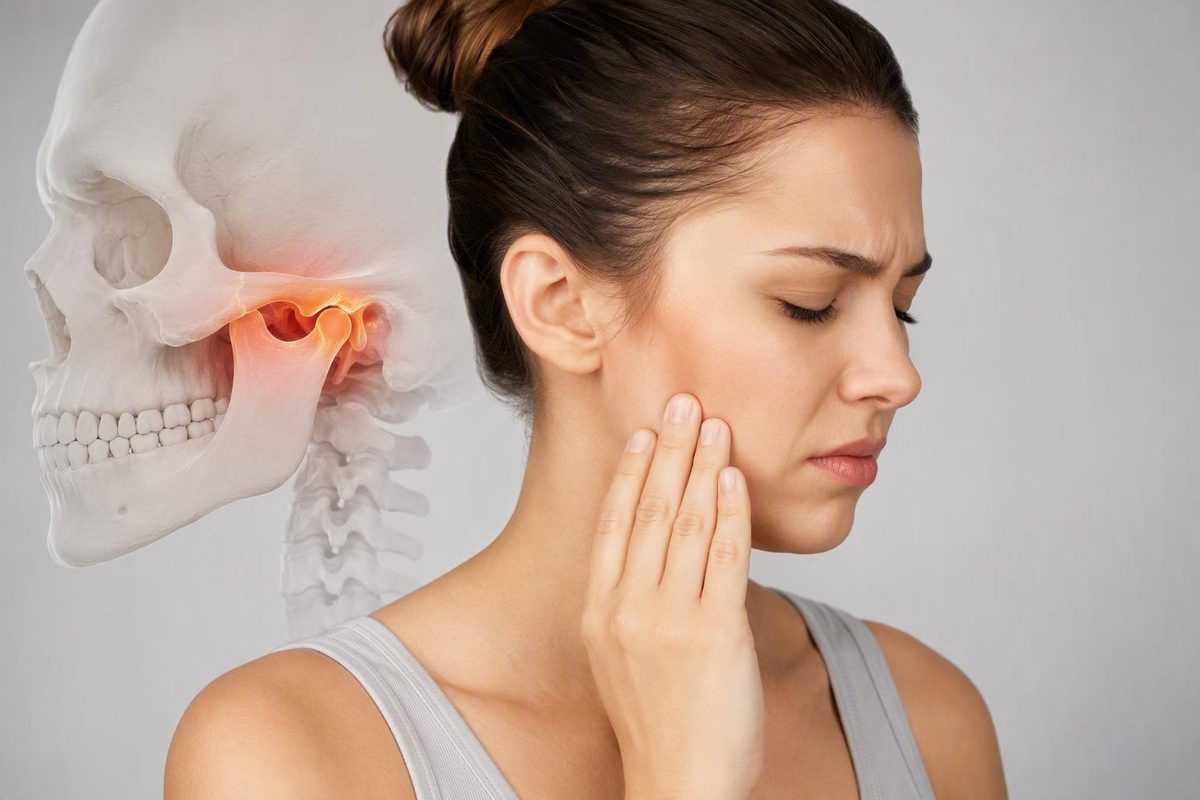
A sudden increase in jaw pain, tightness, clicking, or difficulty opening your mouth may feel like a TMJ flare up. That can be a useful description, but it is not a diagnosis. Tooth disease, infection, injury, arthritis, and other causes of facial pain can produce similar symptoms.
If symptoms are mild and there are no warning signs, start by temporarily reducing jaw strain: stop chewing gum, choose easy-to-chew foods, take small bites, avoid opening through pain, keep your teeth slightly apart at rest, and try protected warmth or cold. Do not force the jaw through stretches or keep extending home care when pain is worsening or function is declining.
What a “TMJ flare-up” means—and what it does not prove
TMJ stands for temporomandibular joint. One joint sits on each side of the jaw, connecting the lower jaw to the skull. These joints work with the surrounding muscles and other structures whenever you chew, speak, swallow, or yawn.
TMD, or temporomandibular disorders, is the broader term for disorders involving the jaw joints, the muscles that control jaw movement, or jaw movement itself.
“TMJ flare-up” is an informal phrase rather than a standardized diagnosis. It generally describes a temporary worsening or recurrence of symptoms that might be related to TMD. Saying that your jaw has “flared” describes what you are experiencing, but it does not establish which joint, muscle, dental, or medical condition is responsible.
Possible symptoms include:
- Pain or tenderness in the jaw, cheek, temple, or face
- Tight or fatigued jaw muscles
- Pain while chewing, speaking, or yawning
- Headache or neck pain
- Discomfort around the ear
- Restricted or uneven mouth opening
- Painful clicking, popping, or grating
- A jaw that catches or locks
- Difficulty fully opening or closing the mouth
Pain may remain near the joint in front of the ear, spread into the face or temple, or feel as though it comes from a tooth. Mayo Clinic’s overview of TMJ disorders includes jaw tenderness, painful chewing, facial or ear-area pain, headache, neck pain, tooth pain, and locking among possible symptoms.
Joint noise alone is not necessarily a problem. Clicking without pain or restricted movement often does not require treatment. A click accompanied by pain, catching, locking, or declining movement deserves more attention, particularly when the change is new or worsening.
Most importantly, a symptom list cannot confirm TMD. Tooth decay, a cracked tooth, an abscess, gum disease, arthritis, trauma, and other painful conditions may overlap with suspected TMD. Treat “TMJ flare-up” as a working description while you check for warning signs and monitor how well the jaw functions.
Triage first: warning signs that should not wait
Before trying home care, decide whether the problem is mild and stable or includes signs of infection, injury, severe progression, or loss of function.
| Level of care | Symptoms and circumstances |
|---|---|
| Prompt or same-day clinical care | Inability to open or close the jaw; locking that interferes with normal eating or speaking; recent facial or jaw trauma; fever with jaw pain; marked or rapidly increasing swelling; drainage, pus, or a bad taste; difficulty eating, drinking, or speaking; sudden severe pain; or pain that is constant or rapidly worsening. Pain Catalog’s published terms specifically advise prompt clinical attention for jaw locking, trauma, or jaw pain with fever. Dental guidance also identifies swelling, drainage, a bad taste, worsening pain, and limited chewing or opening as reasons for assessment. |
| Timely professional assessment | Recurring episodes; persistent restriction; repeated catching or locking; painful clicking; pain that disrupts sleep, work, or routine activities; symptoms that do not improve with reasonable short-term care; or uncertainty about whether pain is coming from a tooth. Mayo Clinic advises medical attention for constant or sudden jaw pain, pain during jaw movement, or inability to open or close the jaw completely. |
| Reasonable short-term home care | Mild or moderate discomfort without trauma, fever, swelling, drainage, rapid progression, locking, or impaired eating and drinking—and with the jaw still moving within a usable range. |
The appropriate destination depends on the symptoms:
-
A dentist is often the best starting point for localized tooth pain, temperature sensitivity, pain on biting, swelling near a tooth, drainage, or a bad taste.
-
Prompt trauma assessment is appropriate after a significant blow to the jaw or face, especially when movement or the bite has changed.
Urgency depends more on severity, progression, fever, swelling, trauma, and loss of function than on an arbitrary number of days. A mild ache that is stable and beginning to improve may be watched briefly. Severe or rapidly worsening pain, fever, trauma, swelling, drainage, or declining function should not be watched simply because it began recently.
Dental clues such as localized tooth pain, sensitivity to temperature, swelling, drainage, a bad taste, or pain on biting support obtaining dental assessment instead of assuming that the problem is TMD-related. These distinctions remain clues rather than diagnostic rules, as summarized in this comparison of TMJ and tooth pain.
Pain Catalog provides educational information, not individualized diagnosis or treatment. Home care should not delay appropriate clinical assessment when warning signs are present.
A practical plan for the first 24 to 48 hours
This is an organizational timeframe for initial self-care—not a required waiting period and not a promise that symptoms should resolve within 48 hours.
-
Reduce chewing demand. Temporarily choose foods that require little force or prolonged chewing. Cut food into small pieces and take small bites rather than opening wide.
-
Stop chewing gum. Gum creates repetitive jaw movement and may aggravate symptoms.
-
Pause hard, tough, sticky, and chewy foods. Avoid foods that predictably increase pain, including tough meat, nuts, bagels, chewy candy, and hard or crunchy snacks.
-
Avoid painful wide opening. Do not force a large bite, exaggerate a yawn, or repeatedly test how far your mouth can open. Loud singing or prolonged talking may also be worth limiting if it clearly aggravates symptoms.
-
Stop nail and pen biting. These repetitive habits add nonessential jaw activity.
-
Notice and release clenching. Check your jaw periodically while working, driving, exercising, or concentrating. At rest, allow the teeth to remain slightly apart rather than holding them together.
-
Use a relaxed resting posture. One commonly suggested posture is to place the tongue gently against the palate while keeping the jaw relaxed and the teeth apart. This is a relaxation cue, not a rigid position that should require effort.
-
Try protected heat or cold. Choose the compress according to the symptom pattern and your response. Protect the skin, keep the application brief, and stop if it makes the area feel worse.
-
Keep necessary movement comfortable. Ordinary low-effort movements for speaking, swallowing, and eating are different from forceful stretching. Move only within a comfortable range; do not push through sharp pain or a mechanical block.
-
Stop any technique that worsens symptoms. Discontinue a compress, massage, movement, or other self-care method if it causes sharp pain, swelling, locking, or increasing restriction.
Mayo Clinic’s treatment guidance supports temporarily reducing jaw overuse, avoiding clenching, using soft food and heat or ice, and resting with the teeth apart. It places diagnosis-specific stretching and massage under professional guidance rather than treating every exercise as appropriate for every person (Mayo Clinic’s diagnosis and treatment guidance).
Exercise selection can depend on the underlying problem, and movements used later in rehabilitation may be unsuitable during acute pain or locking.
These measures are temporary symptom-management strategies for a mild episode. Improvement after reducing jaw strain does not prove that TMD caused the pain, and no home technique guarantees a cure.
Heat or ice? Match the compress to the symptom pattern
Neither warmth nor cold is universally better. Both are commonly used for temporary comfort, and individual responses vary.
Consider a wrapped cold pack when:
- Pain feels sharp or distinctly joint-centered
- The area appears mildly swollen
- Warmth makes the pain feel worse
Consider moist warmth when:
- The discomfort is dull and steady
- The jaw or cheek muscles feel tight or fatigued
- The problem feels more muscular than swollen
- Gentle warmth feels soothing
Use a cloth between the skin and either type of compress. Apply it for roughly 10 to 20 minutes at a time. Never place ice or a frozen pack directly on the skin, and avoid prolonged exposure: excessive heat can burn, while prolonged cold can injure the skin. The TMJ Association’s self-care guidance similarly suggests moist warmth for a dull, steady ache and a wrapped cold pack for occasional sharp joint pain, with brief application and skin protection.
Stop if the compress worsens pain, causes concerning skin changes, or feels unsafe. If the first option is uncomfortable, remove it rather than trying to tolerate the sensation.
Neither a favorable response to heat nor relief from cold identifies the cause. It means only that the measure was temporarily soothing.
How to eat, rest, and move your jaw during a flare
A temporary lower-chew diet can reduce jaw workload. It is a short-term load-management strategy, not a proven long-term treatment and not a reason to remain on a restrictive diet indefinitely.
Easy-to-chew options may include:
- Oatmeal
- Yogurt
- Scrambled eggs
- Soup
- Pasta
- Mashed potatoes or other mashed foods
- Smoothies
- Soft cooked vegetables
- Soft fish
- Mashed beans
Choose foods that fit your nutritional needs and existing dietary restrictions. Cut food into small pieces, use small bites, and chew slowly. If eating something requires opening very wide or applying substantial force, pause it until movement is more comfortable.
Foods and habits commonly worth avoiding temporarily include:
- Chewing gum
- Nuts
- Tough meat
- Bagels or dense bread
- Chewy candy
- Hard or crunchy foods
- Sticky foods
- Large sandwiches, whole apples, or other foods requiring a wide bite
- Biting pens, pencils, or fingernails
Practice-authored dental guidance commonly gives oatmeal, yogurt, eggs, mashed foods, and smoothies as low-chew examples while advising a temporary pause in gum, nuts, tough meat, bagels, and chewy candy (Lakewood Complete Dentistry’s flare guidance). These are practical food examples, not a prescribed therapeutic diet.
As pain and comfortable opening improve, return gradually toward your normal varied diet. Start with foods that require modest chewing and leave the hardest or chewiest choices until later. No single transition schedule applies to everyone, so use comfort and function as guides.
Seek assessment if you cannot progress beyond very soft food, are losing the ability to chew, or cannot maintain adequate food and fluid intake.
Reducing jaw strain does not mean complete immobilization. Continue necessary movement gently, but avoid repeatedly provoking the painful area. Do not hold the jaw rigidly shut, repeatedly test its maximum opening, or force it through pain.
Forceful stretching, repeated wide opening, and resisted strengthening are different from relaxed, comfortable movement. Those interventions may require an examination and an individualized progression plan. A physical therapist familiar with jaw disorders may assess movement, muscle behavior, joint mechanics, and which exercises are appropriate. Hospital rehabilitation guidance likewise emphasizes individualized physical therapy while identifying locking, severe pain, and difficulty chewing or speaking as reasons for clinical evaluation (San Antonio Regional Hospital).
An over-the-counter pain reliever may provide short-term relief for some people, but this article cannot determine whether a particular product is appropriate for you. Follow the product label and do not exceed its instructions. If you are uncertain whether you can use it safely, ask a clinician or pharmacist before taking it. Nonprescription pain medicine is a temporary symptom-management option, not proof of TMD and not treatment for a dental infection, injury, or other underlying cause.
Common aggravators and a trigger diary for recurring flares
It is often impossible to identify one definitive trigger. Jaw symptoms may reflect several interacting factors, and the relative contribution of the joint, muscles, habits, stress, injury, or another health problem can vary.
Commonly reported possible aggravators include:
- Daytime jaw clenching
- Sleep-related grinding or clenching
- Stress accompanied by increased muscle tension
- Gum chewing
- Hard, sticky, tough, or chewy foods
- Repetitive chewing
- Wide yawning
- Nail or pen biting
- A blow or other injury to the jaw
- Prolonged mouth opening during dental treatment
- Repeatedly testing or stretching a painful jaw
These are possible contributors, not proof of causation. Morning soreness may raise the possibility of overnight clenching, but it does not prove that grinding occurred. Pain later in the day may follow accumulated jaw activity, yet it may have another explanation.
Claims involving hormones, dehydration, nutrient deficiencies, sleep position, posture, genetics, or bite alignment require particular caution. Their appearance on a list of possible contributors does not establish that any one of them caused an individual episode. Do not make major dietary, orthodontic, or other treatment decisions based only on a suspected association.
A diary can make recurring patterns easier to describe during a professional evaluation:
| What to record | Example details |
|---|---|
| Pain | Intensity, duration, and exact location: joint, cheek, temple, tooth, ear area, or neck |
| Movement | Comfortable opening, restriction, deviation, catching, or locking |
| Time pattern | Symptoms on waking, during meals, in the afternoon, or before bed |
| Food and chewing | Meal textures, large bites, gum, or prolonged chewing |
| Jaw habits | Clenching noticed while working, driving, exercising, or concentrating |
| Stress | Unusually tense events or sustained concentration |
| Sleep | Sleep quality and whether symptoms were present on waking |
| Recent events | Dental treatment, injury, illness, or prolonged talking or singing |
| Self-care response | What happened after reduced chewing, warmth, cold, or relaxation |
| Function | Whether eating, drinking, speaking, sleeping, and working remained possible |
Record what happened without assuming why. If pain repeatedly follows gum chewing or a particular activity, that association may guide a professional discussion, but it does not prove that the activity is the only cause.
Dental procedures may require prolonged mouth opening, and specialty dental guidance lists this as a possible aggravator alongside clenching, repetitive chewing, and wide opening (Restore TMJ & Sleep Therapy’s flare overview). If previous procedures have been followed by jaw symptoms, tell the dental team before future treatment. Ask whether clinically appropriate breaks or limits on prolonged opening are possible.
There is no universal prevention protocol for every patient or procedure, and necessary dental care should not be avoided without professional advice.
How long a flare may last—and how to judge whether it is improving
There is no universal deadline for a TMJ flare up. Reported durations range from a few days to several weeks, while broader TMD symptoms may sometimes persist longer. Duration varies with the cause, severity, recurrence pattern, jaw demands, and whether another dental or medical condition is present.
Flare-specific estimates often come from clinic articles rather than controlled studies, so treat them as rough descriptions rather than promises. One dental practice reports that symptoms may resolve within a few days or last a week or longer while emphasizing individual variation (Laurie Rosato DMD’s discussion of flare duration).
A more useful question than “Has it been too many days?” is “What direction is this going?”
Practical signs of improvement include:
- Less pain during routine speaking and chewing
- Easier or more symmetrical opening
- Less tenderness at rest
- Fewer episodes of catching or locking
- Less need to modify speech or facial movement
- Gradual tolerance of more ordinary food textures
- Less disruption of sleep or daily activities
- Stable eating and fluid intake
Concerning changes include:
- Rapidly escalating pain
- Increasing or spreading swelling
- New fever or systemic illness
- New drainage or a bad taste
- Decreasing mouth opening
- More frequent or prolonged locking
- Increasing difficulty chewing or speaking
- Inability to drink enough fluid
- Pain that becomes constant, severe, or increasingly localized to a tooth
Some mild or periodic symptoms improve with conservative care, but recurrence and severity vary. Seek professional evaluation when symptoms are severe, worsening, recurrent, persistent despite reasonable self-care, or disruptive to chewing, speaking, sleep, work, or hydration.
Do not wait for an expected recovery date when warning signs are present.
TMJ pain or something else? Dental and medical look-alikes
TMD-associated pain may be diffuse, aching, or radiating. It may change when you chew, talk, yawn, clench, or otherwise move the jaw. Muscle tightness, restricted opening, joint noise, or pain in front of the ear may occur at the same time.
A dental problem may be more likely when pain:
- Can be localized to a particular tooth
- Is triggered by hot, cold, or sweet foods
- Becomes sharp when biting or releasing a bite
- Occurs with gum or facial swelling
- Is accompanied by drainage, pus, or a bad taste
- Persists independently of jaw movement
These are clues, not diagnostic rules. Tooth and jaw structures have overlapping pain pathways, so TMD may feel like tooth pain, while dental disease may produce pain that spreads into the jaw, temple, or ear. A dentist-reviewed overview discusses both the typical patterns and the difficulty of distinguishing toothache from TMJ pain without an examination.
Fever, marked swelling, drainage, trauma, rapidly worsening pain, or sudden loss of jaw function should accelerate assessment. Arthritis and other painful conditions can also affect the jaw. Headaches and ear-area discomfort are not specific to TMD, so they should not automatically be attributed to the jaw when the overall symptom pattern suggests another cause.
Seek dental assessment when tooth decay, a cracked tooth, infection, gum disease, or pain on biting is suspected. Seek medical evaluation when fever, systemic symptoms, significant trauma, arthritis, or another broader cause may be involved. If the appropriate starting point is unclear, a dentist or primary care clinician can help direct further assessment.
For a category-by-category overview, Pain Catalog also lists an article about one-sided jaw pain and possible TMJ, dental, and sinus-related categories. That listing is additional context, not evidence that one-sided or two-sided pain can diagnose the cause.
What professional evaluation and treatment may involve
The most appropriate professional depends on the dominant symptoms:
- Dentist: suspected tooth disease, pain on biting, temperature sensitivity, gum swelling, dental trauma, or concerns about tooth wear and clenching
- Physician or primary care clinician: fever, systemic symptoms, arthritis or another medical condition, unexplained facial pain, or uncertainty about a broader cause
- Physical therapist familiar with jaw disorders: persistent movement limitation, muscle dysfunction, recurrent pain with jaw use, or need for an individualized movement plan
- Orofacial pain specialist: persistent, recurrent, complex, or diagnostically uncertain jaw and facial pain
Evaluation usually begins with a history. Expect questions about when symptoms started, whether they are progressing, which movements provoke them, whether the jaw catches or locks, and whether there was trauma or recent dental treatment.
A clinician may:
- Examine the teeth and gums
- Feel the jaw and surrounding muscles
- Listen for joint sounds
- Observe the path and range of opening
- Identify tender or painful areas
- Assess whether the bite or jaw movement has changed
Imaging is not automatically necessary for every suspected flare. Dental X-rays may be selected to assess the teeth and jaw. CT can provide detailed images of bone, while MRI may be used to examine the joint disk and surrounding soft tissues. These tests are chosen when the history and examination suggest a clinical need rather than performed routinely for every episode, as explained in Mayo Clinic’s TMJ evaluation guidance.
Treatment generally begins conservatively and should be tailored to the suspected source. Options may include:
- Education about reducing aggravating jaw habits
- Individualized physical therapy
- Professionally guided stretching or massage
- Gradual restoration of comfortable movement and chewing
- Behavior-focused care for clenching awareness
- Stress-focused support when tension is an aggravating factor
- Clinician-assessed oral appliances in selected cases
- Treatment of an identified dental or medical condition
Persistent symptoms sometimes require more than one approach. This does not mean every available treatment should be tried at once. Joint, muscle, behavioral, dental, and medical factors may need to be evaluated and addressed separately.
Do not assume that an over-the-counter mouthguard, bite correction, orthodontic treatment, Botox, an injection, or a procedure is a routine solution for an acute flare. Injections and surgical procedures are specialist-directed options for selected cases, and surgery is generally reserved for persistent problems after appropriate conservative measures have failed.
How long does a TMJ flare-up usually last?
A mild episode may improve over several days, while another may last for weeks. There is no reliable recovery deadline that applies to everyone.
Monitor direction rather than the calendar alone. Routine movement should become less painful, opening should become easier rather than harder, locking should decrease, and ordinary food textures should gradually become more manageable. Seek assessment sooner if pain is severe or worsening, function is declining, or fever, swelling, drainage, trauma, or difficulty eating and drinking occurs.
Is heat or ice better for a TMJ flare-up?
Neither is universally better. A wrapped cold pack is a reasonable trial for sharper joint pain or swelling. Moist warmth may feel better for a dull, steady muscular ache or tightness.
Protect the skin and limit use to roughly 10 to 20 minutes at a time. Never place ice directly on the skin. Stop if either method increases pain, affects the skin, or feels unsafe.
Is jaw clicking concerning if it does not hurt?
Painless clicking without restricted movement often does not require treatment. Clicking becomes more concerning when it is painful, newly associated with catching or locking, or accompanied by decreasing mouth opening or other functional loss. Mayo Clinic likewise distinguishes painless, unrestricted clicking from joint noise associated with pain or limited movement.
Do not repeatedly open the jaw to test the sound. Arrange an assessment if the click becomes painful or jaw function changes.
Can I take an over-the-counter pain reliever for TMJ pain?
Some people obtain short-term relief from nonprescription pain medicine, but no single product is appropriate for everyone. Follow the product label and do not exceed its instructions.
If you are uncertain whether a medicine is suitable for you, ask a clinician or pharmacist before using it. Medication may temporarily reduce discomfort, but it does not confirm TMD or treat a dental infection, trauma, or another underlying cause.
Should I see a dentist, physician, physical therapist, or TMJ specialist?
Start with the professional whose scope best matches your symptoms:
- See a dentist for localized tooth pain, sensitivity, pain on biting, swelling near a tooth, drainage, a bad taste, or dental trauma.
-
See a physician for fever, systemic illness, significant injury, unexplained facial pain, or concern about arthritis or another medical cause.
-
See an orofacial pain specialist for recurrent, persistent, complex, or difficult-to-diagnose symptoms.
Severe pain, jaw locking, or difficulty eating, drinking, or speaking warrants prompt assessment rather than waiting for a routine rehabilitation appointment.
If there are no warning signs, reduce jaw strain, use easy-to-chew foods temporarily, try protected cold for sharper pain or warmth for muscular tightness, and keep movement gentle and pain-free. Escalate promptly for locking, trauma, fever, swelling, drainage, severe or worsening pain, or impaired eating, drinking, or speaking. If symptoms recur or fail to improve, bring your trigger diary to a dentist, physician, physical therapist, or orofacial pain specialist so the underlying cause and appropriate treatment can be assessed.