
When Jaw Pain Should Settle—and When It Needs a Closer Look
Pain that is steadily decreasing while chewing and mouth opening become easier is more reassuring than pain that is escalating, returning, or reducing jaw function.
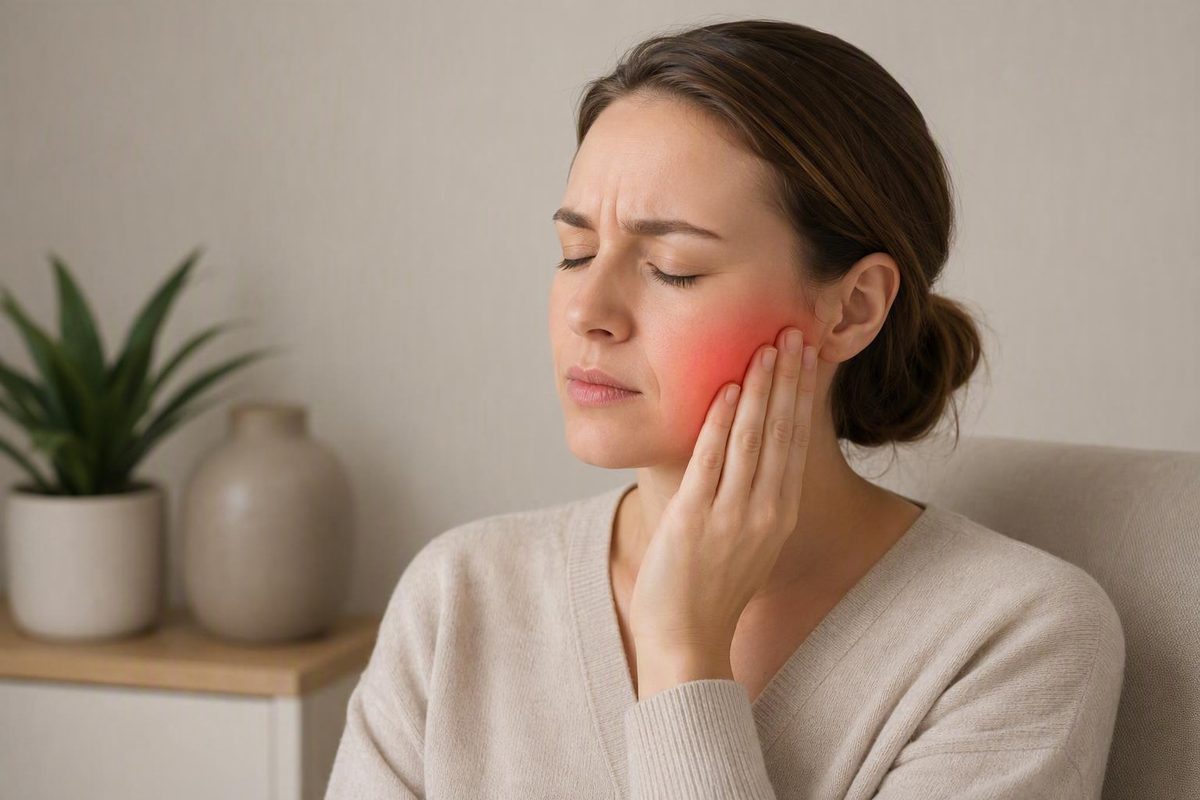
The short answer: TMJ pain can last days, weeks, or longer
A mild TMJ-related pain flare may improve within a few days to a few weeks. This is a practical, practice-based range—not a research-established average or a deadline for recovery. Some episodes last longer or return after appearing to resolve. An oral-surgery practice describes the days-to-weeks range while acknowledging longer-lasting cases.
A useful way to think about the timeline is:
- A short flare: Pain, tenderness, or stiffness lasts several days to a few weeks and gradually improves.
- Intermittent symptoms: Discomfort comes and goes over weeks or months, sometimes with symptom-free intervals.
- Persistent or recurrent pain: Symptoms fail to improve, repeatedly return, worsen, or begin limiting chewing and jaw movement.
These patterns overlap and cannot predict the day one person’s pain will stop. A short episode can return, while symptoms that continue for several weeks may still improve with conservative care.
The National Institute of Dental and Craniofacial Research says many temporomandibular disorders last only a short time and resolve on their own, although some become chronic or long-lasting. Mayo Clinic likewise says symptoms sometimes go away without treatment. Neither provides a standard recovery time in days or weeks. The NIDCR overview explains the variable course of temporomandibular disorders.
Mild or periodic symptoms can also improve over a broader period. The TMJ Association describes many relatively mild or intermittent cases as improving within weeks or months. That does not necessarily conflict with the shorter flare estimate: one range may describe an individual episode, while the other reflects an intermittent pattern over time. The TMJ Association discusses mild or periodic symptoms improving over weeks or months.
The trend matters more than an arbitrary date. Pain that is steadily decreasing while chewing and mouth opening become easier is more reassuring than pain that is escalating, repeatedly returning, or reducing jaw function. Significant pain or loss of function may justify care early, even if the symptoms began recently.
Why there is no single TMJ recovery timeline
“TMJ” and “TMD” are often used interchangeably, but they have different technical meanings. The temporomandibular joint, or TMJ, is the joint in front of each ear that connects the lower jaw to the skull. Temporomandibular disorders, or TMDs, are conditions affecting that joint, the chewing muscles, or related structures.
TMD is not one disease with one predictable healing period. It is an umbrella category covering more than 30 conditions, including muscle-related pain, joint problems, injuries, inflammatory disorders, and movement problems. These conditions can produce similar symptoms while following different courses. The NIDCR describes the breadth of conditions included under TMD.
It also helps to separate the duration of a painful flare from the course of the underlying problem. Jaw muscles may settle after a period of lighter use, for example, but symptoms can return if clenching, grinding, or repeated overuse continues. The end of one flare does not prove that every contributing factor has disappeared.
Possible contributors include:
- Conscious or unconscious jaw clenching
- Nighttime tooth grinding
- Stress-related muscle tension
- Prolonged gum chewing or heavy chewing
- Injury to the jaw or joint
- Osteoarthritis
- Rheumatoid arthritis
Penn Medicine identifies clenching or grinding, stress, jaw injury, osteoarthritis, and rheumatoid arthritis among possible contributors. It also notes that TMD can involve pain or functional problems in either the joint or the surrounding muscles. Penn Medicine outlines these possible contributors.
These possibilities should not be turned into cause-specific recovery promises. The available guidance does not establish that clenching-related pain will resolve within one fixed period or that arthritis-related symptoms will follow a particular schedule.
Location alone is also unreliable. Pain around the jaw joint, ear, temple, cheek, or chewing muscles may fit a TMD pattern, but it can overlap with dental, medical, inflammatory, or headache conditions. A clinician may need to consider the history, symptoms, examination findings, and—when appropriate—imaging. Duration and location alone cannot confirm the diagnosis.
A practical way to track whether the pain is improving
Instead of counting days alone, track pain and function together. A brief daily record can show whether the overall pattern is improving and provide useful information if an assessment becomes necessary.
Once a day, note:
- Pain trend: Is the pain lower, unchanged, or higher than yesterday?
- Mouth opening: Can you open and close your mouth normally for you?
- Chewing tolerance: Are easy-to-chew foods becoming more comfortable?
- Stiffness: Is morning or end-of-day stiffness improving?
- Locking or catching: Has the jaw become stuck or temporarily difficult to move?
- Joint sounds: Is clicking or popping painless, or does it occur with pain or restricted movement?
- Daily impact: Is the problem interfering with eating, talking, sleeping, or routine activities?
If you use a pain scale, use it consistently without becoming preoccupied with small fluctuations. A lower pain rating accompanied by easier movement and better chewing is more meaningful than one unusually good or bad hour.
It may also help to record what happened before the symptoms appeared or intensified. Possible triggers include:
- A stressful day or period of sustained concentration
- Waking with jaw tightness
- Noticing that the jaw is braced or the teeth are held together during the day
- Gum chewing
- Hard, crunchy, or chewy food
- Taking unusually large bites
- Nail biting
- Prolonged talking or heavy chewing
- Opening unusually wide during a yawn
Dental-practice guidance identifies stress, grinding, excessive chewing, and wide yawning as possible flare triggers. It also uses “flare-up” to describe symptoms returning after a symptom-free interval. These observations may help identify patterns, but they do not establish the diagnosis or underlying cause. This dental-practice guide discusses recurring flares and commonly reported triggers.
A diary can guide low-risk changes. If symptoms repeatedly intensify after chewing gum, temporarily removing gum reduces unnecessary jaw work. If pain is worse during stressful periods, checking for conscious clenching may be useful. If morning tightness repeatedly occurs, mention it during a dental or medical assessment rather than assuming grinding is definitely responsible.
Arrange an assessment if the pattern moves in the opposite direction, repeatedly returns after brief improvement, or increasingly interferes with eating and normal jaw use.
What to do while a mild flare settles
For mild symptoms that are improving and do not include warning signs, begin with measures that are conservative and reversible. The goal is to reduce irritation and make normal activity more comfortable—not to force the jaw back to normal or promise a cure.
Temporarily choose soft or easy-to-chew foods. Options may include eggs, yogurt, soups, soft pasta, cooked vegetables, and fish. Maintain a varied diet where possible rather than restricting food unnecessarily for a prolonged period. Cutting food into smaller pieces and taking smaller bites can reduce chewing effort and wide mouth opening.
While symptoms are active:
- Do not chew gum.
- Avoid nail biting and chewing pens or similar objects.
- Limit very hard, crunchy, sticky, or chewy foods.
- Avoid oversized bites and unusually wide opening.
- Notice and release conscious clenching.
- Reduce repetitive jaw activity that clearly aggravates symptoms.
Jaw rest does not require keeping the mouth completely motionless. Normal, comfortable movement is different from repeatedly testing how far the mouth can open or continuing an activity that consistently increases pain.
Heat or cold may make symptoms feel better, but neither is guaranteed to shorten the episode or address its cause. Moist heat may feel helpful for a dull, steady ache, while a wrapped cold pack may be more comfortable for occasional sharp joint pain. The most suitable option varies with the symptom pattern and individual response.
For cold, wrap the pack in a thin cloth, never place it directly against the skin, and do not use it for longer than 20 minutes at a time because prolonged exposure can injure the skin. For heat, use a comfortably warm—not scalding—compress. Stop either approach if it increases pain, irritates the skin, or makes the jaw feel worse. The TMJ Association provides heat, cold, and food-modification precautions.
Over-the-counter pain relievers or nonsteroidal anti-inflammatory drugs may ease symptoms for some people, but they are not appropriate for everyone. Follow the product label and ask a clinician or pharmacist whether a medicine is suitable if you are unsure. Mayo Clinic includes nonprescription pain relievers and anti-inflammatory medicines among nonsurgical options while emphasizing that treatment depends on the individual presentation. Mayo Clinic summarizes medication, self-care, therapy, and procedural options.
These measures manage symptoms; they do not confirm or eliminate the cause. A compress may reduce discomfort without resolving grinding, arthritis, injury, or another condition. Likewise, improvement after switching to softer food does not prove that overuse was the only problem.
Jaw exercises during a flare: gentle does not mean push through pain
Relaxation and gentle movement may be considered during mild discomfort, but “gentle” does not mean forcing the mouth farther open or continuing through increasing pain.
A straightforward safety rule is: stop an exercise if it increases pain. Do not treat discomfort as evidence that an exercise is working, and do not repeatedly test a restricted or painful movement.
During an active flare, relaxation may be more appropriate than resistance or strengthening. That can mean noticing and releasing daytime clenching or using only comfortable, unforced movement. It does not require a complicated exercise routine.
Strengthening exercises are different because some involve opening or closing the mouth against resistance. They should not be treated as universal first aid for an acutely painful jaw. Colgate’s patient guidance suggests waiting until the initial ache has subsided before attempting strengthening and advises stopping exercises immediately if they cause pain. Its exercise guide distinguishes gentle activity from later strengthening.
Avoid self-directed strengthening when:
- Pain is severe.
-
Movement clearly makes symptoms worse.
-
Mouth opening has become markedly restricted.
-
You do not know whether the movement is appropriate for your condition.
Penn Medicine similarly advises against jaw exercises during severe pain or when they worsen symptoms. If initial self-management is not helping, a clinician may recommend individualized exercises or physical therapy based on the examination. Penn Medicine discusses exercise precautions and when physical therapy may be appropriate.
Muscle pain, joint inflammation, injury, and movement disorders are not interchangeable, and the evidence does not establish one standard physical-therapy success rate or recovery timeline.
When persistent or recurring pain should be evaluated
There is no authoritative universal cutoff at which TMJ-related pain formally changes from “temporary” to “chronic.” A rigid one-week rule is not appropriate for every case, but neither is waiting indefinitely while symptoms worsen or eating becomes difficult.
Arrange a routine dental or medical assessment when pain:
- Is not steadily improving
- Keeps returning after symptom-free periods
- Becomes more intense or frequent
- Interferes with chewing, talking, or normal jaw movement
- Persists despite reasonable conservative measures
- Occurs with restricted mouth opening
- Is accompanied by painful clicking or popping
- Continues alongside facial pain, headaches, or ear-area symptoms
Several weeks or months without improvement is a reasonable routine-care prompt for mild, stable symptoms, but it is not a mandatory waiting period. Significant pain, worsening movement, or disruption of eating can justify earlier care.
Some dental practices use shorter thresholds. One practice, for example, recommends contacting a dentist when symptoms continue for more than one week despite home measures. That is a cautious practice recommendation, not a universal clinical standard.
A clinician may observe jaw movement, listen or feel for joint sounds, and examine painful areas. Dental X-rays, CT, MRI, or other testing may be selected when the history and examination suggest that imaging could clarify the problem; it is not automatically required for every case. Mayo Clinic describes examination of jaw movement and the selective use of imaging.
You do not need to identify the ideal specialist before seeking help. Depending on your symptoms and access, an appropriate first contact may be a dentist, primary care clinician, or another professional familiar with jaw and facial pain. That clinician can consider common dental and medical possibilities and arrange referral if needed.
Persistent facial or jaw pain should not be self-diagnosed solely as TMD. Difficulty chewing, inability to open or close normally, continuing ear-area symptoms, and painful joint sounds can occur with TMD, but they may also require assessment for other causes.
Bring your symptom notes if you have kept them. A clear description of the pain trend, jaw function, possible triggers, and self-care measures tried is usually more informative than saying only that the symptoms have lasted “a while.”
Warning signs that should not wait for an arbitrary deadline
The number of days since pain began is not the main consideration when severe symptoms or loss of function develops.
Seek prompt clinical advice for:
- A jaw that locks open or closed
- Inability to open or close the mouth normally
- Marked or rapidly increasing restriction
- Significant trauma to the face or jaw
- Jaw pain accompanied by fever
- Rapidly worsening or severe pain
- Substantial difficulty chewing or eating
- Painful joint sounds accompanied by locking or restricted movement
Jaw locking, major restriction, and inability to use the jaw normally should not be managed indefinitely at home. NIDCR identifies locking, limited movement, stiffness, pain, and painful joint sounds among TMD symptoms that may require clinical assessment.
The appropriate setting depends on the full situation. A mild but persistent chewing problem may be suitable for a routine appointment, while significant trauma, fever with illness, or inability to use the jaw normally calls for faster evaluation. If you are uncertain about urgency, contact a local clinician or urgent-care service that can assess the circumstances directly.
Joint noise requires context. Painless clicking or popping without restricted movement is common and generally does not require treatment. A sound alone does not prove that the joint is damaged. Clicking that is painful, newly associated with reduced opening, or accompanied by catching or locking deserves evaluation.
Do not assume that every case of jaw, facial, temple, or ear-area pain is TMD. Overlap with other conditions is one reason persistent symptoms and functional problems should be assessed rather than managed indefinitely at home.
This article provides general education. It cannot diagnose an individual episode or determine the appropriate level of care for a particular person.
If self-care is not enough, start with reversible treatment
When symptoms do not resolve, a clinician may combine treatments according to the suspected cause, examination findings, severity, and effect on daily life. More treatment is not automatically better, and an invasive option is not necessarily the next step after home care.
Conservative options may include:
- Clinician-guided changes to food texture and jaw use
- Medication selected for the individual
- Physical therapy
- Strategies for reducing clenching and other jaw habits
- Stress-management or behavioral support when tension contributes
- A selected oral appliance when appropriate
A mouth guard or splint may help selected people, particularly when a clinician has identified a reason to consider one. It should not be presented as a guaranteed solution for every type of jaw pain.
Evidence remains limited or uncertain for many TMD treatments, including various medicines, intraoral appliances, acupuncture, botulinum toxin, injections, and invasive procedures. Limited evidence does not mean that every option is ineffective; it means that benefits, risks, and appropriate candidates may not be firmly established.
Procedures such as injections, arthrocentesis, arthroscopy, or open-joint surgery may be considered in selected cases after qualified evaluation. They are not routine next steps for an ordinary mild flare. Before proceeding, the reason for the treatment, alternatives, expected benefit, uncertainties, and possible complications should be clear.
Open-joint surgery permanently changes the joint and carries greater risk than less invasive options. It should not be framed as a predictable solution simply because pain has lasted a long time.
The guiding principle is to match treatment to the problem while preserving future options. When symptoms are mild and improving, reversible self-care may be enough. When they persist or recur, professional assessment can help determine whether continued conservative management, therapy, medication, an oral appliance, or specialized evaluation is appropriate.
Can TMJ pain go away on its own?
Yes. Many mild TMD symptoms resolve without treatment, but there is no guaranteed schedule.
Improvement is more reassuring when pain is steadily decreasing and jaw movement and chewing are returning to normal. Symptoms that persist, repeatedly return, worsen, or reduce jaw function should be evaluated.
Is TMJ pain lasting several weeks normal?
It can fall within the variable course of a mild or intermittent TMD presentation, but “normal” does not mean “always safe to ignore.”
Mild pain that is improving without interfering with jaw use may continue to settle. Unchanged, worsening, recurrent, or function-limiting pain is a reason to arrange an assessment.
Why does my TMJ pain keep coming back?
A contributing factor may remain after each flare subsides. Possibilities include clenching, grinding, stress-related muscle tension, heavy chewing, wide opening, injury, or a joint condition.
Recurrence does not identify the cause by itself. Track when symptoms occur and whether function changes, and seek an assessment if episodes continue returning.
Does clicking or popping mean my jaw joint is damaged?
Not necessarily. Painless clicking or popping without restricted movement is common and generally does not require treatment. Noise alone does not prove damage.
Arrange an assessment when the sound is painful, appears with reduced movement, or is accompanied by catching or locking.
Should I use heat or ice for TMJ pain?
Either may provide temporary relief. Moist heat may feel better for a dull, steady ache, while a wrapped cold pack may be more comfortable for occasional sharp joint pain. Neither is guaranteed to address the underlying cause.
Use comfortably warm heat, never place cold directly against the skin, and stop if either approach worsens the symptoms.
The practical decision rule is simple: use conservative, reversible care while symptoms are mild and improving; arrange an evaluation when pain persists, returns, worsens, or limits jaw function; and seek prompt clinical attention for locking, trauma, fever, or major difficulty moving or using the jaw.