
When Jaw Pain May Settle—and When Waiting Is the Wrong Move
Mild symptoms can improve without treatment. Arrange an evaluation after several weeks without progress, or sooner if eating or movement is affected.
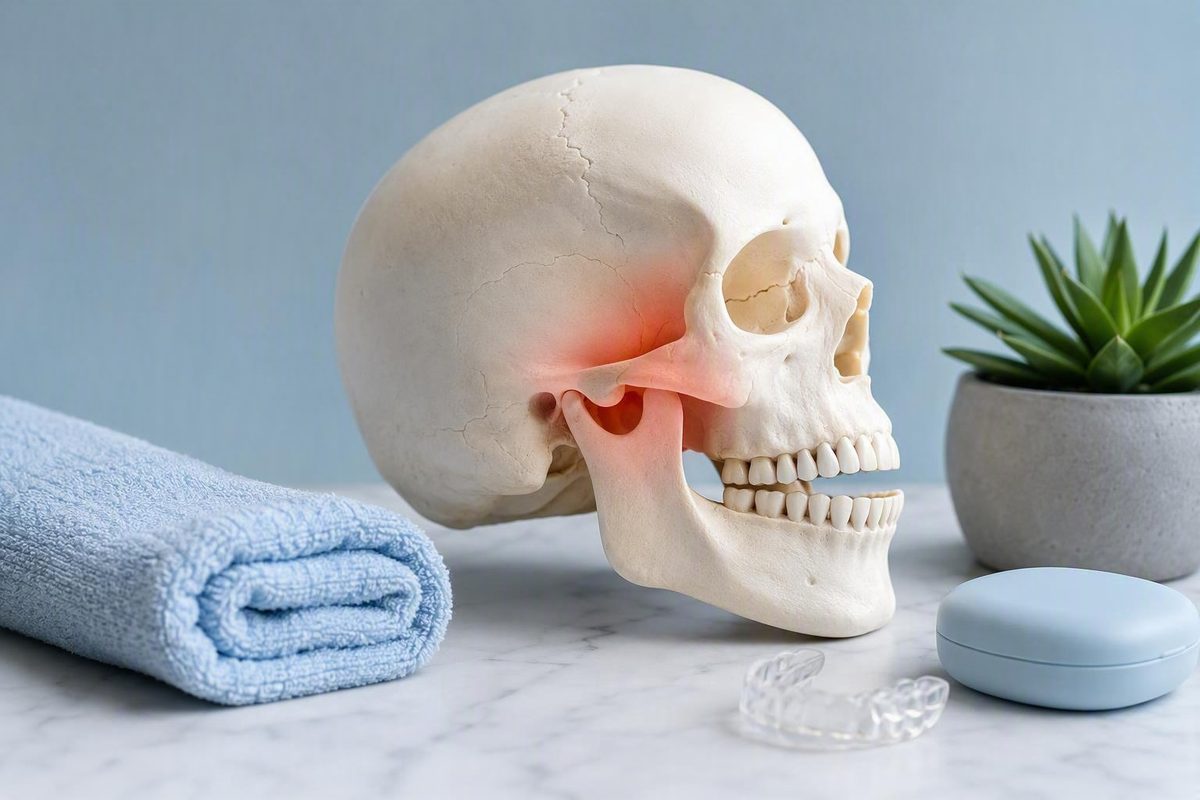
The short answer: TMJ symptoms sometimes improve on their own
Yes—many mild, short-lived, or periodic temporomandibular disorder symptoms improve without formal treatment. But improvement is not guaranteed. Some symptoms persist, repeatedly return, or become a longer-term problem requiring professional care.
A terminology note helps:
- TMJ means the temporomandibular joint—the jaw joint in front of each ear.
- TMD means temporomandibular disorders, the broader group of conditions affecting those joints and the muscles that control jaw movement.
People commonly say they “have TMJ,” but everyone has temporomandibular joints. TMD is the more accurate term for pain or dysfunction involving them.
TMD is not one uniform condition. It includes more than 30 joint- and muscle-related disorders. Many cases last only a short time and resolve without treatment, while others become chronic or long-lasting, according to the National Institute of Dental and Craniofacial Research’s TMD overview.
“Going away” can also mean several different things. Symptom improvement does not prove that the underlying problem has been permanently cured or guarantee that discomfort will never return.
A short period of watchful waiting is most reasonable when:
- Pain or tenderness is mild.
- Eating remains manageable.
- The mouth opens and closes almost normally.
- The jaw is not locking.
- Symptoms are becoming less frequent or less intense.
- There was no significant injury.
- Pain is not severe or accompanied by fever.
Waiting should not mean ignoring the problem. It should be an active period of reducing jaw strain, monitoring function, and checking whether the overall trend is improving.
If symptoms do not settle independently, evaluation and appropriate treatment can still help. Many people obtain pain relief and regain normal jaw movement with suitable care, although the right approach depends on the condition and its severity.
How long can TMJ symptoms take to settle?
There is no universal TMD recovery deadline. The term covers many different joint and muscle conditions, so one person’s course may not resemble another’s.
Some people notice meaningful improvement within one or two weeks. Others need ongoing care rather than a brief recovery period. Recovery varies with factors such as the cause and severity of the problem, according to the Cleveland Clinic’s patient guide to TMD.
Relatively mild or periodic symptoms may instead improve over several weeks or months with simple home care. The TMJ Association advises discussing symptoms with a clinician when they do not improve during that period so that other possible causes can be considered in its TMD self-care guidance.
A practical timeline is more useful than choosing one deadline for everyone:
During the first several days: If symptoms are mild and jaw function remains largely normal, reduce avoidable strain. Choose easier-to-chew foods, stop gum chewing, avoid extreme mouth opening, and notice clenching. Look for an early change in the right direction rather than expecting complete recovery immediately.
Over the next one or two weeks: Check whether pain and tenderness are becoming less intense, flare-ups are becoming shorter, and eating and opening the mouth are getting easier. A steady improvement supports continuing conservative care.
After several weeks: Arrange an evaluation if there has been no meaningful improvement, symptoms keep returning, or chewing and jaw movement are becoming more difficult.
You do not need to wait several weeks if function is declining. Increasing difficulty eating, decreasing mouth opening, severe pain, or new locking matters more than the calendar.
Several variables can affect the timeline:
- The specific joint or muscle disorder involved
- Symptom severity
- How long symptoms were present before self-care began
- A recent injury or another suspected contributor
- Repeated clenching, gum chewing, or wide opening
- Locking or restricted movement
- The extent to which pain affects chewing and everyday activity
It is also important to distinguish steady improvement from temporary disappearance. Pain that vanishes for a few days and repeatedly returns represents a recurring symptom pattern, not necessarily complete recovery.
Four symptom paths: when waiting is reasonable and when it is not
The safest response depends mainly on pain, function, and trajectory. These four paths can help organize what you are experiencing, although they cannot identify the cause by themselves.
Path 1: Painless clicking or popping
An occasional click or pop without pain, locking, or restricted movement is common and generally does not require treatment. Joint noise alone does not establish that the jaw is damaged, as explained in the NIDCR guidance cited above.
Monitor the sound rather than repeatedly testing it. Pay more attention if it becomes painful or is joined by stiffness, locking, reduced opening, or difficulty chewing.
Path 2: Mild pain with normal movement
Monitoring and reversible self-care may be reasonable when soreness is mild, eating remains manageable, and the mouth opens and closes normally. The trend should be stable or improving—not progressively worse.
That pattern may suggest a useful habit to change, but it does not prove a diagnosis or rule out another cause.
Continue to monitor whether:
- Pain is becoming less frequent or intense.
- Jaw movement remains comfortable and unrestricted.
- Normal eating is returning.
- No locking or substantial loss of function develops.
- Home care is helping rather than masking worsening symptoms.
Path 3: Persistent or recurring symptoms
Arrange an evaluation when pain, stiffness, painful joint noise, headaches, or chewing discomfort continues for several weeks without meaningful improvement. The same applies when symptoms repeatedly disappear and return.
It does not automatically mean severe joint damage, but repeated pain or loss of function should not be dismissed simply because each episode eventually settles.
An earlier appointment is reasonable if you are unsure whether the discomfort comes from the jaw joint, chewing muscles, a tooth, or another part of the face.
Path 4: Locking or major functional loss
Seek prompt clinical assessment if the jaw becomes stuck open or closed, movement becomes substantially limited, pain is severe, or eating becomes difficult. Dental-practice guidance on initial TMD care likewise advises professional evaluation for severe pain or jaw locking rather than an extended home-care trial.
Trauma also changes the decision. Jaw pain or altered movement after a blow, fall, collision, or other injury should not be approached as routine watchful waiting.
Pain Catalog’s standing notice places jaw locking, trauma, and pain accompanied by fever outside ordinary self-monitoring and directs readers to seek a clinician promptly. This is a publisher safety policy rather than a diagnosis of what is causing those symptoms.
The central rule is simple: function and direction matter more than an arbitrary number of days. Mild discomfort that steadily improves is different from pain accompanied by decreasing mouth opening or increasing difficulty eating.
A conservative self-care plan for mild symptoms
For mild, improving symptoms with preserved jaw function, the purpose of home care is to reduce avoidable load while the area settles. These measures should be temporary, reversible, and adjusted according to comfort.
Make food easier to chew
For a short period, choose foods that require less force and less mouth opening. Options may include soups, eggs, yogurt, pasta, cooked vegetables, soft fish, or other foods that meet your dietary needs.
Also:
- Cut food into smaller pieces.
- Take smaller bites.
- Avoid hard, crunchy, or very chewy foods.
- Avoid biting directly into foods that require wide opening.
- Chew gently instead of repeatedly testing which side hurts.
A soft-food approach is intended as a temporary way to rest the jaw, not a permanent highly restricted diet.
Reduce unnecessary jaw work
Pause gum chewing and avoid habits that repeatedly load the jaw. When yawning, use a comfortable opening rather than stretching as widely as possible. Notice whether you clench while concentrating, driving, exercising, or using a computer.
When you are not eating or speaking, allow the jaw to remain relaxed rather than deliberately holding the teeth tightly together.
Avoid repeatedly pressing or manipulating a painful area to check whether it is “fixed.” More jaw activity is not necessarily better when symptoms are active.
Use heat or cold cautiously
Moist heat may feel comfortable for a dull, steady ache or muscle tightness. It should be warm rather than hot enough to burn the skin.
A cold pack may be useful for occasional sharp pain or swelling. Wrap it in a clean, thin cloth and never place it directly against the skin. Apply it for about 10 to 15 minutes and no longer than 20 minutes at a time, as advised in the TMJ Association’s temperature-therapy guidance.
Choose the approach that feels more comfortable, and stop if it increases pain or irritates the skin. Heat and cold may provide symptom relief, but neither method identifies the cause or guarantees a permanent cure.
Be careful with pain medicines
Short-term use of an over-the-counter pain reliever or nonsteroidal anti-inflammatory drug may help some people, but these medicines do not correct every possible cause of jaw pain and are not suitable for everyone.
Use any medicine according to its label. If you are uncertain whether a product is appropriate for you, ask a clinician or pharmacist before taking it. Pain relief should not be used as a reason to push through worsening chewing difficulty or declining jaw movement.
Keep movement gentle
Some people may be advised to use gentle jaw movements, but no single exercise is appropriate for every TMD. Avoid forceful stretching or resistance exercises based only on a generic routine.
Keep any movement within a comfortable range. Stop if it causes sharp or intense pain, locking, or clear worsening afterward. This stop rule is also included in dental-practice guidance on conservative TMD exercises.
Massage, posture changes, mouthguards, and other oral appliances should not be presented as guaranteed solutions. They may be useful in selected circumstances, but their suitability depends on the symptom pattern and professional assessment.
Track improvement instead of simply waiting
Memory can be unreliable when discomfort changes from day to day. A brief daily record can show whether home care is genuinely helping and provide useful information if an appointment becomes necessary.
Record the following once a day:
- Pain intensity and location
- Tenderness around the jaw or temple
- How comfortably the mouth opens
- Any locking or catching episodes
- Whether clicking or popping is painful
- Difficulty chewing or finishing a meal
- Headaches or facial discomfort
- Suspected triggers or periods of heavier jaw use
- What self-care you tried and how the jaw responded
You do not need to measure mouth opening precisely or force the jaw to its maximum. A functional description is enough: “opened comfortably,” “felt tighter than yesterday,” or “could not bite into normal food.”
Look for broad trends:
- Are symptoms less frequent?
- Is pain less intense?
- Are flare-ups shorter?
- Is eating becoming easier?
- Is comfortable movement returning?
- Are you relying less on symptom-relief measures?
It can also help to record possible strain patterns, such as gum chewing, prolonged talking, wide opening, daytime clenching, or stressful periods. These associations may guide a later discussion, but none proves that a particular habit or stress caused the disorder.
Repeated flare-ups belong in the record even if the jaw feels normal between them. Note how long each episode lasts, what function is lost, and whether the same circumstances tend to precede it.
Consider the self-care trial unsuccessful if there is:
- No meaningful improvement after several weeks
- Increasing pain or tenderness
- Reduced jaw movement
- New or repeated locking
- Growing difficulty eating
- Repeated recurrence after apparent improvement
- An ongoing need to restrict normal activities
A decline in pain is encouraging, but symptom relief and permanent resolution are not the same outcome. The useful question is not only “Does it hurt today?” but also “Is normal, comfortable function returning and remaining stable?”
Why persistent jaw pain needs a proper evaluation
Persistent jaw or facial pain cannot be reliably diagnosed from symptoms alone. TMD has no single widely accepted test that confirms every disorder, so evaluation commonly starts with a detailed history and physical examination.
A clinician may ask when the pain began, whether it is constant or intermittent, and what happens during chewing, speaking, or opening the mouth. The examination may include watching the jaw’s range of motion, feeling for tender areas, and listening or feeling for joint sounds.
Imaging is not automatically necessary. Depending on the examination and suspected problem, a professional may consider dental X-rays to assess the teeth and jaw, CT for detailed views of bone, MRI for the joint disc and surrounding soft tissue, or arthroscopy in selected circumstances. The Mayo Clinic’s TMD diagnosis guide describes this history, examination, and imaging process.
The availability of imaging does not mean every click or mild ache requires a scan. Its usefulness depends on whether the result is likely to clarify the diagnosis or affect management.
Evaluation also matters because not all jaw or facial pain is TMD. Toothache and sinus problems, for example, can produce overlapping symptoms, according to Northwell Health’s discussion of TMJ pain and assessment. Injury and other sources of head or facial pain may also need to be considered according to the individual history.
Do not try to determine from tenderness, clicking, or pain location alone whether the problem is entirely muscular or reflects a structural joint issue. Those clues can contribute to an examination, but they do not provide a dependable do-it-yourself distinction.
A general dentist or primary care clinician can be a reasonable starting point. The best entry point depends on the symptoms, whether a dental problem seems possible, local access, and the healthcare system. Persistent or complex cases may require referral to an appropriately experienced dentist, physician, physical therapist, oral and maxillofacial specialist, or orofacial pain professional.
Bring your symptom record to the appointment. Include:
- When the problem began
- Whether it is continuous or recurring
- Suspected triggers
- Any locking or restricted opening
- Changes in eating
- Recent dental care or trauma
- Headaches or other associated symptoms
- Self-care measures tried
- Medicines taken and their effect
That information may be more useful than trying to reproduce a click or pushing the jaw to its painful limit during the visit.
If symptoms do not resolve: start with reversible treatment
When waiting and basic self-care are not enough, the next step is evaluation—not an automatic jump to surgery or permanent dental work.
Treatment should be matched to the suspected disorder, symptom severity, and effect on daily function. Depending on the findings, options may include:
- Professionally guided changes to clenching or overuse habits
- Physical therapy
- Selected short-term medicines
- An oral appliance
- A combination of conservative approaches
An oral appliance may be appropriate for some people, but it is neither necessary nor effective for everyone. It should not be purchased on the assumption that all jaw pain comes from grinding or that every appliance works in the same way.
There is limited or inconsistent evidence for many commonly promoted TMD interventions, including some medicines, intraoral appliances, acupuncture, and transcutaneous electrical nerve stimulation. Conservative approaches are generally preferred before treatments that permanently alter the teeth, bite, or jaw.
That caution also addresses a common misconception: research does not support a “bad bite” or previous orthodontic treatment as an established universal cause of TMD. Examining the teeth and bite may still be part of an assessment, but that is different from assuming bite correction will resolve every TMD problem.
Be cautious about beginning with:
- Grinding down otherwise healthy teeth
- Permanent bite alteration
- Extensive restorative dental work intended solely to reposition the bite
- Surgery before reasonable conservative options have been considered
Irreversible treatment is difficult or impossible to undo. If such a procedure is proposed, ask what diagnosis it addresses, what evidence supports it, what less invasive alternatives exist, and what permanent changes or risks are expected. A second opinion may be appropriate before major treatment.
Procedures and surgery have a role in selected cases. They may be considered when severe symptoms persist or when a demonstrated structural joint problem has not responded to less invasive care. Open-joint surgery carries more risk than conservative or less invasive options, so it is not the routine next step for mild pain that simply lasted longer than expected.
What recovery realistically looks like
Recovery is easier to understand when four different outcomes are kept separate.
Spontaneous improvement means symptoms settle without formal treatment. This happens in many mild or temporary cases, but it cannot be promised in advance.
Temporary symptom relief means pain or stiffness improves for a period. Heat, cold, reduced chewing, or medication may make the jaw feel better without ensuring that symptoms will not return.
Successful ongoing management means a recurring or persistent condition is controlled well enough for comfortable eating, speaking, and daily activity. This can be a meaningful success even if occasional care or habit adjustments remain necessary.
Permanent resolution means the problem does not return. An initial pain-free period cannot prove that outcome.
If symptoms recur, do not assume that the joint is necessarily undergoing severe damage. Instead, consider how often episodes happen and whether they affect function. Repeated painful flare-ups, locking, reduced opening, or eating difficulty deserve evaluation even when symptom-free periods occur between them.
When the jaw is irritated, low-strain habits may help reduce additional loading:
- Avoid unnecessary clenching.
- Pause gum chewing.
- Limit extreme mouth opening.
- Take breaks from prolonged or intensive jaw use.
- Choose easier-to-chew foods while symptoms are active.
No single measure—whether stress reduction, medication, a mouthguard, posture adjustment, or exercise—can guarantee that symptoms will never return.
The practical decision rule is:
- Mild, improving symptoms with normal eating and movement: a short period of conservative monitoring may be reasonable.
- Persistent, recurring, or worsening symptoms: arrange a professional assessment.
- Symptoms interfering with eating or normal jaw movement: seek evaluation rather than continuing to wait.
- Locking, trauma, severe pain, or pain with fever: obtain prompt clinical attention.
This article provides general education and cannot diagnose the cause of an individual person’s jaw or facial pain. Pain Catalog describes these limitations in its medical-content and safety notice.
Frequently asked questions
Is painless jaw clicking a sign that I need treatment?
Usually not by itself. Occasional painless clicking or popping is common and generally does not require treatment. Monitor for a change rather than repeatedly testing the sound.
Seek an evaluation if clicking becomes painful or is accompanied by locking, stiffness, reduced movement, worsening pain, or difficulty chewing. Those functional changes matter more than noise alone.
How many weeks should I wait before seeing a dentist or healthcare professional?
There is no fixed waiting period that fits every case. For mild symptoms that are clearly improving while eating and jaw movement remain normal, a short conservative-care trial may be reasonable.
Arrange an evaluation if there is no meaningful improvement after several weeks, symptoms repeatedly return, or normal eating and movement are affected. Seek help sooner for severe pain, substantial movement loss, locking, trauma, or pain with fever.
Should I use heat or ice for TMJ pain?
Moist heat may be more comfortable for a dull, steady ache or muscle tightness. A cloth-wrapped cold pack may help with occasional sharp pain or swelling.
Never place a cold pack directly on the skin. Use it for about 10 to 15 minutes and no longer than 20 minutes at a time. Avoid temperatures that burn or irritate the skin, and stop if either approach makes symptoms worse.
Can TMJ symptoms go away and then come back?
Yes. Symptoms may improve and later recur. Recurrence does not automatically mean severe damage, but it does mean that the earlier relief was not necessarily permanent resolution.
Keep track of how often symptoms return, possible strain patterns, locking, and any effect on eating or jaw movement. Repeated painful or function-limiting episodes should be evaluated.
Does persistent TMJ pain mean I will need surgery?
No. Persistent pain calls for evaluation, but care generally progresses from conservative, reversible measures to selected nonsurgical treatments. Depending on the diagnosis, these may include professionally guided habit changes, physical therapy, medication, or an appropriately selected oral appliance.
Surgery may be considered when other treatments have not helped, but persistent pain alone does not establish that it is necessary, as noted in the Cleveland Clinic’s overview of TMD treatment.