
TMJ Pain: Symptoms, Relief and When to Seek Care
Learn what points toward TMJ-related pain, which symptoms need urgent care, and how conservative treatments may help without permanently changing your bite.
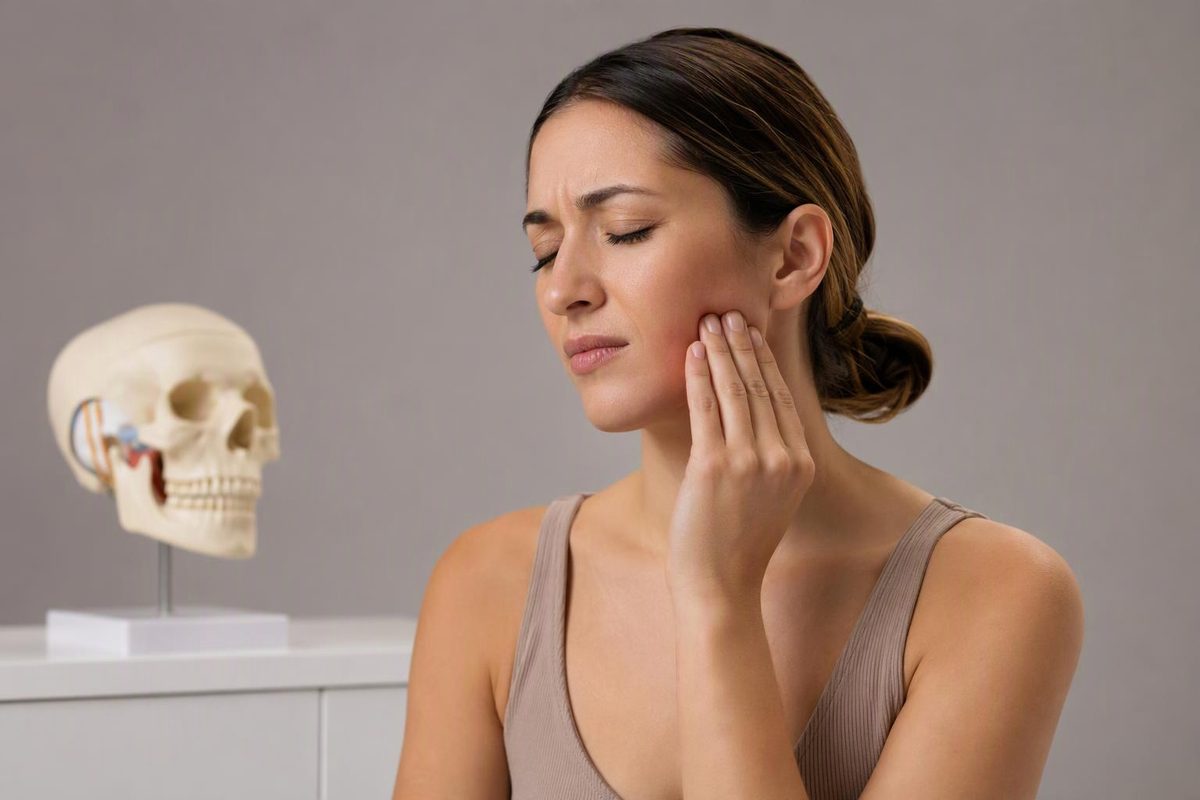
“TMJ pain” usually means pain in the jaw joint or the muscles used for chewing. TMJ is the temporomandibular joint—you have one just in front of each ear. TMD, or temporomandibular disorders, is the name for the conditions affecting those joints and muscles. Many episodes improve on their own, but jaw pain is not automatically TMD, and persistent pain or loss of jaw movement deserves an examination. NIDCR
What points toward TMJ-related pain?
A TMD may cause:
- Tenderness or aching in one or both jaw joints or the chewing muscles.
- Pain that gets worse with chewing, sometimes felt around the ear or temple.
- Jaw stiffness, reduced opening or locking.
- Painful clicking, popping or grating during jaw movement.
- Pain spreading into the face or neck.
These patterns are described by NIDCR and the NHS, but they are clues, not a self-diagnosis. Clicking without pain or restricted movement usually does not need treatment. Mayo Clinic
A dental problem can overlap with this pattern. Intense tooth or gum pain, hot-and-cold sensitivity, a bad taste, swelling or fever can occur with a dental abscess and call for urgent dental assessment—not just jaw relaxation. TMD can also produce tooth pain, so location alone cannot reliably separate the two. NHS dental abscess guidance and Mayo Clinic
When not to treat it as an ordinary flare
- Call your local emergency number for jaw discomfort with chest pressure, shortness of breath, a cold sweat, nausea or lightheadedness. Jaw discomfort can be a heart-attack warning sign; do not assume it is TMD. American Heart Association
- Seek emergency care for difficulty breathing, speaking or swallowing, or substantial swelling inside the mouth. A suspected dental infection with a swollen or painful eye or new eyesight problems also needs emergency care. NHS
- Get urgent assessment if the jaw is stuck open or closed, you cannot eat or drink, or pain follows a significant blow—especially with a changed bite, bleeding or numbness. Do not try to push a displaced jaw back into place. NHS TMD guidance and MedlinePlus
- Seek urgent medical assessment for jaw pain with new temple or scalp tenderness, frequent severe headaches, or vision problems. These symptoms can indicate a serious problem rather than TMD. NHS
- Arrange urgent dental care for suspected infection, including jaw swelling with tooth or gum pain, fever or a bad taste. NHS
What you can try for mild jaw discomfort
If you can eat, drink and move your jaw, and none of the warning signs above applies, simple measures may ease symptoms:
- Temporarily reduce chewing demands. Choose softer foods such as eggs, soup or pasta. Avoid gum, nail biting and very wide yawning.
- Reduce daytime clenching. Notice when you are holding your teeth together and let them separate when you are not eating.
- Try comfortable warmth or cold. Wrap a heat or cold pack in a cloth rather than placing it directly on the skin. Use whichever feels better.
- Make time to relax. Relaxation techniques are part of self-management; they do not imply that the pain is imaginary.
These approaches are recommended as initial care by NIDCR and the NHS. For more detail, see things that can make TMJ pain worse.
For adults, an over-the-counter pain reliever such as acetaminophen (paracetamol) or ibuprofen may help if it is safe for you. Follow the product label. Use the smallest effective dose of ibuprofen for the shortest time needed. Check with a pharmacist or clinician first if you are pregnant, have had stomach ulcers or reactions to anti-inflammatory medicines, have asthma or heart, liver or kidney disease, or take blood thinners. Do not combine ibuprofen with another anti-inflammatory painkiller such as naproxen unless advised. NHS TMD guidance and ibuprofen guidance
When to book an examination
Arrange a dental or medical appointment for persistent or constant pain, worsening symptoms, or difficulty opening or closing your mouth. You do not need to wait for pain to become severe. Mayo Clinic
Bring a short record of where the pain occurs, when it started, what triggers it, and whether eating or opening has changed. A clinician will take a history and examine the jaw, face and neck; imaging may be recommended depending on the findings. Other causes of mouth, jaw or facial pain may need to be ruled out. NIDCR
If self-care is not enough
Treatment should fit the problem identified in the examination. Options can include physical therapy, medication and behavioral approaches such as cognitive behavioral therapy, which teaches pain-management and coping skills. There is limited evidence that night guards or splints improve TMD pain, even though an appliance may protect teeth. If an appliance causes pain, stop using it and contact its prescriber. NIDCR
Before agreeing to treatment, ask: What is it intended to improve—pain, jaw movement or tooth protection? How will we judge whether it helps? Can it permanently change my bite? NIDCR recommends starting with conservative care and avoiding irreversible changes to the teeth, bite or joints as a first approach. For appliance-specific questions, see TMJ mouthguard designs, uses and risks.