
TMJ After Dental Work: Causes, Red Flags, and Relief
Jaw pain after dental work may be a muscle flare, tooth or bite problem, dry socket, or infection. Compare symptoms, timelines, and when to call.
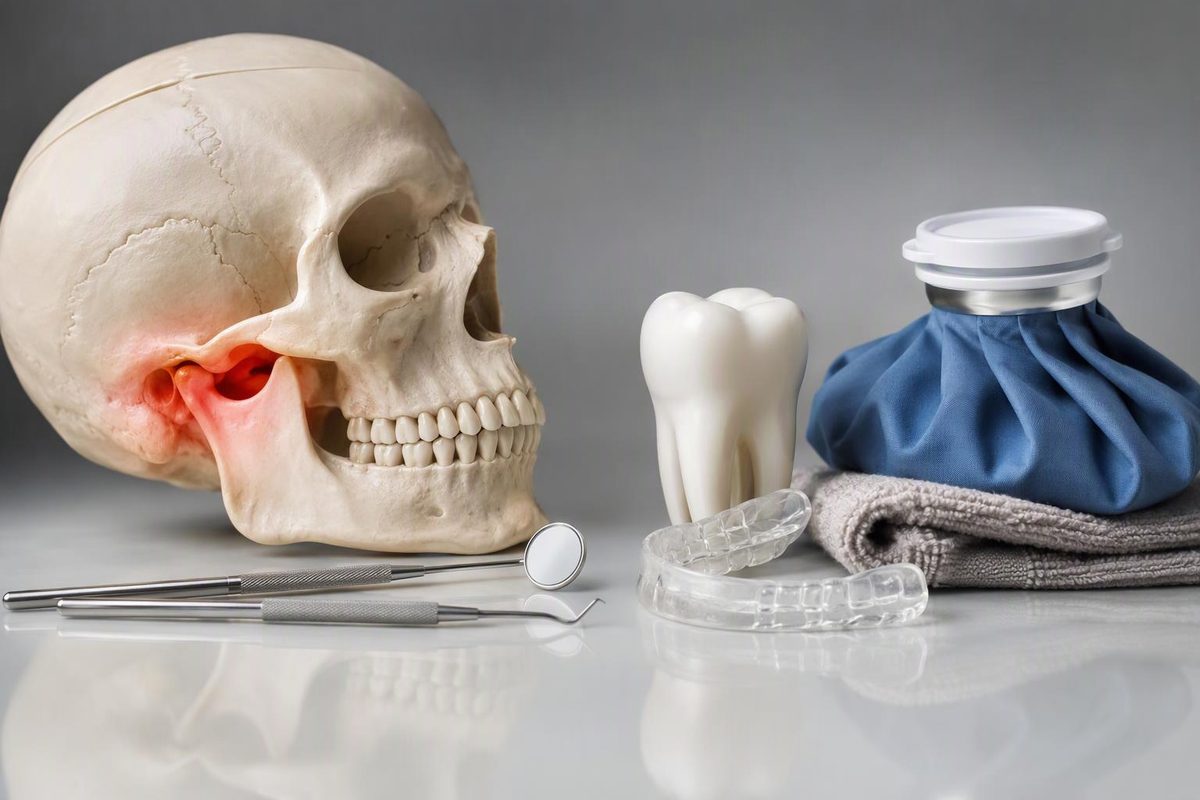
Jaw aching or stiffness after dental work may be a temporary jaw-muscle or temporomandibular disorder (TMD) flare, especially after the mouth was held open for a long time. It is not automatically “TMJ”: pain can also come from the treated tooth, an extraction site, a restoration that meets the opposing teeth first, or an infection. Worsening pain, swelling, fever, drainage, altered sensation or trouble swallowing needs dental or emergency assessment rather than self-treatment alone.
Choose the closest symptom pattern, warning sign and direction of change.
Check the Pattern After Dental Work
Select the closest match. This sorts the next step; it does not diagnose the cause.
Reduce chewing and wide opening, use comfortable heat or cold, and follow the procedure’s aftercare instructions. Seek an assessment if the pain stops improving, interferes with eating or hygiene, or new warning signs appear.
Decision Rules and Caveats
- Emergency signs override the other choices and require emergency care.
- Fever, increasing swelling, drainage, bad taste or odor require prompt dental advice.
- A tooth that hurts when biting or a restoration that touches first needs a bite and tooth check.
- Altered lip, chin or tongue sensation remaining the day after oral surgery should be reported promptly.
- Jaw-area pain that is improving and has no warning signs is more consistent with a temporary muscle or joint flare, but an examination may still be needed.
TMD is the name for a group of jaw-joint and chewing-muscle disorders; TMJ is the joint itself. An examination may be needed because there is no widely accepted standard test for TMD, its symptoms overlap with other conditions, and mouth, jaw or facial pain may have another cause, according to the National Institute of Dental and Craniofacial Research (NIDCR).
Prolonged Mouth Opening Can Trigger a Jaw Flare
A prolonged, wide-open position can strain the jaw muscles and joints. A clinical guide from the Journal of the Canadian Dental Association lists prolonged opening during dental procedures among possible causes of restricted jaw movement.
A published case report describes a person with a previous TMD episode whose symptoms flared after a difficult, lengthy extraction. A single case cannot show how often this happens, but it illustrates a possible mechanism (BMJ Case Reports).
Muscle or joint irritation is more plausible when:
- the ache is in the cheek, temple or just in front of the ear;
- opening wide, yawning or chewing makes it worse;
- the jaw feels tired, tight or stiff;
- there is painful clicking or reduced movement.
Marked difficulty opening the mouth is called trismus. It can follow dental surgery, but infection, injury and other conditions can also cause it. Cleveland Clinic advises having trismus assessed rather than assuming it is simply a TMD flare.
Tooth, Bite and Surgical-Site Pain Have Different Clues
Contact the dentist who performed the work when symptoms center on the treated area, especially if they are worsening.
| Pattern | Possible Explanation | Next Step |
|---|---|---|
| One tooth hurts when biting or has lingering heat or cold sensitivity | The tooth, restoration or tissues around the root | Ask the treating dentist to examine it |
| A new filling or crown touches before the other teeth | The restoration and bite may need checking | Avoid repeatedly testing the bite and arrange a review |
| Extraction pain increases after initially settling, with bad taste or breath | Dry socket is one possibility | Contact the dentist or oral surgeon promptly |
| Pain and swelling worsen several days after surgery, especially with fever or discharge | Infection must be ruled out | Seek urgent dental advice |
| Lip, chin or tongue sensation remains altered the day after oral surgery | A sensory-nerve issue rather than typical TMD | Contact the treating dentist or surgeon promptly |
The advice about persistent altered sensation follows guidance from Hull University Teaching Hospitals NHS Trust.
After dental surgery, pain is commonly worst during the first two to three days and then begins to improve. Swelling may appear within 48 hours and usually lasts five to seven days. In contrast, infection-related pain and swelling may worsen around days four to six. Dry socket often causes increasing pain, unpleasant taste and bad breath around days three to five, according to Guy’s and St Thomas’ NHS Foundation Trust. These timelines apply to oral surgery, not every filling, crown or cleaning.
Mild tenderness for a few days can also follow root-canal treatment. Severe or worsening pain, or pain lasting more than a few days, warrants review by the treating clinician, according to the American Association of Endodontists.
Mild Jaw-Muscle Symptoms Usually Need Reduced Strain
If symptoms are mild, there is no concerning swelling or fever, and the treated tooth itself is settling:
- Temporarily reduce the workload. Choose foods that require little chewing. Avoid gum, chewy foods and very wide bites.
- Use comfortable heat or cold. Apply it to the sore cheek or jaw with a cloth barrier. Stop if it aggravates the pain.
- Let the jaw rest. Keep the teeth apart when not eating, with the lips relaxed. Notice and interrupt clenching.
- Use pain medicine only if it is safe for you. Follow the dental team’s instructions and the product label. A pharmacist can help if you have ulcers, kidney or liver disease, take blood thinners, are pregnant, or use other medicines.
- Follow procedure-specific instructions. Extraction and implant aftercare may limit rinsing, exercise or jaw exercises. Do not force the mouth wider or begin vigorous stretching unless the treating clinician says it is appropriate.
NIDCR recommends starting confirmed TMD care with conservative, reversible measures such as softer food, heat or cold, gentle clinician-directed exercise and reducing clenching. It also cautions that evidence for oral appliances is limited. Do not buy a guard or pursue permanent bite changes solely because discomfort followed dental work. For a broader plan, see what to do during a TMJ flare.
Worsening Symptoms Belong With the Treating Dentist
Call the treating dentist promptly if pain is escalating rather than easing, a tooth or restoration seems to meet first, swelling is increasing, there is fever or drainage, the socket has a bad taste or odor, or mouth opening is becoming more restricted.
Arrange an assessment if jaw pain is not showing a clear improving trend after several days or is interfering with eating, drinking or oral hygiene. Recovery depends on the procedure and cause; how long TMJ pain lasts explains why the direction of change is more useful than one fixed deadline.
Seek emergency care now if it is hard to breathe, speak or swallow; there is a lot of swelling inside the mouth; an eye becomes swollen or painful; vision suddenly changes; or it becomes hard to open the mouth. The NHS dental-abscess guidance lists these as emergency signs.
A dental examination can help separate tooth or surgical-site pain from jaw-muscle or joint pain by checking the restoration, the way the teeth meet, the extraction site, signs of infection, muscle tenderness and jaw movement. Correcting a restoration, treating an infection and managing a temporary muscle flare are different responses to pain that may initially feel similar.