
When Your Bite Feels Off: What It Means and What to Do Next
A mild, longstanding difference may need monitoring. A sudden bite change after trauma or dental treatment, or with jaw locking, calls for a different evaluation.
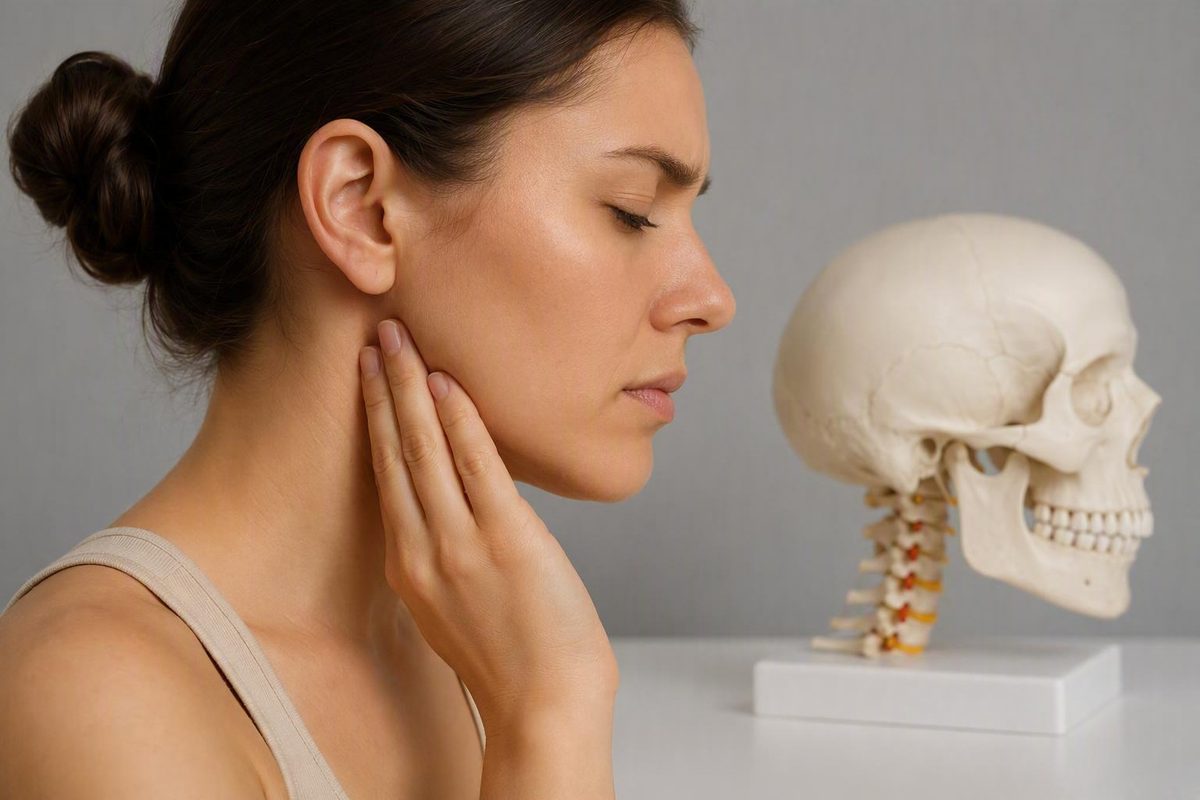
“Misaligned jaw” is a useful description, but it is not a diagnosis. A bite can look or feel unusual because of individual tooth positions, the relationship between the upper and lower jaw bones, a problem involving the jaw joints or chewing muscles, or a combination of these factors.
That distinction matters. Mild, longstanding differences may be healthy and need nothing beyond monitoring. A bite that suddenly changes—especially after trauma, dental treatment, swelling, pain, or jaw locking—calls for a different evaluation. Treatment should address the identified source rather than automatically changing the bite or assuming surgery is necessary.
What “misaligned jaw” can—and cannot—mean
In the narrow skeletal sense, a misaligned jaw means that the upper and lower jaws do not relate properly to each other. That is different from having one crooked tooth or several crowded teeth. It is also different from temporomandibular disorder, although these issues can overlap.
Malocclusion means that the upper and lower teeth do not fit together properly when the mouth closes. The problem may come from tooth position, jaw position, or both. Normally positioned jaw bones may contain crowded or angled teeth that create an uneven bite. Conversely, relatively straight teeth may sit on jaw bones whose sizes or positions do not match well, as explained in Cleveland Clinic’s malocclusion guide.
| Concept | What it describes | What it does not establish |
|---|---|---|
| Tooth-position or spacing differences | Teeth that are rotated, tilted, overlapping, impacted, widely spaced, or short of room | That the upper and lower jaw bones are improperly positioned |
| Dental malocclusion | Upper and lower teeth that do not fit together properly | Whether the source is dental, skeletal, or mixed |
| Skeletal jaw discrepancy | A mismatch in the position, shape, or size relationship of the upper and lower jaws | That pain, clicking, or another symptom must be present |
| Temporomandibular disorder (TMD) | Conditions involving the jaw joints, chewing muscles, or related structures and headaches | Another name for crooked teeth or a misaligned jaw |
TMD is an umbrella term rather than a single bite diagnosis. The National Institute of Dental and Craniofacial Research describes TMD as a group of more than 30 conditions involving the jaw joints, chewing muscles, or associated headaches. A person can have TMD with an ordinary-looking bite, malocclusion without TMD, or both at the same time. NIDCR explains the scope, symptoms, diagnosis, and treatment of TMD.
Facial asymmetry also needs context. Human faces are not perfectly symmetrical, and a visible difference between sides does not by itself demonstrate a skeletal disorder. Teeth and jaws naturally vary, and an appearance that differs from an idealized “perfect smile” may still be healthy and function normally. More pronounced differences can affect eating, speech, or oral health, but appearance alone cannot determine severity, as the NCBI Bookshelf overview of tooth and jaw differences emphasizes.
Timing is often more informative than appearance. A bite that has looked the same for years and causes no functional problems is different from one that begins to feel uneven over days or weeks. A sudden or progressive change raises questions about recent dental work, injury, inflammation, joint or muscle dysfunction, swelling, or tooth movement.
This article is for general education. It cannot determine whether an individual concern comes from the teeth, jaw bones, muscles, joints, or another condition, and it does not replace an examination or diagnosis.
Common bite patterns explained in plain language
In a typical bite, the upper and lower dental arches meet with a slight overlap, and the lower front teeth sit somewhat behind the upper front teeth. There is considerable healthy variation within that broad description.
Common labels describe the direction in which teeth meet. They do not reveal whether the underlying cause is tooth angulation, jaw shape, jaw size, or a combination. A visual label also does not determine whether treatment is needed.
- Overbite: The upper front teeth overlap the lower front teeth too much vertically. Think of this as excessive up-and-down overlap.
- Overjet: The upper front teeth project too far forward relative to the lower front teeth. This describes a front-to-back relationship, not vertical overlap.
- Underbite: The lower front teeth meet edge-to-edge with, or sit in front of, the upper front teeth.
- Open bite: Some upper and lower teeth do not touch when the mouth is closed, leaving a space. The opening may occur at the front, side, or back.
- Crossbite: One or more upper side teeth sit inside or behind the corresponding lower teeth during biting.
Overbite and overjet are therefore not interchangeable. Someone can have one, both, or neither. Online measurements are poor substitutes for a clinical examination because tooth angulation, jaw position, facial growth, missing teeth, and the relationship of the back teeth all affect interpretation.
Each pattern can have more than one structural explanation. An underbite, for example, may reflect lower front teeth angled forward, upper teeth angled backward, a relatively prominent lower jaw, a relatively small or recessed upper jaw, or a mixed problem. An open bite may be mainly dental in one person and related to jaw growth or shape in another. A crossbite may involve a single tilted tooth or a broader width difference between the jaws. These patterns and their possible structural sources are outlined in the government-hosted InformedHealth overview of misaligned teeth and jaws.
Avoid assigning yourself a malocclusion “class” from photographs or diagrams. A frontal selfie can distort proportions, and a picture does not show how all the teeth contact, how the jaw moves, or whether a difference is stable. The useful question is not merely, “Which label looks like me?” It is, “Which structures are producing this bite, and is function or oral health affected?”
Signs that deserve attention—and why symptoms do not diagnose the cause
Possible signs of a bite or jaw problem fall into several groups. Their significance depends on onset, persistence, severity, and effect on daily function.
Functional changes may include:
- Difficulty biting through food or chewing efficiently
- Changes in speech
- Limited mouth opening
- Catching or locking during movement
- Trouble fully opening or closing the mouth
- A persistent change in how the teeth meet
Oral-health effects may include:
- Repeated cheek biting
- Localized or uneven mechanical tooth wear
- Chipped or otherwise damaged teeth
- Gum irritation or injury
- Areas that are difficult to brush or clean between
- Food trapping related to crowding or spacing
Erosion should not be treated as proof that an uneven bite caused the loss of tooth structure.
Nonspecific symptoms may include:
- Jaw, temple, or facial pain
- Headaches
- Ear fullness or discomfort
- Jaw stiffness
- Clicking, popping, or grinding sounds
- Clenching or grinding
- Perceived facial asymmetry
These symptoms cannot confirm skeletal jaw misalignment. Pain may arise from teeth, muscles, joints, injury, infection, or non-dental conditions. Headaches and ear discomfort have many possible sources. Tooth wear does not prove that the jaw bones moved, and asymmetry does not identify the structures responsible.
Joint sounds also require context. Occasional painless clicking or popping is common and generally does not need treatment. A sound deserves more attention when it is painful or occurs with locking, restricted movement, or a persistent functional change. NIDCR distinguishes common painless joint sounds from TMD symptoms such as painful clicking, limited movement, locking, and a change in how the teeth fit together.
A mild bite difference that is longstanding, stable, painless, and easy to clean may only need observation. Treatment becomes more relevant when the issue impairs function, damages teeth or gums, interferes with oral hygiene, changes progressively, or creates a concern the patient wants professionally assessed.
| Situation | Appropriate action |
|---|---|
| Stable concern | Discuss longstanding asymmetry, crooked teeth, or a painless bite difference at a routine dental visit. Document changes rather than assuming correction is required. |
| Needs a scheduled evaluation | Arrange an appointment for persistent pain, repeated chewing difficulty, speech limitations, restricted movement, tooth or gum damage, or a lasting change in how the teeth meet. |
| Needs prompt assessment | Seek timely clinical care after facial or jaw trauma, or for jaw locking, inability to open or close the mouth, fever with jaw pain, severe swelling, major difficulty chewing, or a rapidly changing bite. Trauma accompanied by swelling or altered closure should not be managed by trying to reposition the jaw at home. A dental-practice account also identifies trauma and swelling as reasons to seek assessment, although it is not a clinical guideline; see its discussion of sudden jaw and bite changes. |
Use local emergency services rather than waiting for a routine dental appointment.
Why a jaw or bite may seem misaligned
Possible sources can be organized into four categories: teeth, jaw bones and development, joints and muscles, and recent injury or dental changes.
1. Teeth
Crowded, oversized, tilted, missing, or impacted teeth can change the way opposing teeth contact. A tooth that erupts in an unusual position may create a localized interference even when the jaw bones have a generally proportionate relationship.
Tooth loss can allow neighboring or opposing teeth to change position over time. Restorations alter tooth shape, while orthodontic treatment intentionally moves teeth. These changes may affect which teeth touch first and how pressure is distributed.
Bruxism—clenching or grinding—may contribute to muscle soreness, tooth wear, sensitivity, or a sense that the bite is uncomfortable. Those findings do not prove that grinding moved the jaw bones.
2. Jaw bones and development
Inherited anatomy and developmental variation influence jaw size, shape, and position. A mismatch can develop when one jaw grows differently relative to the other or when a jaw does not provide enough room for the teeth.
Congenital conditions can also affect facial and jaw development. Childhood oral habits, such as prolonged thumb or finger sucking, may influence tooth position and developing bite relationships in some people. The result can be mainly dental, mainly skeletal, or mixed.
A longstanding difference is not automatically progressive or unhealthy. What matters clinically is its source, stability, effect on function and oral health, and the patient’s goals.
3. Jaw joints and muscles
TMD, joint inflammation, arthritis, muscle guarding, or swelling can make closure feel altered. If one side is painful or its movement is restricted, the lower jaw may follow a different path while opening or closing. The teeth can then seem to meet differently even though there has been no permanent skeletal realignment.
Stress may coincide with increased clenching or muscle tension in some people. That can contribute to soreness or altered movement, but it does not prove that stress physically shifted the jaws. Posture-based explanations likewise do not establish skeletal movement.
4. Recent injury or dental changes
A blow to the face or jaw can affect teeth, bone, joints, or soft tissues. An abrupt bite change after trauma—particularly with swelling, locking, or difficulty opening or closing—needs prompt assessment rather than home manipulation.
Recent dental treatment offers another practical clue. A filling that contacts too early, a new crown or bridge, or an orthodontic adjustment may make the bite feel suddenly uneven. Because the evidence for these examples comes from a dental-practice article rather than a clinical guideline, they should be treated as possibilities that require direct inspection, not a diagnosis.
Do not file a restoration or tooth yourself. The feeling may reflect a high contact, temporary sensitivity, muscle guarding, expected orthodontic movement, or an unrelated joint problem. Contact the professional who performed the procedure, explain when the change began, and ask whether it should be checked.
Misaligned bite versus TMD: resolving a common misconception
TMD affects the jaw joints, chewing muscles, or related structures and can cause pain or impaired movement. It is not synonymous with malocclusion or skeletal jaw misalignment.
Some consumer health pages and provider websites list a “bad bite” as a possible cause of TMD. NIDCR takes a more cautious position: current research does not support a strong causal relationship between malocclusion and TMD, and it does not support the belief that orthodontic treatment causes TMD. NIDCR also cautions that treatments permanently changing the teeth or bite lack adequate evidence for treating TMD and can make the problem worse.
That leaves room for several important distinctions:
- Malocclusion and TMD can coexist.
- Coexistence does not prove that one caused the other.
- A changed bite can be a symptom of joint or muscle dysfunction rather than its cause.
- A person with a visibly unusual bite may have no joint symptoms.
- A person with significant TMD symptoms may have no obvious malocclusion.
Many TMD cases have no single clearly identifiable cause. Injury accounts for some cases, while genes, life stressors, pain perception, and other biological or behavioral factors may contribute. Symptoms also overlap with dental disease, headache disorders, ear conditions, and other sources of facial pain.
There is no single widely accepted test that confirms every TMD. Diagnosis generally relies on the history, physical examination, selective imaging when appropriate, and consideration of alternative explanations. Cleveland Clinic similarly describes TMD as involving the jaw joints and surrounding muscles, with symptoms such as pain, movement problems, locking, and joint sounds in its clinical guide to temporomandibular disorders.
This uncertainty is why nonspecific symptoms should not automatically lead to orthodontics, tooth filing, restorative bite adjustment, or jaw surgery. Those interventions change anatomy or tooth relationships but may not address the actual source of pain. Permanent procedures can also be difficult or impossible to reverse.
For symptoms thought to come from TMD, conservative and reversible care generally comes first. Irreversible treatment may still be appropriate when a separate, clearly diagnosed dental or skeletal problem exists, but its purpose and evidence should be explicit. “Your bite looks uneven” is not, by itself, an adequate explanation for why a permanent procedure will relieve joint or muscle pain.
How clinicians determine where the problem comes from
A general dentist is a reasonable starting point when the concern centers on teeth, a changed bite, recent dental work, tooth damage, or oral hygiene. Emergency services are appropriate for serious injury or major breathing difficulty.
The first step is usually a detailed history. Expect questions such as:
- When did the bite or appearance change?
- Was the onset sudden or gradual?
- Is the change constant, or does it vary through the day?
- Is there pain, locking, stiffness, or restricted opening?
- Was there a recent blow, fall, sports injury, or accident?
- Have you recently had a filling, crown, bridge, extraction, or orthodontic adjustment?
- Do you clench or grind, and is soreness worse in the morning?
- Has chewing, biting, swallowing, or speech changed?
- Have you used a retainer, splint, night guard, or other oral appliance?
- Have you previously had orthodontic, restorative, joint, or jaw treatment?
The examination may assess individual tooth positions, wear and damage, gum health, and how the upper and lower teeth contact. The clinician may also look at facial structure and symmetry, observe the opening and closing pathway, measure movement, feel for muscle or joint tenderness, and listen or feel for joint sounds.
Records may include photographs, dental impressions, or digital scans to document the teeth and bite. These tools complement rather than replace the clinical examination. Cleveland Clinic describes examinations, impressions, X-rays, and photographs as possible parts of malocclusion assessment.
CT or MRI may be selected when suspected bone, joint, trauma, or soft-tissue findings require more information. The appropriate modality depends on the clinical question. Imaging is not necessary for every uneven bite, click, or episode of jaw discomfort, and an image alone may not establish the source of symptoms.
Referral depends on the suspected problem:
- General dentist: Initial assessment of teeth, bite contacts, restorations, tooth damage, and oral health
- Orthodontist: Detailed assessment of tooth movement, dental arches, growth, and whether orthodontic correction is suitable
- Oral and maxillofacial surgeon: Evaluation of substantial skeletal discrepancies, jaw injury, and conditions that may require surgery
- Physician or another relevant specialist: Assessment when infection, headache, ear symptoms, systemic disease, or another non-dental cause is possible
The key diagnostic task is to determine whether the issue is mainly dental, skeletal, muscular, joint-related, or mixed. Treatment selection should come after that distinction.
Before the appointment, prepare:
- A timeline of when symptoms or bite changes began
- Photographs showing a genuine change in appearance, if available
- A list of recent dental or orthodontic procedures
- Details of any facial or jaw trauma
- Your history of clenching or grinding
- Notes about locking, pain, and limited movement
- Specific examples of chewing, biting, or speech difficulty
- A list of current and previous retainers, guards, or splints
- Copies of relevant dental images or treatment records, if accessible
Treatment options matched to the diagnosed problem
Treatment depends on the source, severity, symptoms, functional effects, oral-health consequences, general health, and the patient’s goals. “Correcting a misaligned jaw” can therefore mean very different things: monitoring a stable bite, moving teeth, repairing damage, managing joint or muscle symptoms, or repositioning jaw bones.
Monitoring
No active correction is a legitimate option for a mild, stable, symptom-free malocclusion. A dentist can monitor tooth wear, gum health, hygiene, and bite stability during regular care. Choosing observation does not mean ignoring new symptoms; it means avoiding treatment when expected benefits do not justify its burdens or risks.
Braces, clear aligners, and other orthodontic appliances
Braces and clear aligners move teeth. They can correct selected forms of crowding, spacing, angulation, overbite, overjet, crossbite, open bite, and underbite when tooth movement can produce an acceptable relationship.
They cannot correct every substantial discrepancy in the size or position of the jaw bones. Orthodontic movement may sometimes compensate for a skeletal difference, but whether that is suitable depends on anatomy, function, facial goals, periodontal health, and the size and direction of the discrepancy.
Other orthodontic appliances may be selected to guide tooth position, arch development, or growth. Suitability depends on the specific problem, anatomy, and growth status; no appliance provides the same result for every patient.
Restorative dentistry and extraction
Fillings, crowns, bridges, and other restorations can repair damage or alter tooth shape and contacts. Cosmetic procedures can change appearance. Neither approach repositions an underlying skeletal jaw discrepancy.
Extraction may be one component of an individualized dental, surgical, or orthodontic plan—for example, when space, impaction, damage, or another defined issue warrants it. It is not a universal solution for an uneven bite.
Conservative care for joint or muscle symptoms
When symptoms are consistent with TMD, initial management may include temporarily choosing softer foods, applying heat or cold, using gentle clinician-guided movement, and reducing clenching, nail biting, or gum chewing. A pharmacist or clinician can help assess individual contraindications.
Evidence remains limited for many TMD medicines, intraoral appliances, acupuncture, transcutaneous electrical nerve stimulation, injections, and related interventions. None should be presented as a guaranteed way to “realign” the jaw. NIDCR’s TMD treatment guidance recommends beginning with conservative, reversible approaches and avoiding permanent changes to the teeth, bite, or jaw unless clearly indicated.
A clinician may select a guard or splint for a defined purpose in an individual patient, but appliance choice, fit, and monitoring matter. Evidence for treating TMD with intraoral appliances remains limited, and symptom relief would not prove that an appliance changed the skeletal relationship of the jaws.
Orthognathic surgery
Orthognathic surgery repositions the upper jaw, lower jaw, or both. It may be considered for selected severe skeletal discrepancies that cannot be adequately addressed through tooth movement alone, and it is often coordinated with orthodontic treatment. Consumer oral-health guidance likewise distinguishes orthodontic treatment of tooth-position problems from surgery for selected severe or skeletal cases; see this overview of misaligned-jaw treatment options.
Surgery is not the usual response to minor malocclusion, painless asymmetry, clicking alone, or nonspecific TMD symptoms. It requires diagnosis, planning, and a case-specific discussion of likely benefits, limitations, risks, and alternatives. Outcomes and recovery should not be assumed from general online descriptions.
A practical next-step plan—and treatments not to try on your own
Use timing, symptoms, and function to decide what to do next.
If the difference is longstanding, painless, and stable: Note what concerns you and raise it at a routine dental visit. Old photographs may help show whether an appearance is truly changing. Do not assume that an unusual-looking bite must be corrected.
If symptoms are persistent: Arrange a dental or medical evaluation for ongoing pain, chewing or speech difficulty, tooth damage, restricted movement, or a bite change that does not settle. Describe the functional problem rather than relying only on the term “misalignment.”
If the change followed dental treatment: Contact the dentist or orthodontist who performed the filling, crown, bridge, or adjustment. Explain which teeth seem to touch first and when you noticed it. Do not try to grind or reshape the work yourself.
If there are warning signs: Seek prompt assessment after trauma or for jaw locking, inability to open or close the mouth, fever with jaw pain, severe swelling, major chewing difficulty, or a rapidly changing bite. Major breathing difficulty requires emergency help.
Avoid attempting to:
- File or grind your teeth
- Adjust a filling, crown, bridge, or other restoration
- Push or force the jaw “back into place”
- Perform forceful exercises based on an online demonstration
- Use orthodontic forces without professional supervision
- Assume a mail-order guard or splint will realign the jaw
- Continue using an appliance that creates a persistent bite change without having it assessed
Be cautious about irreversible bite adjustment, extensive restorative work, orthodontics, or surgery offered primarily as a cure for headaches, ear discomfort, clicking, or other nonspecific TMD symptoms. Ask what diagnosis is being treated, what findings support it, whether the proposed treatment is reversible, and what alternatives exist.
A concise decision pathway is:
- Decide whether the issue is sudden or longstanding.
- Note pain, locking, tooth damage, and limits on opening, chewing, or speech.
- Check for prompt-care features such as trauma, fever, severe swelling, inability to move the jaw normally, breathing difficulty, or rapid change.
- Start with the clinician best matched to the concern: usually a dentist for teeth or bite issues, a physician for suspected medical or infectious causes, and emergency services for serious trauma or breathing difficulty.
- Choose treatment only after identifying whether the source is dental, skeletal, muscular, joint-related, or mixed.
A bite that looks unusual or feels different is a starting point for evaluation—not proof that the jaw is structurally out of place. Mild and stable differences may need only monitoring. Persistent symptoms or functional problems deserve assessment, while irreversible treatment should be reserved for a clearly diagnosed problem with a proportionate indication.
Frequently asked questions
Can a misaligned jaw correct itself?
It depends on what “misaligned” means. Temporary muscle guarding, inflammation, or soreness may settle, and many TMD episodes improve with time or conservative care. A bite sensation may then return to normal without the jaw bones having moved.
If a change is new, progressive, painful, or affecting function, have it evaluated rather than waiting for assumed self-correction.
Can braces or clear aligners fix a misaligned jaw without surgery?
Braces and aligners can move teeth and correct many dental malocclusions. They may also compensate for selected, limited skeletal differences when an orthodontist judges that approach appropriate.
They do not directly reposition every substantial jaw-bone discrepancy. A pronounced skeletal problem may require combined orthodontic and orthognathic treatment, while a mild, stable issue may require no treatment at all. The answer depends on whether the mismatch comes mainly from the teeth, the jaws, or both.
Why does my bite suddenly feel different?
Possible explanations include a high filling or new restoration, orthodontic movement, tooth movement, muscle tension or guarding, TMD, joint inflammation, arthritis, swelling, bruxism-related soreness, or trauma. A changed sensation does not prove that the jaw bones shifted.
Contact the treating dental professional if the change began after dental work. Arrange an evaluation if it persists or occurs with pain or limited movement. Seek prompt care after trauma or when the jaw locks, swelling is severe, fever accompanies jaw pain, or you cannot open or close your mouth normally.
Does jaw clicking mean my jaw is misaligned?
No. Clicking alone does not establish dental malocclusion or skeletal jaw misalignment. Occasional painless clicking with normal movement is common and generally does not require treatment.
Evaluation is more appropriate when clicking is painful, becomes persistent, occurs with locking or restricted opening, or accompanies a lasting change in function or bite. The clinician should assess the joint, muscles, teeth, and movement rather than assuming the sound identifies one cause.
When does a misaligned jaw need prompt medical or dental attention?
Seek prompt assessment when a bite or jaw change follows trauma or occurs with jaw locking, inability to open or close the mouth, fever with jaw pain, severe swelling, major chewing difficulty, or rapid progression. Significant breathing difficulty requires emergency care.
A stable, painless difference usually does not require urgent treatment. Persistent pain, restricted movement, tooth damage, chewing or speech difficulty, or a lasting bite change should still be evaluated through a scheduled dental or medical appointment.