
Why Your Jaw May Hurt—and When the Symptoms Need Prompt Care
Jaw pain may occasionally occur without prominent chest pain, so the absence of severe chest pain does not make a cardiac cause impossible.
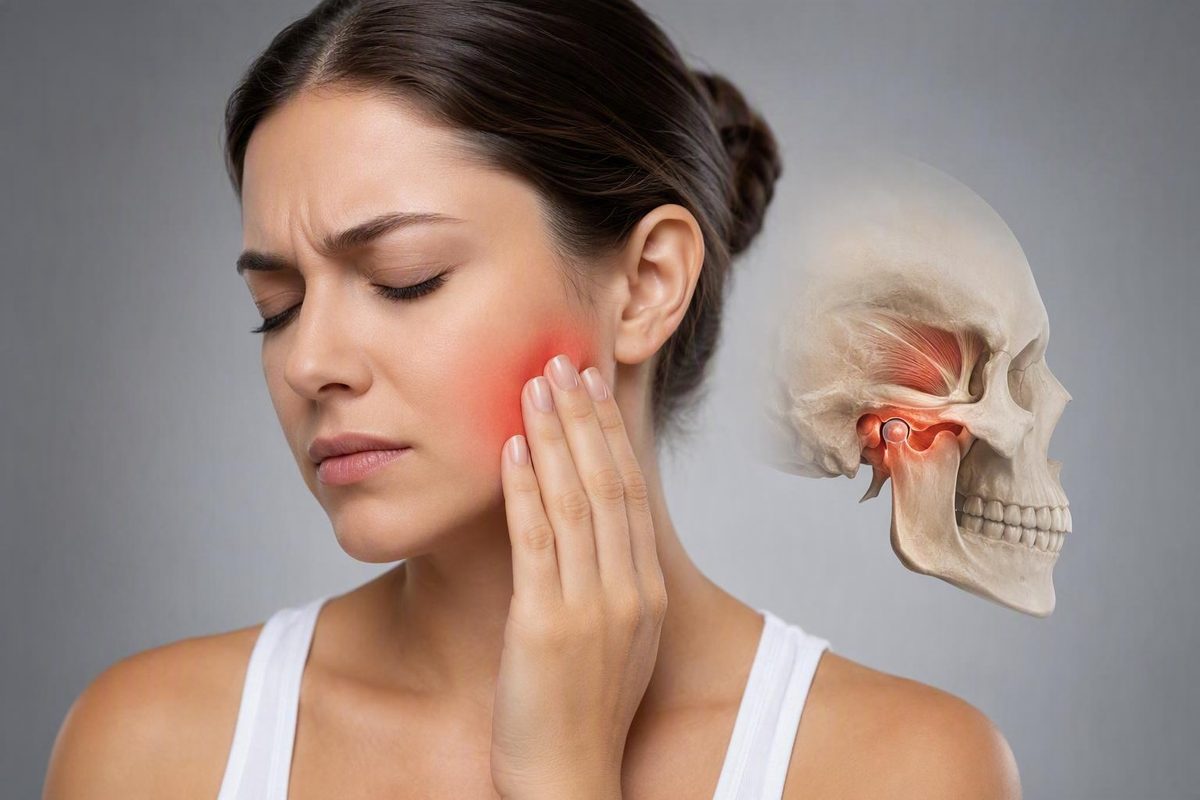
The short answer: what can cause jaw pain?
Jaw pain can originate in the temporomandibular joint, the muscles used for chewing, teeth, gums, sinuses, facial nerves, or the jawbone. Common possibilities include temporomandibular disorders (TMD), muscle strain from clenching or grinding, cavities, cracked teeth, gum disease, and dental abscesses. Other causes include sinus inflammation, arthritis, infection, injury, and certain neurologic or headache disorders. Occasionally, pain originating elsewhere—most importantly the heart—may be felt in the jaw, and a broken or dislocated jaw also requires immediate attention (Cleveland Clinic).
The location, quality, timing, and triggers may provide useful clues:
- Pain linked to chewing, yawning, clenching, or opening widely may point toward a joint or muscle problem.
- Pain centered on one tooth, especially with temperature sensitivity or pain on biting, may suggest a dental source.
- Pressure across several upper teeth with congestion may fit sinus inflammation.
- Brief, one-sided, electric-shock-like attacks may suggest nerve pain.
- Jaw discomfort accompanied by chest pressure or breathing difficulty requires emergency assessment.
These patterns are clues, not diagnostic rules. Different conditions can produce similar symptoms, and more than one problem may exist at the same time. Someone may clench their teeth and have TMD symptoms while also having an unrelated cavity, for example.
This article covers common joint, muscle, and dental causes first, compares symptom patterns next, and then explains warning signs and whether to contact a dentist, medical clinician, or emergency service.
This is general educational information, not an individualized diagnosis or a substitute for care from a qualified clinician. Online symptom matching cannot determine why a particular person’s jaw hurts.
TMD, clenching, grinding, and overworked jaw muscles
The temporomandibular joints, or TMJs, sit in front of the ears and connect the lower jaw to the skull. “TMJ” names the joint; TMD refers to disorders affecting the joint, associated muscles, or related structures.
TMD is not one disease. The National Institute of Dental and Craniofacial Research describes TMDs as a group of more than 30 conditions involving the jaw joint, the muscles controlling jaw movement, or associated headaches. Pain in the joint or chewing muscles is a common TMD symptom, but jaw pain may have another cause that needs to be ruled out (NIDCR).
Patterns that may support a joint or muscle source include:
- Tenderness over the jaw joint or chewing muscles
- Pain with chewing, talking, yawning, or opening widely
- Stiffness or reduced range of motion
- Aching around the ear without an identified ear problem
- Facial soreness or headache
- Painful clicking or grating
- A jaw that catches or locks
- Difficulty opening or closing the mouth normally
Clicking requires context. Painful clicking accompanied by restricted movement, tenderness, or locking is more concerning than noise alone. Painless clicking or popping without limited movement is common and does not, by itself, establish that someone has a disorder requiring treatment.
Clenching and grinding
Clenching means forcefully holding the teeth together; grinding involves moving them against one another.
Repeated clenching or grinding may overload the chewing muscles and jaw joints. It may also accompany:
- Morning jaw soreness or tightness
- Headaches after waking
- Tooth sensitivity
- Flattened or worn tooth surfaces
- Cracked or chipped teeth
- Muscle fatigue during chewing
Morning soreness makes nighttime clenching or grinding a possibility, but it is not proof.
Repetitive gum chewing, nail biting, and frequently holding the jaw tense may also aggravate the muscles and joints. Stress can be relevant because some people clench more or experience more persistent symptoms during stressful periods. It should not, however, be treated as a universal or stand-alone cause of TMD.
The precise cause of many TMD cases remains uncertain. Potential contributors include joint injury, displacement or deterioration of the cushioning disc, arthritis, soft-tissue strain, muscle spasm, clenching, grinding, repetitive habits, and interacting biological or life stressors. Several factors may be present at once (Mayo Clinic).
Evidence check: two common TMD misconceptions
NIDCR guidance does not support a “bad bite” or orthodontic braces as established causes of TMD. A person may notice bite changes during a painful jaw condition, and dental alignment can matter for other reasons, but neither point proves that the bite or braces caused TMD. Be cautious about explanations that promise to identify or cure all TMD by permanently changing the bite (NIDCR).
Dental causes: teeth, gums, abscesses, and wisdom teeth
Dental disease can produce pain that feels as though it is in the jaw, cheek, ear, or neck. Possible dental causes include:
- Cavities and inflammation inside a tooth
- A cracked, chipped, or otherwise damaged tooth
- Gum inflammation or periodontal disease
- A dental abscess
- An impacted, infected, or erupting wisdom tooth
- Tooth wear or cracking associated with grinding
- Injury to a tooth following a blow or fall
A dental abscess is a pocket of pus caused by bacterial infection. Depending on its location and extent, it may cause tooth pain, gum tenderness, swelling, or pain that spreads into the jaw.
Clues that may favor a tooth or gum source include:
- Pain centered on one identifiable tooth
- Throbbing or pulsing pain
-
Sensitivity to hot or cold
-
Tenderness when a particular tooth or gum area is pressed
- Localized gum swelling
- Facial swelling near the painful tooth
- A damaged tooth or recent dental problem
The apparent location can be misleading. Pain from a tooth may radiate along the jaw or toward the ear and neck. Conversely, TMD, sinus pressure, or nerve pain can resemble a toothache even when the tooth is not the source.
An examination may therefore be needed even when the pattern seems obvious. A dentist can inspect the teeth and gums, test individual teeth, assess jaw movement and decide whether dental X-rays or other imaging are appropriate. Symptoms alone cannot reliably distinguish a deep cavity, crack, abscess, or non-dental source.
Dental infection is not always confined to the tooth. It can extend into surrounding tissues, and infection of the jawbone—called osteomyelitis—is an uncommon but serious possibility. Prompt diagnosis and treatment are important because untreated jawbone infection may damage bone tissue (Prisma Health).
Contact a dentist promptly when pain is focused on a tooth or gum, reacts to temperature, worsens with biting, or is accompanied by localized swelling or a suspected abscess. Fever, rapidly increasing swelling, or difficulty breathing or swallowing changes the urgency: those symptoms may indicate spreading infection and require urgent or emergency assessment rather than a routine appointment.
Sinus pressure and other infections that can affect the jaw
The maxillary sinuses sit above the upper teeth and close to their roots. When these sinuses become inflamed or congested, pressure may be perceived in the upper jaw, cheek, or upper back teeth.
Features that can support sinus involvement include:
- A diffuse ache across the upper jaw
- Pressure affecting several upper teeth rather than one tooth
- Nasal congestion or discharge
- Cheek or facial pressure
- Reduced sense of smell
- A recent cold
- An allergy flare
- Discomfort that becomes more noticeable when bending forward
The distinction from dental pain is imperfect. Pain involving several upper back teeth together with congestion makes sinus inflammation more plausible, while hot-or-cold sensitivity or pain centered on one tooth makes a dental problem more plausible. Neither pattern is reliable enough to confirm a diagnosis without an examination.
Not every sinus infection causes jaw pain, and nasal symptoms do not prove that the jaw discomfort comes from the sinuses. Dental disease and sinus inflammation can coexist. The close anatomical relationship between the maxillary sinuses and upper teeth explains why one problem may resemble the other, but it does not identify the source in an individual case (WebMD).
Other infections that can affect the jaw are less common:
- Mumps can cause jaw-area pain by swelling salivary glands located near the ears and jaw.
- Tetanus may cause painful muscle stiffness or spasms, including jaw stiffness.
- Osteomyelitis is an infection within the jawbone that requires prompt clinical attention.
- A severe dental or soft-tissue infection can spread into the face or neck.
These uncommon infections should not be presented as equally likely as dental disease, muscle strain, or TMD. Their importance lies in recognizing associated warning signs.
Seek prompt professional assessment for fever with dental or facial swelling, severe or rapidly worsening pain, or marked illness. Difficulty breathing or swallowing, rapidly increasing facial or neck swelling, or facial swelling accompanied by fever requires emergency assessment (clinical guidance on overlapping jaw-pain emergencies).
Arthritis, injury, and structural damage
The temporomandibular joint can be affected by arthritis. Osteoarthritis may damage joint cartilage over time, while rheumatoid arthritis can inflame the joint. Either may contribute to soreness, stiffness, reduced movement, or pain during chewing. Having arthritis elsewhere does not automatically mean it is causing the jaw pain; the joint still needs to be assessed in context.
Jaw pain can also begin after:
- A fall
- A blow to the face
- A vehicle collision
- A sports injury
- Another head or facial trauma
An impact may injure the jawbone, joint, ligaments, chewing muscles, teeth, or surrounding soft tissues. Findings that increase concern after trauma include:
- Bruising or swelling
- Loose, broken, or displaced teeth
- A bite that suddenly feels different
- Difficulty opening or closing the mouth
- Visible asymmetry or deformity
- Pain that began directly after the impact
A sprain, strain, or muscle spasm may also cause movement-related pain. Symptoms alone cannot show whether an injury is limited to soft tissue or involves a fracture, dislocation, joint injury, or tooth damage.
A broken or dislocated jaw requires immediate treatment and should not be handled as ordinary TMD. Major facial trauma, obvious deformity, or a suspected fracture or dislocation warrants emergency assessment. Persistent pain, a changed bite, loose teeth, or restricted movement after a less dramatic injury still calls for prompt dental or medical evaluation (Prisma Health).
Injury and arthritis are direct potential sources of tissue damage. Factors merely associated with TMD or chronic pain are different: their presence does not prove that they caused a particular person’s symptoms.
Nerve pain, headache disorders, and referred pain
Sudden or unexplained jaw pain sometimes comes from a facial nerve, a headache disorder, inflammation of a blood vessel, or a source outside the jaw.
Trigeminal neuralgia
The trigeminal nerve carries sensation from much of the face. Trigeminal neuralgia can cause brief, severe, one-sided pain in the cheek, jaw, teeth, or gums. People often describe it as stabbing, shooting, or electric-shock-like.
These features are characteristic clues, not confirmation. Dental pain and other neurologic conditions can overlap, so recurrent shock-like facial pain warrants medical evaluation rather than repeated self-diagnosis.
Cluster headache
Cluster headache typically causes an intense headache around one eye or the temple, and the pain may spread toward the cheek or jaw. Jaw pain by itself is not enough to identify a cluster headache; the broader severe headache pattern and associated symptoms are central to the assessment. Trigeminal neuralgia and cluster headache are among the neurologic and headache-related conditions that may produce jaw-area pain (WebMD).
Temporal arteritis
Temporal arteritis, also called giant cell arteritis, requires particular attention. Delayed treatment can threaten vision (Harvard Health).
This pattern differs from pain that appears immediately when biting one tooth or opening the jaw. Even so, readers should not try to rule temporal arteritis in or out based only on timing.
Referred cardiac pain
“Referred pain” means discomfort is felt in a different location from its actual source. Overlapping nerve pathways can cause a problem outside the jaw to be perceived there.
Coronary artery disease or a heart attack can refer pain to the lower face or jaw. Jaw pain may occasionally occur without prominent chest pain, so the absence of severe chest pain does not make a cardiac cause impossible.
Call emergency services rather than waiting for a routine dental or medical appointment.
Neurologic and cardiac causes are less common explanations than dental or musculoskeletal problems in many everyday presentations. They matter because their distinctive patterns can change how quickly—and where—someone should seek care.
What the location and timing of jaw pain may suggest
The following table is a comparison tool, not a diagnostic checklist. Every row describes a clue rather than a rule, and the evidence supporting these patterns is discussed in the sections above.
| Pattern—a clue, not a diagnosis | Possible causes | Accompanying clues | Urgency | Appropriate first clinician |
|---|---|---|---|---|
| Pain on one side | Localized tooth problem, TMD, muscle strain, injury, sinus disease, trigeminal neuralgia | One-tooth sensitivity, joint tenderness, painful movement, congestion, trauma, or shock-like attacks | Depends on associated symptoms; obtain prompt assessment if severe, recurrent, or worsening | Dentist for tooth-specific symptoms; medical clinician for neurologic or systemic symptoms |
| Pain with chewing, yawning, clenching, or opening wide | TMD, overworked muscles, sprain or strain | Joint or muscle tenderness, stiffness, painful clicking, limited opening | Usually non-emergency unless movement becomes markedly restricted, the jaw locks, or trauma is involved | Dentist or medical clinician familiar with jaw disorders |
| Pain when biting on one spot | Cracked tooth, cavity, inflamed tooth, abscess, tooth injury | Local tenderness, temperature sensitivity, throbbing, gum swelling | Prompt dental evaluation; emergency escalation for airway difficulty or rapidly increasing swelling | Dentist |
| Morning soreness | Nighttime clenching or grinding, TMD, muscle tension | Headache on waking, worn teeth, sensitivity, tight chewing muscles | Arrange evaluation if persistent or recurrent | Dentist, with medical input if sleep or headache symptoms are prominent |
| Upper-jaw or several upper-tooth ache | Sinus pressure or dental disease affecting more than one area | Congestion, cheek pressure, reduced smell, cold or allergy symptoms support sinus involvement | Medical evaluation for significant sinus illness; dental evaluation if symptoms are tooth-specific or unclear | Medical clinician or dentist, depending on accompanying symptoms |
| Brief, severe, electric-shock-like pain | Trigeminal neuralgia or another nerve disorder | One-sided attacks triggered by touch, brushing, shaving, talking, vibration, or wind | Prompt medical evaluation | Medical clinician; neurology referral may follow |
| Jaw fatigue or pain after chewing | TMD or muscle overuse; temporal arteritis when paired with warning signs | A new headache, scalp tenderness, or visual changes make temporal arteritis urgent | Urgent medical assessment if those warning signs are present | Medical clinician or urgent-care service |
| Pain after a blow, fall, collision, or sports injury | Fracture, dislocation, tooth injury, bruising, sprain, or muscle injury | Swelling, altered bite, loose teeth, deformity, limited movement | Emergency care for major trauma, deformity, or suspected fracture or dislocation | Emergency service; dentist for isolated tooth injury after major trauma has been excluded |
| Jaw pain with chest pressure or spreading upper-body pain | Referred cardiac pain | Shortness of breath, sweating, nausea, weakness, or pain spreading from the chest or shoulder | Emergency (Cleveland Clinic emergency guidance) | Emergency services |
| Pain with fever and facial or dental swelling | Dental abscess, spreading soft-tissue infection, osteomyelitis, or another infection | Rapid progression, severe tenderness, trouble swallowing, or breathing difficulty | Prompt assessment; emergency care for airway symptoms or rapidly increasing swelling | Dentist or medical clinician; emergency service when severe |
| Painful clicking or recurrent catching | TMD, joint-disc problem, inflammation, or injury | Restricted opening, tenderness, changed movement | Prompt assessment if persistent or function-limiting | Dentist or medical clinician |
| Jaw currently locked open or closed | Joint dysfunction or dislocation | Inability to restore normal opening or closing | Emergency assessment (jaw-locking guidance) | Emergency service or emergency department |
| Painless clicking with normal movement | Normal joint noise may be possible | No tenderness, limitation, or functional problem | Usually non-emergency; monitor for change | Discuss during routine dental or medical care if concerned |
One-sided pain is particularly nonspecific. A tooth, one jaw joint, the surrounding muscles, sinus pressure, injury, or a facial nerve can all produce symptoms mainly on one side. Pain Catalog’s guide to causes of one-sided jaw pain looks more closely at that pattern, but location alone cannot identify the cause.
Several conditions may coexist. Clenching can aggravate a painful joint and damage a tooth. A person with nasal congestion can still have an abscess. Someone with arthritis may also develop unrelated muscle strain. The best interpretation accounts for the complete pattern rather than selecting a diagnosis from one feature.
What to record before an appointment
A short symptom diary can make a dental or medical assessment more efficient. Record:
- When the pain began
- Its exact location and whether it spreads
- How long each episode lasts
- Whether it is aching, throbbing, burning, stabbing, or shock-like
- Whether chewing, talking, yawning, clenching, or opening triggers it
- Any hot-or-cold sensitivity or pain on biting
- Clicking, locking, or reduced jaw movement
- Nasal congestion, discharge, reduced smell, or cheek pressure
- Recent dental treatment, a broken tooth, or other dental symptoms
- Recent falls, impacts, or other trauma
- Fever, facial swelling, or feeling generally unwell
- A new headache, scalp tenderness, or vision changes
- Chest pressure, shortness of breath, sweating, nausea, or spreading pain
Do not delay urgent care to complete a diary. Its purpose is to organize non-emergency symptoms, not to screen out emergencies.
When jaw pain is an emergency—and who to contact otherwise
A practical approach is to divide jaw pain into three levels: emergency assessment, prompt professional assessment, and non-emergency evaluation for persistent or recurrent uncomplicated pain.
1. Seek emergency assessment now
Call emergency services or go to an emergency department for:
- Jaw pain with chest pressure, shortness of breath, sweating, nausea, unusual weakness, or pain spreading from the chest or shoulder
- Difficulty breathing or swallowing
-
Rapidly increasing facial, mouth, or neck swelling
-
A suspected broken or dislocated jaw
- A jaw locked open or closed
Possible cardiac, airway, or major-trauma symptoms are not appropriate for a routine dental appointment. Heart-related jaw pain may occur without prominent chest pain, while a fracture or dislocation requires immediate treatment.
2. Obtain urgent or prompt professional assessment
Seek urgent medical care for jaw pain or fatigue that develops after chewing and occurs with a new headache, scalp tenderness, or visual disturbance. This combination may indicate temporal arteritis, for which delayed treatment can threaten vision (Harvard Health).
Arrange prompt dental or medical assessment for:
- Fever with facial, gum, or dental swelling
- A suspected dental abscess
- Severe tooth tenderness
- Pain that is rapidly worsening
- Restricted jaw movement
- Significant pain after an injury
- Persistent unexplained pain
- Recurrent attacks
- Pain that interferes with eating, speaking, or sleeping
- Shock-like facial pain or other neurologic symptoms
Fever and swelling may indicate infection extending beyond a tooth. Facial swelling accompanied by trouble breathing or swallowing, or swelling that is increasing rapidly, belongs in the emergency category rather than the prompt-appointment category.
3. Arrange non-emergency evaluation for persistent or recurrent pain
Uncomplicated soreness without warning signs may not require emergency care. Even so, arrange an assessment when pain persists, repeatedly returns, worsens rather than improves, or limits normal jaw function.
There is no single number of days that safely applies to every person. Severity, progression, functional limitation, recurrence, and associated symptoms matter more than a rigid waiting period.
Dentist or medical clinician?
A dentist is usually a practical first contact when:
- Pain centers on a tooth or gum
- A tooth reacts to hot, cold, or biting
- There is localized gum swelling
- A tooth is cracked, loose, or damaged
- Symptoms followed dental treatment or another dental problem
- Grinding-related tooth wear or jaw soreness is suspected
A medical clinician is generally more appropriate when:
- Pain is electric-shock-like or accompanied by numbness or other neurologic symptoms
- There is a significant new headache
- Symptoms suggest temporal arteritis
- Fever or systemic illness is prominent
- A substantial sinus illness accompanies upper-jaw pain
- A dental examination does not identify the source
- The pain is unexplained and not clearly related to a tooth or jaw movement
Either clinician may redirect or coordinate care if the source appears to fall outside their field. Evaluation may include a detailed symptom history, examination of the teeth and gums, assessment of jaw movement and muscle or joint tenderness, and checks for alternative causes. Imaging or medical testing should be selected according to the examination rather than ordered automatically.
The cause map is broad: jaw-joint and muscle problems, clenching or grinding, and dental disease are common possibilities, while sinus inflammation, arthritis, trauma, infection, nerve disorders, headache conditions, and referred pain also belong in the differential. Tooth sensitivity, movement-related pain, nasal symptoms, or shock-like attacks can guide the next step, but they cannot confirm the source.
Use emergency services for possible cardiac symptoms, breathing or swallowing difficulty, major trauma, rapidly increasing swelling, or a locked jaw. Seek urgent medical care for chewing-related jaw pain with a new headache or visual symptoms. Arrange dental or medical evaluation for persistent, recurrent, worsening, function-limiting, or unexplained pain. Online symptom matching cannot provide an individual diagnosis.
Can stress cause jaw pain?
Stress may contribute indirectly. Some people clench or grind their teeth more during stressful periods, which may strain the chewing muscles and joints. Stress may also aggravate existing symptoms or influence how long pain persists.
That does not mean stress alone universally causes TMD, and jaw pain should not automatically be dismissed as tension. Tooth disease, joint problems, sinus inflammation, injury, and other causes may need consideration—especially when pain is localized, worsening, or accompanied by swelling, fever, restricted movement, or other warning signs.
Is painless jaw clicking always a sign of TMD?
No. Painless clicking or popping without tenderness or restricted movement is common and does not by itself establish TMD or a need for treatment.
Clicking deserves more attention when it is painful, begins after an injury, accompanies recurrent catching or locking, or occurs with reduced movement. A jaw that is currently locked open or closed requires emergency assessment.
Can sinusitis cause upper-jaw and tooth pain?
Yes. Inflammation in the maxillary sinuses can create pressure felt in the upper jaw or upper back teeth because those structures lie close together. Sinus involvement becomes more plausible when several upper teeth ache together and the pain accompanies congestion, facial pressure, nasal discharge, reduced smell, a cold, or an allergy flare.
Sinus symptoms do not prove the source, however. A dental problem can coexist with congestion, and dental infection can sometimes be perceived across a broader area. Pain centered on one tooth, temperature sensitivity, or pain on biting should prompt dental assessment.
Can jaw pain be the only noticeable symptom of a heart attack?
Jaw pain may occasionally occur without prominent chest pain or may be the most noticeable symptom. That does not mean isolated jaw pain usually comes from the heart; dental and musculoskeletal explanations are more common in many everyday presentations.
Because cardiac symptoms vary, do not wait for severe chest pain if jaw discomfort appears with shortness of breath, sweating, nausea, unusual weakness, chest pressure, or pain spreading from the chest or shoulder. Call emergency services rather than arranging a routine dental visit.
Should I see a dentist or a doctor for jaw pain?
Start with a dentist when symptoms center on a tooth or gum, react to hot or cold, worsen with biting, or follow a dental injury or problem.
Start with a medical clinician for shock-like pain, neurologic symptoms, a significant new headache, substantial sinus or systemic illness, or unexplained pain after dental causes have been excluded.
Use emergency services—not a routine dentist or doctor appointment—for cardiac warning signs, breathing or swallowing difficulty, major facial trauma, a suspected fracture or dislocation, rapidly increasing swelling, or a jaw locked open or closed. Persistent, recurrent, worsening, function-limiting, or unexplained pain warrants professional evaluation even when no emergency sign is present.