
Muscle Pain in the Jaw and Neck: Patterns and Next Steps
Compare jaw-led TMD, neck strain, clenching and dental pain, plus practical self-care and warning signs that need prompt attention.
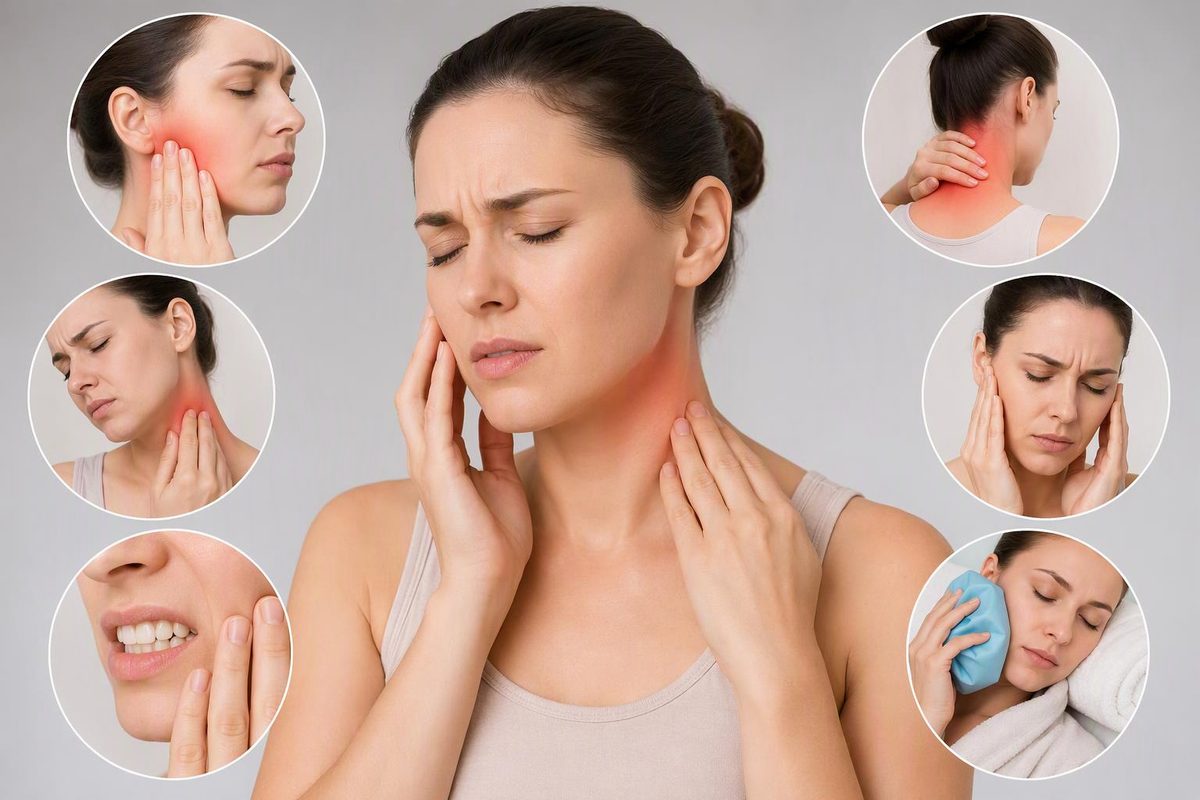
Jaw and neck muscles can hurt at the same time, but this does not prove that one area caused the other. Jaw-muscle temporomandibular disorder (TMD), clenching, a neck strain and dental problems can produce overlapping symptoms. What provokes the pain—and what comes with it—helps determine the next step.
When the pattern leans toward jaw-muscle TMD
TMD is a group of conditions affecting the jaw joints, chewing muscles or both. A muscle-led TMD pattern is more plausible—not confirmed—when pain:
- feels like an ache, tightness or fatigue in the cheek, jaw angle or temple
- worsens with chewing, clenching, yawning or prolonged talking
- is reproduced as your familiar pain when the chewing muscles are pressed, rather than feeling only like pressure
- comes with jaw stiffness, restricted opening or painful clicking
- spreads from the jaw into the face or neck
The National Institute of Dental and Craniofacial Research (NIDCR) lists pain in the chewing muscles or jaw joint as the most common TMD symptom and notes that it can spread to the neck. It also cautions that jaw and facial pain can come from other conditions, so symptoms alone do not confirm TMD (NIDCR).
Jaw and neck pain commonly coexist. A 2025 systematic review found more TMD and greater chewing-muscle tenderness among adults with neck pain than among controls. However, the evidence was rated very low certainty and came from cross-sectional studies, which can show an association but not which problem caused the other (systematic review).
When the neck may be leading the problem
The pattern leans more toward the neck when turning, bending or holding the neck in one position reliably reproduces the pain, while chewing has little effect. A stiff neck after prolonged desk work, an awkward sleep position or exercise also fits a strain or tension pattern. Numbness, tingling or weakness in an arm or hand can indicate nerve involvement rather than an isolated jaw-muscle problem (MedlinePlus).
The distinction is not always clean. A clinician evaluating possible TMD may examine the head, face, jaw and neck because tenderness and movement problems can span these regions. A physiotherapist familiar with jaw disorders can assess both areas; TMJ physical therapy techniques may include jaw exercises, manual therapy and neck treatment when appropriate.
Clenching can be part of the picture
Awake or sleep bruxism—clenching or grinding—can cause jaw pain, tiredness and headache. Morning jaw fatigue, tooth wear or a partner hearing grinding may raise suspicion, but some people clench without noticing. Stress is associated with bruxism and may increase TMD pain, but that does not mean the symptoms are imaginary or that stress is the only possible cause (NIDCR bruxism guidance; UCLH).
During the day, let the teeth stay slightly apart rather than holding them together. Do not force the jaw into a rigid position; use the gentle approach described in how to fix resting teeth position.
Clues that suggest a different source
Arrange a dental assessment when the pain centers on one tooth or gum, especially with hot-or-cold sensitivity, pain on biting, a bad taste or localized swelling. A dental abscess can also cause jaw swelling, fever, swollen neck glands and difficulty opening the mouth (NHS). Location alone cannot separate dental pain from TMD; jaw pain causes and warning signs provides a broader comparison.
Pain centered in front of the ear with locking, a sudden bite change or painful joint sounds may involve the jaw joint rather than only muscle. By contrast, painless clicking is common and generally does not need treatment, according to NIDCR.
What to try for a mild, recent muscle flare
If there was no injury or warning sign, a short period of reversible self-care is reasonable:
- Temporarily choose softer foods, then return toward your usual diet as pain eases.
- Avoid gum, chewy foods, nail biting and very wide yawning.
- Use wrapped heat or cold on the sore area, whichever feels better.
- Keep the jaw relaxed and notice daytime clenching.
- Continue comfortable neck and jaw movement rather than stretching aggressively into pain.
- Ask a pharmacist or clinician whether an over-the-counter pain reliever is safe with your health conditions and other medicines.
These measures align with conservative first-line care from NIDCR. Because evidence for many TMD procedures is limited, the agency recommends starting with simple, non-permanent options and avoiding treatment that permanently changes the teeth, bite or jaw joint without a clear indication (NIDCR).
Arrange an evaluation if pain is worsening, repeatedly returning, limiting eating or mouth opening, or not improving with self-care. A dentist is a practical first stop for tooth symptoms, suspected grinding or pain tied to jaw function. Primary care is appropriate when neck symptoms dominate, particularly with arm symptoms or broader medical concerns. Persistent combined jaw and neck pain may require assessment of both regions rather than assuming that every symptom is TMD.
Get urgent help for these warning signs
Call emergency services for unexplained jaw or neck discomfort with chest pressure or shortness of breath, or with signs such as a cold sweat, nausea or lightheadedness. Heart-attack discomfort can involve the neck or jaw and shortness of breath may occur with or without chest discomfort (American Heart Association).
Call emergency services for sudden facial drooping, one-sided arm weakness or numbness, speech difficulty, new loss of balance or sudden vision changes—possible stroke signs listed by the American Heart Association. Seek emergency help as well for difficulty breathing, speaking or swallowing; extensive mouth, face or neck swelling; or severe symptoms after a fall or blow.
Fever with facial or jaw swelling, a bad taste and worsening difficulty opening the mouth can indicate a dental abscess and needs urgent dental assessment. Major mouth swelling or trouble breathing, speaking or swallowing requires emergency care (NHS). New temple or scalp tenderness with vision changes—particularly if chewing brings on jaw pain—also warrants urgent medical assessment rather than massage or jaw exercises.