
How to Fix Resting Teeth Position Without Forcing Your Jaw
At rest, teeth usually stay slightly apart. Learn a gentle jaw-reset routine, what not to force, and when bite or breathing changes need evaluation.
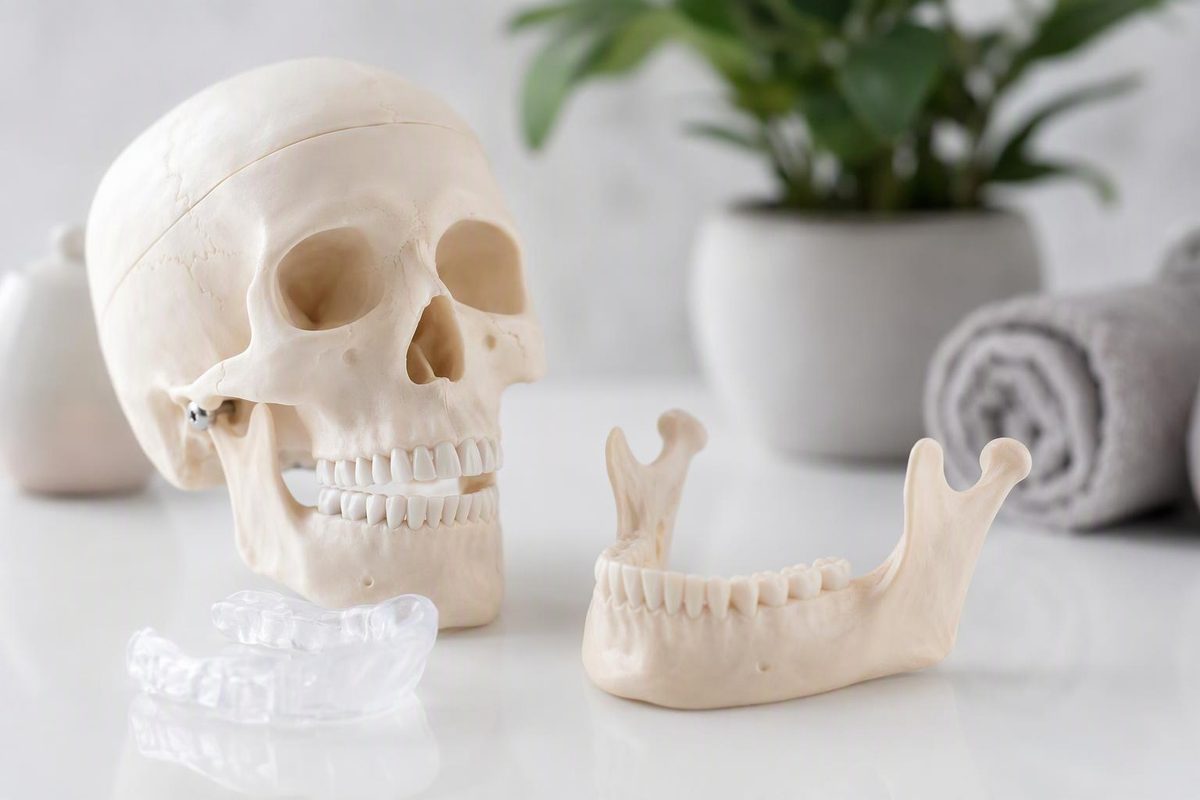
At rest, your upper and lower teeth generally should not be held together. A useful starting posture is:
- teeth slightly apart;
- jaw muscles relaxed;
- lips resting together if that is comfortable;
- tongue resting lightly inside the mouth rather than pressing against or between the teeth; and
- quiet nasal breathing when your nose is clear.
There is normal variation in tongue placement. The American Speech-Language-Hearing Association describes a typical oral rest posture as closed lips, nasal breathing, slightly separated teeth, and the tongue tip resting at the front of the hard palate, by the lower incisors or over nearby gum tissue. There is not one precise “spot” that everyone must force the tongue to hold (ASHA).
A gentle way to reset your resting position
Try this without pushing, stretching or attempting to change your bite:
- Let your shoulders drop. Unclench your hands and soften your face.
- Say “Emma.” After the final sound, pause without closing your teeth together. NHS guidance uses this as a cue for a relaxed jaw position (Right Decisions, NHS Scotland).
- Keep a small space between the teeth. You do not need to measure it or hold your mouth visibly open.
- Rest the tongue lightly. It may rest near the ridge behind the upper front teeth, but do not press it against the teeth or create a forceful suction hold.
- Let the lips meet only without strain. If closing them tightens your chin or interferes with comfortable breathing, do not force them shut.
- Breathe normally. Use nasal breathing only when your nasal airway feels clear.
Check this position briefly several times a day, then return to what you were doing. Phone reminders or notes near a computer may help. The National Institute of Dental and Craniofacial Research suggests reminders to keep the teeth apart for people who grind or clench during the day (NIDCR).
The aim is a relaxed habit—not a jaw exercise, treatment for every type of jaw pain or way to move the teeth. Your teeth will still meet while you chew.
Reduce habits that keep the jaw working
Rest posture is harder to maintain if the jaw is repeatedly loaded. Notice whether you:
- hold the teeth together while concentrating or driving;
- brace the lower jaw forward or to one side;
- chew gum, pens, nails or the inside of your cheek;
- prop your chin on your hand; or
- press the tongue firmly against or between the teeth.
NHS guidance lists tooth contact, jaw bracing, chin resting, gum or pen chewing, and sustained tongue pressure among behaviors to address in TMD self-management (Right Decisions, NHS Scotland). Use the brief reset whenever you notice one of them. If your jaw is sore, avoid repeatedly testing your bite or opening your mouth just to check whether it still clicks.
A daytime reset may help you interrupt awake clenching, but it cannot show whether you grind during sleep or stop sleep bruxism. Waking with jaw fatigue has several possible explanations; compare the patterns in sleep bruxism versus TMD symptoms.
Do not try to move your teeth with tongue pressure
A relaxed tongue posture is different from “mewing,” forceful tongue pressing or trying to hold the jaw in a new position. The American Association of Orthodontists says evidence does not support claims that mewing can reshape the jaw or correct tooth alignment. It advises against attempts to move teeth or align the jaws without professional supervision (AAO).
Do not use an online exercise, mouthguard or improvised appliance to force your bite into a different position. If an appliance causes a new or persistent change in how your teeth meet, stop experimenting and contact the clinician who supplied it. Partial coverage, poor fit and some repositioning designs require particular care; see this overview of TMJ mouth-splint types and safety risks.
A resting position that feels “wrong” may reflect a tooth, bite, muscle, airway or jaw-joint issue that posture practice cannot resolve. See what clinicians may mean by a misaligned jaw before assuming posture is the cause.
When the position is difficult to maintain
Arrange an evaluation rather than forcing the posture if:
- you cannot breathe comfortably through your nose;
- your lips will not meet without strain;
- tongue position appears to affect speech or swallowing;
- your tongue persistently rests between the teeth;
- you have tooth wear, fractures, sensitivity or morning jaw fatigue;
- jaw pain or limited opening persists; or
- your bite seems to be changing.
A dentist can examine the teeth, bite and signs associated with clenching. An orthodontist evaluates tooth and jaw alignment. Persistent nasal blockage may need assessment by a primary-care clinician or an ear, nose and throat specialist. A speech-language pathologist with relevant orofacial myofunctional training may assess tongue, swallowing and speech patterns as part of a team. ASHA notes that closed-mouth posture cannot be established consistently until airway interference has been addressed (ASHA).
Seek prompt clinical care if your jaw locks open or closed, your bite changes suddenly after trauma, or jaw pain occurs with fever. Rapid facial or neck swelling accompanied by difficulty breathing or swallowing needs emergency care. These are not resting-posture problems to correct at home.