
Jaw Lock Remedy: Safe Steps for an Open or Closed Lock
Use jaw position and warning signs to choose the next step, from emergency care for a mouth stuck open to safe comfort measures for limited opening.
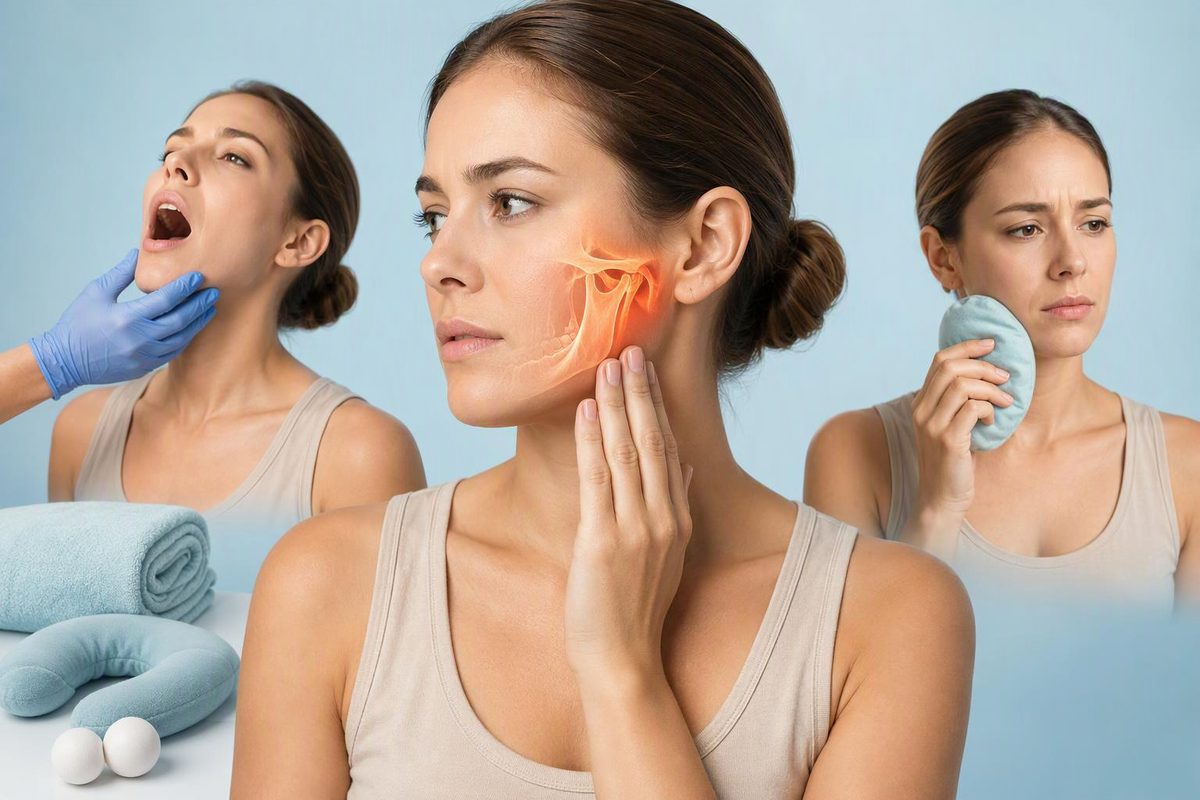
A jaw stuck open that cannot close needs emergency treatment because it may be dislocated. A jaw that will not open fully needs prompt assessment, especially when the restriction is new or persistent. Do not force either type of lock, attempt to reposition the joint or repeatedly test how far the mouth can move.
Choose what your jaw is doing and any warning signs; the tool shows the appropriate level of care.
Choose the Next Step for a Locked Jaw
Select the closest description. This tool separates emergency warning signs from restricted opening that needs prompt assessment.
A new or persistent reduction in opening should be assessed by a dentist or clinician experienced in jaw disorders.
- Do not force the mouth wider.
- Use soft food and comfortable heat or cold.
- Keep movement gentle and stop if pain or catching increases.
Sources: Cleveland Clinic on jaw dislocation, NHS on dental-abscess warnings and NIDCR on conservative TMD measures.
A Mouth Stuck Open Needs Emergency Treatment
A jaw held open that cannot close—often after a yawn, a large bite or dental work—fits the pattern of a mandibular dislocation. It may cause severe pain, drooling and difficulty speaking or eating. This is a medical emergency, and delaying treatment can make the jaw harder to return to its normal position, according to Cleveland Clinic and the Merck Manual.
This is not the same as having a limited but still movable jaw. With a suspected dislocation, the mouth remains open despite attempts to relax, and the person cannot bring the teeth together normally. The visible position and inability to close matter more than whether the episode began with pain, a pop or an ordinary movement such as yawning.
While getting emergency help:
- Support the lower jaw gently with your hand or a soft cloth.
- Do not eat, chew or try to open wider.
- Do not push on the jaw or ask another person to put it back.
- Do not follow an online jaw-reduction maneuver.
Healthdirect Australia advises never trying to put a dislocation back yourself. Reduction is a clinical procedure. Clinicians may use pain relief, a muscle relaxant, sedation or anesthesia before repositioning the jaw.
Trying to reduce it without an examination can apply force in the wrong direction, worsen pain or overlook an injury. A jaw that became stuck after a blow or fall may also have an associated facial injury, so it should not be treated as an uncomplicated joint problem at home.
Call emergency services rather than arranging your own transport if breathing is affected or the lock followed a serious head or facial injury. Emergency services are also appropriate when the person has concerning symptoms after trauma, such as vision changes, vomiting or unusual drowsiness.
Restricted Opening Should Not Be Forced
A sudden, persistent reduction in how far the mouth opens is sometimes called a closed lock. The jaw may still move a little, but eating, brushing the teeth or taking a normal bite becomes difficult. This requires a different response from a mouth fixed open.
One possible explanation is disc displacement without reduction. The small disc in the jaw joint remains out of position and obstructs normal movement. Clues can include a click that stopped just before opening became restricted, pain in front of one ear and the jaw pulling toward that side while opening.
Those clues do not establish the diagnosis. Muscle spasm, arthritis, infection, trauma and other conditions can also limit opening. A person cannot reliably identify which tissue is responsible simply by feeling where it hurts or listening for a click.
Arrange prompt assessment with a dentist or clinician experienced in jaw disorders when restricted opening is new and does not release. Acute closed-lock treatment differs from treatment for longstanding restriction. Diagnosis requires a history and examination, and imaging is sometimes used.
The Canadian Dental Association’s clinical guidance warns that trying to force the mouth wider can aggravate tissues inside the joint and increase pain. That means forceful stretching is not a substitute for determining why movement has changed.
A brief catch that releases immediately is not identical to a jaw that remains restricted, but repeated catching still deserves attention if it is becoming more frequent, painful or disruptive. For a closer comparison of brief catching, a closed lock and a jaw stuck open, see why your jaw keeps locking.
Safe Comfort Measures While Arranging Care
If there was no significant injury, the mouth is not stuck open and none of the emergency warning signs is present, temporary measures can reduce strain. They do not relocate a dislocated joint, move a displaced disc back into place or treat a dental infection.
Rest the Jaw Without Immobilizing It
Choose foods that require little chewing and cut them into small pieces. Avoid gum, chewy meat, crusty bread and oversized bites. The aim is to reduce loading while keeping eating manageable, not to test whether the jaw can tolerate one more difficult bite.
Do not repeatedly open wide to check whether the restriction has gone. Repeated testing can reproduce the same painful movement and irritate an already sensitive joint or muscle.
If the jaw can move, keep movements slow and within a comfortable range. Stop if an attempted movement increases pain, causes catching or leaves the jaw more restricted. Do not begin forceful stretches or joint-mobilization exercises unless a clinician has identified the problem and shown you how to perform them.
Use Heat or Cold for Comfort
A wrapped heat or cold pack can be used according to which feels better. Keep a protective layer between the pack and the skin. Do not apply heat to a recent injury.
Temperature is a comfort measure rather than an unlocking technique. It should not delay urgent assessment when swelling is spreading, fever is present, the mouth is stuck open or the restriction followed significant trauma.
Use Nonprescription Medicine Only When Appropriate
Ibuprofen or acetaminophen may help with pain if you can take the chosen medicine safely. Follow the package directions and do not exceed the stated dose. Ask a pharmacist or clinician when health conditions, other medicines or uncertainty about the product make the choice unclear.
Pain relief does not identify the cause of restricted movement. An improvement after medicine does not rule out a joint problem, dental infection or injury if the jaw remains mechanically restricted.
Reduce Clenching and Other Jaw Loading
Avoid clenching, nail biting and resting your chin on your hand. When the jaw is at rest, let it relax rather than deliberately holding the teeth together.
Soft food, wrapped heat or cold, over-the-counter pain medicine and reducing clenching are among the conservative measures described by the National Institute of Dental and Craniofacial Research. These measures can make a restricted jaw more comfortable while care is arranged, but they are not a universal remedy for every type of lock.
Home Unlocking Attempts Can Make the Problem Worse
Do not use your fingers, an object between the teeth or another person’s hands to lever the mouth open or closed. The correct response depends on whether the jaw is dislocated, the joint disc is obstructing movement, muscles are in spasm, an infection is limiting opening or an injury has occurred.
Do not treat a mouthguard as an emergency unlocking device. A newly purchased guard does not diagnose the cause, and placing anything in the mouth is inappropriate when the jaw is stuck open or swallowing is difficult.
Avoid copying exercises intended for a different jaw condition. A gentle movement used after a clinician’s diagnosis is not equivalent to a forceful maneuver used during an unexplained acute lock. If movement makes the jaw catch, increases pain or reduces opening further, stop rather than pushing through it.
Do not assume that a familiar history of clicking makes a new persistent lock harmless. A click that previously came and went does not establish the cause of a later restriction. A sudden bite change, worsening pain or difficulty eating and drinking warrants assessment even without an emergency warning sign.
Swelling, Fever or Trauma Changes the Response
Seek emergency care now for:
- a mouth stuck open that cannot close
- trouble breathing, speaking or swallowing
- rapidly increasing or extensive swelling in the mouth, face or neck
- locking after a substantial blow, fall or other facial injury
- vision changes, vomiting, unusual drowsiness or other concerning symptoms after trauma
Restricted opening with fever, facial or jaw swelling, intense tooth or gum pain, a bad taste or drainage requires urgent dental or medical assessment. These features may point away from a simple joint flare and toward an infection requiring specific treatment.
A dental abscess can cause both swelling and difficulty opening. It needs dental treatment rather than jaw exercises. The NHS dental-abscess guidance advises emergency care for breathing or swallowing difficulty, extensive mouth swelling or severe difficulty opening the mouth.
Do not apply the advice for an uncomplicated restricted jaw to someone with these infection signs. Soft food or a pain reliever may provide temporary comfort, but neither addresses the source of an abscess.
Trauma also changes the decision. A lock following a substantial impact should be assessed for injury rather than manipulated as though it were an ordinary TMJ episode. Support the jaw, avoid chewing and seek emergency evaluation when the injury or associated symptoms are serious.
Assessment Determines Which Remedy Fits the Cause
A clinician will distinguish between a jaw stuck open, restricted joint movement, muscle-related limitation, dental infection and injury. The history of how the episode started matters: a yawn followed by an inability to close suggests a different problem from a click that stopped before opening became restricted or swelling that developed with tooth pain.
The examination can also assess whether the jaw deviates during opening, whether the bite has changed and where tenderness or swelling is located. Imaging is sometimes used, but the draft evidence does not provide a single imaging rule that applies to every patient with locking.
Treatment therefore cannot be reduced to one universal jaw lock remedy. A dislocation requires professional repositioning. A possible acute closed lock needs prompt examination and cause-specific management. Infection requires dental or medical treatment. Muscle-related restriction and other jaw disorders may be managed differently after serious causes have been excluded.
Even without emergency signs, make an appointment when locking keeps recurring, the bite suddenly feels different, pain is worsening or eating and drinking remain difficult. Until then, avoid force, reduce jaw loading and use only comfortable movement.