
TMJ Physical Therapy Techniques: What Helps and Why
How jaw exercises, manual therapy, neck treatment and self-management fit into TMJ physical therapy—and where the evidence is limited.
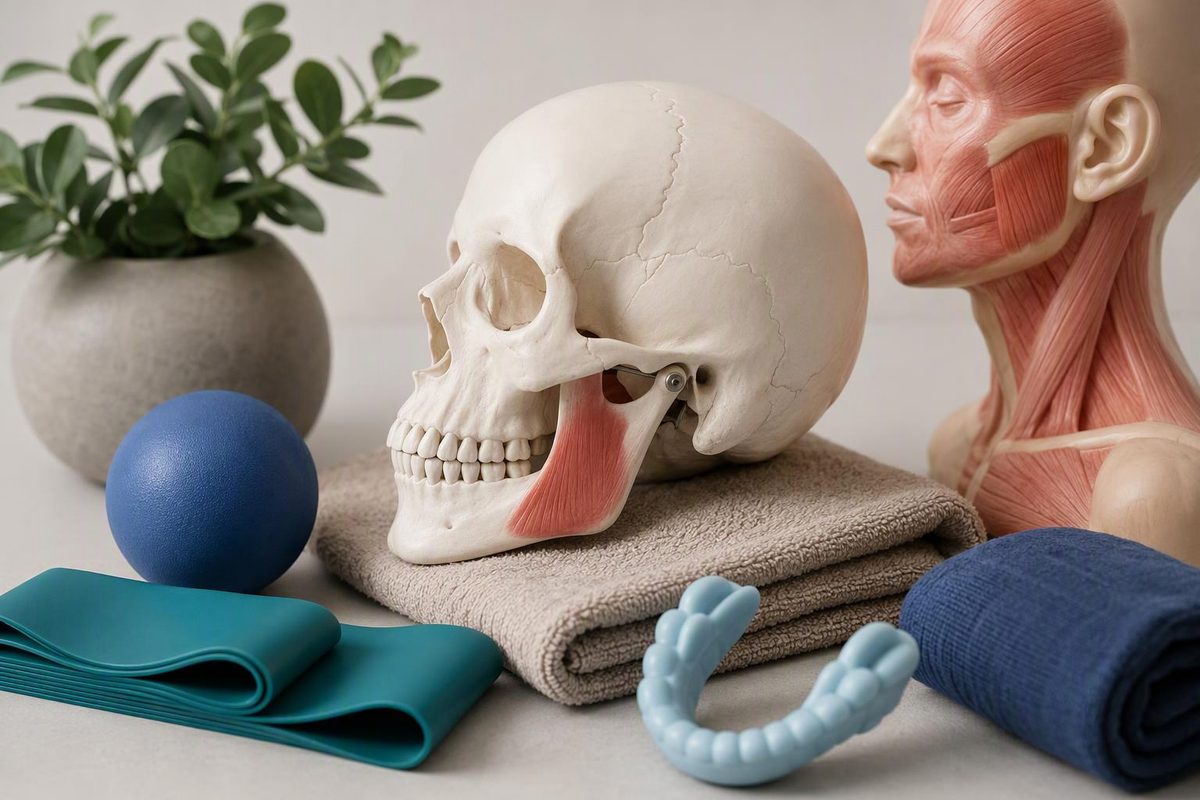
Physical therapy for temporomandibular disorders (TMDs) usually combines movement training, hands-on treatment and practical changes that reduce strain on the jaw. “TMJ” is the joint; TMD is the broader term for disorders involving the joint, chewing muscles or both (NIDCR).
The useful techniques depend on the problem being treated: painful muscles, restricted opening, poorly controlled movement, neck involvement or recovery after a procedure. The goal is better function—easier chewing, speaking and yawning—not simply forcing the mouth to open wider.
The main techniques
| Technique | What it involves | What it may target |
|---|---|---|
| Jaw coordination exercises | Slow, controlled opening and closing, sometimes using a mirror or light finger guidance | Deviation, jerky movement and movement-related pain |
| Mobility and stretching | Gentle opening or side-to-side movements within a planned range | Stiffness and limited motion |
| Isometric or resisted exercise | The jaw presses lightly against resistance with little or no movement | Muscle control and gradual strengthening |
| Therapist-assisted mobilization | A physical therapist applies controlled movement to the jaw joint | Restricted movement and pain |
| Soft-tissue and trigger-point work | External or, with consent, intraoral pressure or massage to chewing muscles | Muscle tenderness and guarding |
| Neck treatment and postural exercise | Neck mobility, endurance and movement work selected after an examination | TMD accompanied by neck pain or restricted neck movement |
| Education and habit change | Pacing chewing, reducing clenching and gum use, and learning a relaxed jaw position | Repeated overload and flare management |
| Heat, cold or electrical modalities | Symptom-relief measures used alongside active treatment | Short-term comfort rather than lasting movement capacity |
Controlled jaw movement
Coordination exercises retrain how the lower jaw moves rather than forcing it farther open. A therapist may ask you to open slowly while keeping the movement smooth, then practice only through a comfortable range. Mobility drills can add gentle forward and side-to-side movement. Stretching or resistance may follow when appropriate.
These categories are not interchangeable. A person with muscle-related pain may receive a different exercise from someone whose jaw catches or has recently been immobilized. That is one reason not to copy an aggressive stretching routine without an assessment.
A 2023 systematic review covered excursion, stretching, resistance and coordination exercises. Coordination work appeared promising, but only five trials with 145 participants qualified for the review. Exercise dose and terminology varied, and most assessments had a high risk of bias. The authors could not establish standardized treatment parameters (Frontiers in Oral Health). There is no single research-backed repetition count that fits every TMD.
Manual therapy
Manual therapy is treatment delivered with the therapist’s hands. It can include:
- gentle jaw-joint mobilization;
- massage or sustained pressure over tender chewing muscles;
- intraoral soft-tissue work, with consent; and
- treatment of the neck when examination findings support it.
This is different from a forceful attempt to “put the disc back.” The pressure and direction should be selected from the examination and adjusted to your response.
For chronic TMD pain lasting at least three months, a 2023 guideline strongly recommended therapist-assisted mobilization, manual trigger-point therapy, supervised jaw exercise and stretching, and supervised postural exercise (The BMJ). The recommendations do not apply to acute TMD pain.
The linked systematic review found 233 eligible randomized trials; 153 trials involving 8,713 participants were included in network meta-analyses. Therapist-assisted jaw mobilization and manual trigger-point therapy were among the interventions most likely to produce a meaningful improvement in chronic pain. Supervised jaw exercise and stretching probably improved physical function (The BMJ systematic review). These results concern chronic TMD as a group and are not a protocol for every new jaw injury or locking episode.
Neck and posture work
A therapist may examine neck movement, muscle endurance and whether neck activity reproduces familiar symptoms. Treatment can include gentle neck mobilization and exercises for controlled head and upper-back movement.
This does not mean posture alone caused the TMD or that holding a rigid “perfect” posture will cure it. Neck treatment is most relevant when neck symptoms or movement limitations are part of the presentation.
A systematic review of five trials involving 213 participants found short-term improvements in pain and jaw function after manual therapy to the neck. However, 90% of participants were women, and the authors said further studies were needed to establish the quality and durability of the results (Journal of Oral & Facial Pain and Headache).
Education and a home plan
The active part of therapy continues between appointments. A plan may include:
- keeping the teeth apart when not eating, without forcing the jaw into position;
- temporarily reducing gum, tough foods and very wide opening during a flare;
- noticing daytime clenching and using reminders to release it;
- gradually returning to normal chewing rather than staying on soft food indefinitely; and
- tracking pain, comfortable opening and tasks such as eating or speaking.
The National Institute of Dental and Craniofacial Research advises starting with conservative care because symptoms resolve without treatment for many people and evidence for many TMD treatments remains limited. Its initial measures include soft food, heat or cold combined with gentle exercise, and reducing clenching, gum chewing and nail biting (NIDCR). See things that can make TMJ pain worse for practical ways to reduce jaw load temporarily.
Passive modalities
Heat or cold may make movement more comfortable. Some clinics also offer ultrasound, low-level laser therapy or transcutaneous electrical nerve stimulation (TENS). These should not automatically become the center of treatment.
For chronic TMD pain, the BMJ guideline conditionally recommended against TENS and low-level laser therapy when compared with placebo or sham treatment. “Conditionally against” does not mean nobody experiences temporary relief; it means the evidence does not favor routinely choosing these options ahead of better-supported care. Ask what measurable goal a passive treatment serves and what active work is intended to carry any gains into daily life.
What to expect from an assessment
A physical therapist may ask where the pain is, what movements provoke it, whether the jaw locks and how symptoms affect eating, sleep and speaking. The examination can cover jaw opening and side-to-side movement, familiar tenderness, joint sounds and neck movement. There is no single standard test that diagnoses TMD, and mouth, jaw or facial pain may come from another condition. A doctor or dentist may recommend imaging according to the findings (NIDCR).
Look for a licensed physical therapist with training or regular experience in TMD and head-and-neck problems. The American Physical Therapy Association’s consumer guide specifically suggests asking about the therapist’s experience helping people with TMD before booking (ChoosePT). A useful plan should explain the working diagnosis, home technique, expected response and reassessment point.
Track function as well as pain: comfortable mouth opening, chewing tolerance, frequency of locking and recovery after meals. Contact the treating clinician if an exercise causes sharp pain, increasing locking or a sustained worsening rather than mild, short-lived soreness.
When assessment should come before exercise
Arrange prompt medical or dental assessment rather than stretching through symptoms if the jaw is locked open or closed, pain followed facial trauma, or fever, facial swelling or drainage accompanies the pain. Physical therapy may become part of care after the cause is assessed, but it should not delay treatment for a fracture, infection or dental problem. When to seek care for a TMJ flare explains how locking, worsening function and systemic symptoms affect the next step.
Call emergency services for chest pressure or other possible heart-attack symptoms, which can include discomfort in the jaw, arm, back, neck or stomach; shortness of breath; cold sweat; nausea; or lightheadedness. The American Heart Association advises calling 911 rather than waiting when these warning signs occur (American Heart Association).