
Physical Therapy for TMJ Syndrome: Benefits and Limits
See when physical therapy may help TMD pain and jaw movement, what treatment involves, which warning signs need care, and how to judge progress.
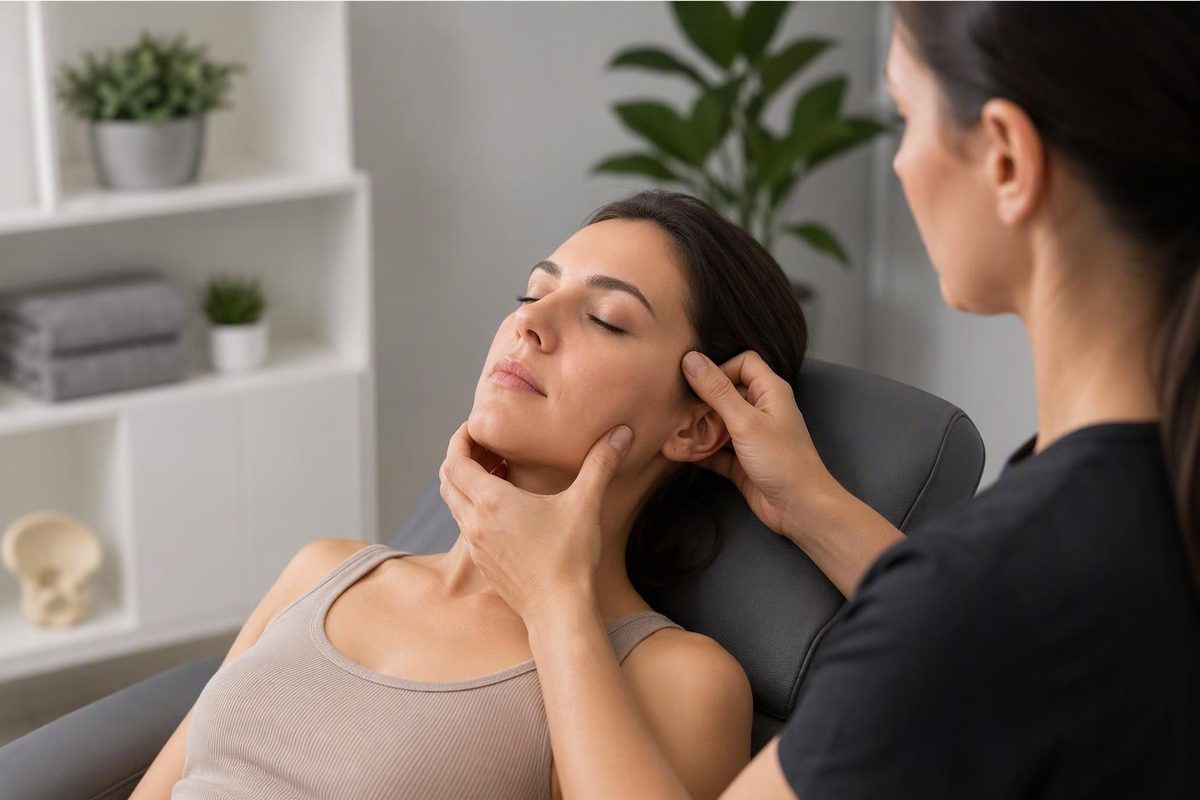
Physical therapy can be a reasonable conservative treatment for some temporomandibular disorders (TMDs), especially when pain, muscle tenderness or restricted movement interferes with chewing, speaking or opening the mouth. It cannot treat every cause of jaw pain, and it does not “put the TMJ back in place.”
“TMJ” refers to the jaw joint; TMD is the broader term for disorders involving the joint, the chewing muscles or both. Tooth problems, ear conditions and other disorders can resemble TMD. The National Institute of Dental and Craniofacial Research (NIDCR) says there is no single standard diagnostic test, so a dentist or doctor may need to rule out other conditions (NIDCR). Unexplained jaw or facial pain may need evaluation before—or alongside—physical therapy.
Choose your warning signs and symptom pattern to see where physical therapy may fit.
Choose Two Answers
The result will indicate whether physical therapy is reasonable to discuss, whether another evaluation should come first, or whether prompt care is more appropriate.
Sources: NIDCR TMD guidance; 2023 BMJ chronic TMD guideline; American Heart Association warning signs. This tool provides general information, not a diagnosis.
How Physical Therapy May Help
A TMD-focused physical therapy plan may combine several approaches:
- Jaw exercises: Controlled opening and closing, side-to-side movement, stretching or gentle resistance selected for the problem being treated.
- Manual therapy: Hands-on work to the jaw, face or neck muscles and gentle joint mobilization. Some treatment may be performed inside the mouth, but the therapist should explain it and obtain consent first.
- Movement retraining: Practicing a smoother opening path while reducing unnecessary muscle effort.
- Neck exercise: Used when neck pain, stiffness or movement is relevant—not because posture is assumed to be the sole cause.
- Education and self-management: Temporarily modifying clenching, gum chewing, prolonged wide opening and other aggravating habits, followed by a gradual return to normal use.
For chronic TMD pain lasting at least three months, a 2023 BMJ clinical guideline strongly recommended therapist-assisted mobilization, manual trigger-point therapy, supervised postural exercise, and supervised jaw exercise and stretching. These recommendations apply to chronic TMD pain as a group of conditions, not every individual diagnosis or acute TMD pain (BMJ guideline).
The guideline’s linked review included 233 randomized trials. It found moderate-certainty evidence that therapist-assisted jaw mobilization and manual trigger-point therapy probably improve chronic TMD pain compared with placebo or sham treatment. Supervised jaw exercise and stretching probably improve physical function (BMJ systematic review).
These findings support several physical therapy techniques. They do not establish that every technique or branded protocol works equally well.
Exercises Should Be Individualized
There is no evidence-based universal set of “TMJ exercises” with one correct number of repetitions. A 2023 systematic review found encouraging results for coordination exercises, but it included only five studies with 145 participants. Treatment frequency, intensity and duration were not standardized, and the certainty of evidence for pain and range of motion was low (Frontiers in Oral Health).
Different findings can require different approaches. Someone with guarded, restricted opening may receive graded movement work, while another person may need a different program. A generic video cannot account for the diagnosis, symptom irritability or response to each exercise.
A useful home program should specify:
- Which movement to perform and why.
- How many repetitions to do and how often.
- How much discomfort, if any, is acceptable.
- When to reduce the dose or stop.
- Which outcome to track before the next visit.
Mild, brief muscle effort may occur during exercise. Stop and contact the treating clinician if an exercise causes a sustained increase in pain, new locking, a new change in how the teeth meet or progressively reduced opening rather than improvement.
What Happens at a TMD Physical Therapy Visit
A physical therapist will usually ask where the pain occurs, how long it has lasted, and how chewing, talking, yawning and sleep affect it. The examination may include jaw opening and movement, tenderness around the chewing muscles and joints, and relevant neck movement.
The American Physical Therapy Association’s patient guide also describes assessment of the head, neck, jaw, posture, breathing pattern and possible contributing factors (ChoosePT).
Treatment goals should be functional and measurable. Examples include chewing a broader range of foods, opening the mouth more comfortably or completing a workday with less jaw pain. Pain ratings can help, but they should not be the only measure.
Ask when progress will be reviewed rather than buying an open-ended package of care. Research does not establish one treatment length that works for everyone. If function and symptoms are not improving, the plan—and sometimes the diagnosis—should be reassessed.
When Physical Therapy Fits—and When It Does Not
Physical therapy may be worth discussing when jaw pain or stiffness changes with movement, the chewing muscles are tender, opening is limited, or symptoms coexist with relevant neck pain. It may also be part of rehabilitation after jaw surgery or trauma, but only within the treating clinician’s precautions.
Painless clicking alone usually does not require treatment. NIDCR describes painless TMJ sounds as common and normal. Physical therapy is also unlikely to solve pain caused by a cracked or infected tooth, an ear disorder or another non-TMD condition.
Arrange prompt clinical care instead of starting exercises if the jaw is locked, symptoms followed facial trauma, or pain occurs with fever, marked swelling, drainage, or trouble eating, drinking or speaking. See what to do during a TMJ flare and when to get care.
Jaw discomfort can also occur during a heart attack. Call emergency services for jaw discomfort accompanied by chest pressure or pain, shortness of breath, a cold sweat, nausea, lightheadedness, or discomfort in an arm, the back, neck or stomach (American Heart Association).
How to Choose a Physical Therapist
Look for a licensed physical therapist who regularly treats jaw, facial and neck disorders. Before booking, ask:
- How often do you treat TMD?
- Do you coordinate with dentists, orofacial pain clinicians or physicians when the diagnosis is uncertain?
- Will I receive a written home program with progression and stopping rules?
- How will we measure improvement and decide whether to continue?
- Do you use intraoral manual therapy, and what alternatives are available if I decline it?
Hands-on treatment may provide relief, but it need not be the entire plan. The longer-term aim is usually to improve movement, function and self-management. If a clinic markets a branded “deep release” as a cure, compare that claim with the evidence for broader manual therapy: deep jaw release is not a standardized TMD protocol.
Physical therapy is most defensible as a reversible, goal-directed trial—not a promise to permanently realign the jaw. An appropriate evaluation, individualized exercises and scheduled reassessment make it easier to tell whether it is helping.