
Why Jaw Injections Can Flatten or Unbalance Your Smile
Learn why jaw injections can alter a smile, the evidence on frequency and recovery, warning signs, and the questions to ask before treatment.
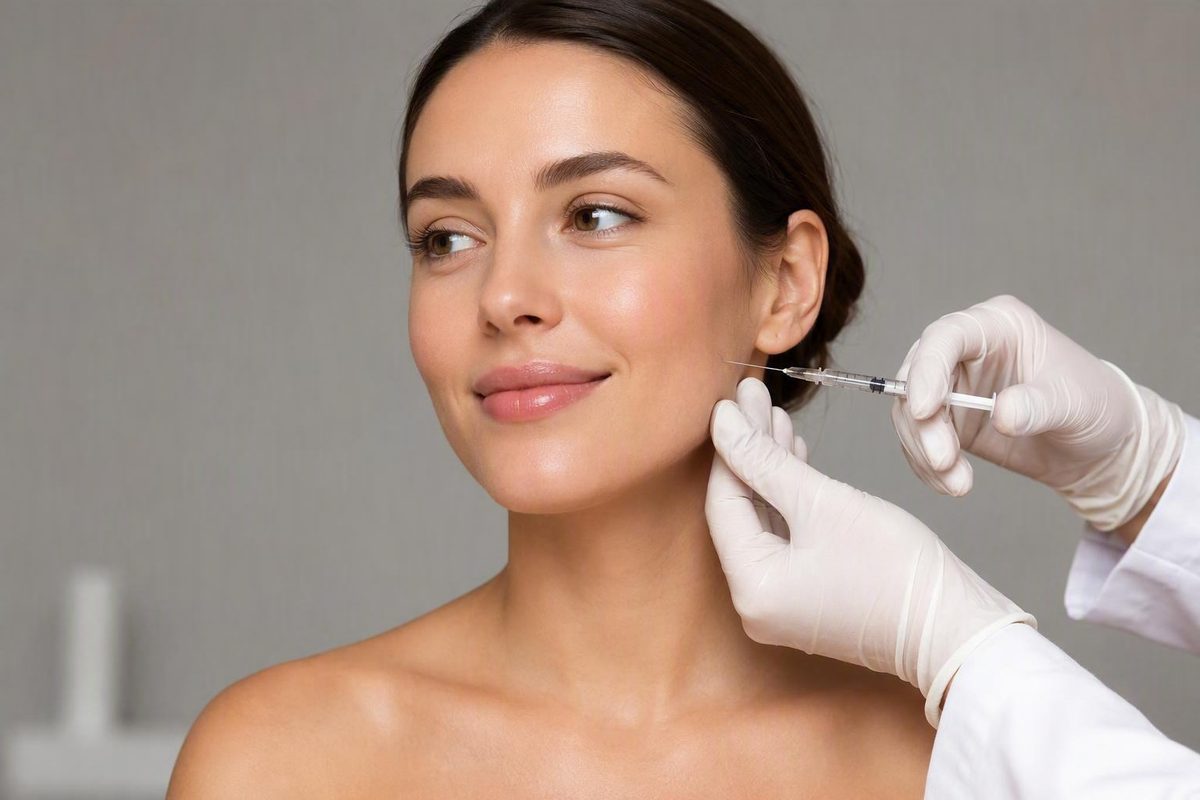
Yes. Masseter botulinum toxin injections can temporarily flatten, weaken, or unbalance your smile if toxin affects nearby expression muscles. This is an unintended complication, not the expected result of treating clenching or changing jaw contour. One review found smile asymmetry in 2 of 80 patients, or 2.5%, but the evidence is too limited to predict an individual risk or a reliable recovery date.
Tap the face zones, enter what you know about the treatment, and generate questions for your injector.
The diagram is schematic, not an injection guide. Select a colored structure to see its role and what unintended weakness may look like.
Normal role: Closes the jaw during biting and chewing.
If weakened as intended: Clenching force and lower-face prominence may decrease. This should not directly freeze a smile.
Units cannot be converted across botulinum toxin products.
- Which exact product will you use, and why is it appropriate for my goal?
- How will you document my smile at rest and in motion before treatment?
- How will you keep treatment within the intended masseter?
- When is follow-up, and whom do I contact if my smile or chewing changes?
| Evidence | Finding | Limit |
|---|---|---|
| 80-patient chart review | 2 smile-asymmetry cases: 2.5% | One clinic; 74 patients were women |
| 36-article review | Most masseter-injection complications appeared in 2–4 weeks and resolved within 12 weeks | Not specific to smile asymmetry |
| Expert guidance and one account | Fuller effect around days 10–14; reported smile recovery about 3–5 months | No reliable smile-specific average |
| FDA status evidence | Application accepted August 4, 2026 for review of BOTOX Cosmetic for masseter prominence | Acceptance was not approval |
Sources: 80-patient retrospective review; 36-article literature review; October 2024 BOTOX Cosmetic label; August 4, 2026 Allergan announcement. Diagram is schematic.
Smile Asymmetry Is Documented but Poorly Quantified
The strongest direct clinical evidence supplied for this question is a retrospective chart review of 80 patients who received masseter injections. Two developed smile asymmetry, representing 2.5% of the group. Fifteen patients experienced 16 treatment-related side effects overall, but that broader count is not the smile-change rate. Read the peer-reviewed study abstract.
That finding confirms the complication can happen, but it is not a universal risk estimate. The review came from one dermatology clinic, and 74 of the 80 patients were women. Product, dose, injection pattern, clinician, anatomy and treatment goal may differ elsewhere.
The evidence therefore does not support calling altered smiles either common or invariably rare. Larger controlled studies across products and treatment settings would be needed.
Comedian Hannah Berner brought the complication wider attention after reporting that Dysport injections for TMJ-related clenching left her unable to smile normally. Her experience reportedly began around day 10 and resolved after approximately five months. It demonstrates a possible course, not the typical frequency or duration. E! reported her account.
Contour Change and Impaired Smile Movement Are Different
The masseter is a powerful chewing muscle that helps close the jaw. Botulinum toxin blocks acetylcholine release and reduces neuromuscular activity, temporarily limiting how forcefully the injected muscle contracts, according to the official BOTOX Cosmetic label.
People receive masseter injections for a slimmer lower-face contour and for concerns such as clenching or bruxism. That does not establish that injections are equally safe and effective for every case of temporomandibular joint pain, headache, jaw pain or grinding.
Three effects can look similar in a photograph:
- Lower-face contour changes. Reduced masseter prominence can make the jaw look narrower or less square without impairing expression.
- Chewing changes. Weakening a jaw-closing muscle can make forceful chewing feel different.
- Expression changes. If a nearby smile muscle is weakened, one mouth corner may lift or pull less than the other.
If both mouth corners move equally but the jaw looks slimmer, the difference is primarily contour. If the face appears balanced at rest but one side moves less during a smile, that suggests movement asymmetry. Appearance alone cannot identify the responsible muscle.
Record the face at rest, during a gentle closed-mouth smile and during a full smile. A short video while saying the same phrase can show movement better than a still image. Use similar lighting, camera distance and head position, and compare with pre-treatment images when available.
Toxin Can Reach the Risorius or Zygomaticus Muscles
The masseter closes the jaw, while nearby expression muscles move the mouth corners. The risorius pulls a corner outward, and the zygomaticus muscles help lift it. If toxin reaches one of those muscles, a smile may look flattened, weak or lopsided.
This spread is a plausible and repeatedly discussed explanation, but it has not been proved as the cause of every case. Unequal masseter response, baseline asymmetry and individual anatomy can also change the result.
Factors proposed to affect unintended weakness include:
- Placement within or outside the intended masseter target
- Injection depth, particularly treatment that is too superficial
- Dose and injected volume
- The exact botulinum toxin product
- Differences in muscle size, position and overlap
- Previous lower-face injections and baseline movement
Clinical commentary has raised particular concern about injections placed too superficially or too far toward the front of the masseter, where adjacent expression muscles may be more vulnerable. These are considerations for trained clinicians, not self-injection instructions.
Dysport, the brand reportedly used in Berner’s treatment, is often discussed as having different spread characteristics from BOTOX Cosmetic. The supplied evidence does not provide a controlled head-to-head masseter figure showing how much farther one spreads. Product choice alone therefore cannot explain an individual outcome.
The products also use different potency units. BOTOX Cosmetic units cannot be compared with or converted into units of another botulinum toxin product. A number of “units” has little meaning unless the exact brand is named.
Normal smiling has not been established as a cause of toxin spread. Placement, depth, dose, exposed area and individual anatomy are the more commonly proposed factors. Anatomy-informed treatment can reduce risk, but no credential or technique guarantees that asymmetry cannot occur.
Changes May Appear After Several Days and Last for Months
A smile can look normal immediately after treatment and become uneven as neuromuscular weakness develops. Commercial medical-training guidance places fuller effect at approximately 10 to 14 days, so the pattern may be clearer near two weeks than the next morning. That estimate is expert guidance, not a controlled smile-specific result.
The broader literature gives a shorter but less specific range. A review of 36 articles found that most reported complications from masseter injections appeared within two to four weeks and resolved within 12 weeks. Those findings covered masseter-injection complications generally, not smile asymmetry alone, and included evidence ranging from clinical studies to case reports and expert reviews. Read the literature review abstract.
Dermatologists quoted in the Berner report estimated that smile asymmetry may take approximately three to five months to fade, depending on the product and individual circumstances. Her reported recovery at about five months is one personal account.
There is no dependable average or median recovery time specifically for an altered smile. Duration may vary with the affected muscle, product, dose, placement and individual response. Limited reports generally describe improvement as the toxin effect wears off, but no particular week or month is guaranteed.
When a change first appears, record the date and make comparable photos or videos. Contact the treating clinician during the first two weeks rather than waiting silently. If symptoms are mild and stable, reassessment near two weeks may make the distribution of weakness easier to evaluate. Seek earlier care when function is affected.
Established Toxin Effects Cannot Be Immediately Reversed
There is no direct antidote that instantly cancels an established botulinum toxin effect in a smile muscle. Time and clinical reassessment are central while neuromuscular function returns.
Adding more toxin immediately is not a reversal. The original effect may still be developing, and another injection can make the pattern harder to assess or produce additional weakness.
A clinician may occasionally propose treating the unaffected side to make movement appear more balanced. This creates symmetry by weakening another muscle. It can reduce overall smile movement, cause a different imbalance, affect function or extend the return to baseline.
Before accepting a balancing injection, ask which muscle is thought to be affected, whether the original effect is fully apparent and what improvement is realistic. Also ask whether another dose could interfere with eating, drinking, speech or expression, and how waiting compares with treating again.
Functional Problems Need Faster Assessment
Contact the injector if your smile becomes crooked, flat or weak. An examination may compare the face at rest and during smiling, speech, clenching and jaw movement. Bring the product name, treatment date, onset date, prior photos and details of any chewing or altered bite sensation.
Use the severity of the symptoms—not the size of the cosmetic difference—to decide how quickly to seek care.
| Level | What It Looks Like | What To Do |
|---|---|---|
| Mild asymmetry | One corner moves less, but eating, drinking, speech, swallowing and breathing are normal | Document it and contact the injector for follow-up |
| Functional impairment | Trouble chewing, controlling food or keeping liquids in the mouth | Obtain prompt clinical assessment |
| Emergency symptoms | Swallowing or breathing difficulty, meaningful speech change, or sudden neurological symptoms | Seek immediate medical attention |
New slurred speech, difficulty forming words, a voice change or another meaningful speech problem requires immediate medical attention. The same applies to difficulty swallowing or breathing.
The BOTOX Cosmetic label carries a boxed warning that toxin effects may spread beyond the injection area. It says symptoms consistent with spread have been reported from hours to weeks after injection, that swallowing and breathing difficulties can be life-threatening, and that respiratory, speech or swallowing problems require immediate attention.
A mildly uneven smile alone does not prove dangerous distant spread. The warning explains why functional symptoms should not be watched at home.
Do not automatically attribute a sudden facial droop to a recent cosmetic treatment. Seek emergency assessment when it occurs with arm weakness, confusion, vision changes, severe headache, loss of balance or another new neurological symptom.
Settle the Product, Goal and Follow-Up Plan Before Treatment
Choose a licensed healthcare professional with specific masseter experience and detailed lower-face anatomy knowledge. Ask how often the clinician performs this treatment, not merely whether the office offers facial injections.
Clarify whether the goal is visible contouring, reduced masseter activity or care for a diagnosed symptom. An aesthetic treatment considered for masseter prominence is not automatically an evidence-based treatment for undiagnosed jaw pain, headache or joint symptoms. Discuss alternatives for TMJ symptoms when symptom relief is the objective.
Request baseline assessment at rest and during movement. The clinician should account for existing asymmetry, differences in muscle strength and previous treatment rather than evaluating only a still face.
Ask for the exact product name and proposed units. Disclose previous botulinum toxin treatment, facial weakness, neuromuscular disorders, swallowing or breathing problems, dental procedures, facial surgery, medicines, supplements, allergies and prior injectable reactions.
The October 2024 BOTOX Cosmetic label lists infection at the proposed site and hypersensitivity to botulinum toxin preparations or formulation components as contraindications. It warns that people with pre-existing neuromuscular disorders may have a greater risk of clinically significant effects.
Agree on when routine reassessment will occur, whom to contact outside office hours and what the office would do if chewing weakness or smile asymmetry developed. A provider should acknowledge these possibilities rather than promise that they cannot happen.
FDA Review Does Not Equal FDA Approval
Regulatory status is product- and indication-specific. The official BOTOX Cosmetic label updated October 18, 2024 listed glabellar lines, lateral canthal lines, forehead lines and platysma bands. It did not list masseter prominence or jaw slimming, so it supplied no masseter-specific dose, effectiveness data or smile-asymmetry rate.
On August 4, 2026, Allergan Aesthetics announced that the FDA had accepted a supplemental application for review. The proposed indication was temporary improvement in marked-to-very-marked masseter muscle prominence associated with masseter activity in adults. Read the company announcement.
Acceptance for review was not approval. The announcement did not provide a masseter-specific smile-asymmetry rate. The supplied evidence does not establish whether the position changed after that announcement, so verify the current official label and FDA approval database for the exact product before treatment.
The proposed indication concerned visible masseter prominence. It was not proof of effectiveness for every case of bruxism, TMJ pain, jaw tension, headache or migraine.
Masseter injections can change a smile, and an immediate correction is not available once a nearby expression muscle is weakened. Mild asymmetry with normal function calls for documentation and injector follow-up. Chewing or oral-control problems need prompt assessment; swallowing, breathing, speech or acute neurological symptoms require immediate medical care.