
How Do You Prevent Teeth Grinding? What Actually Helps
See which steps may reduce awake clenching, why sleep grinding is harder to stop, how night guards help, and which warning signs require prompt care.
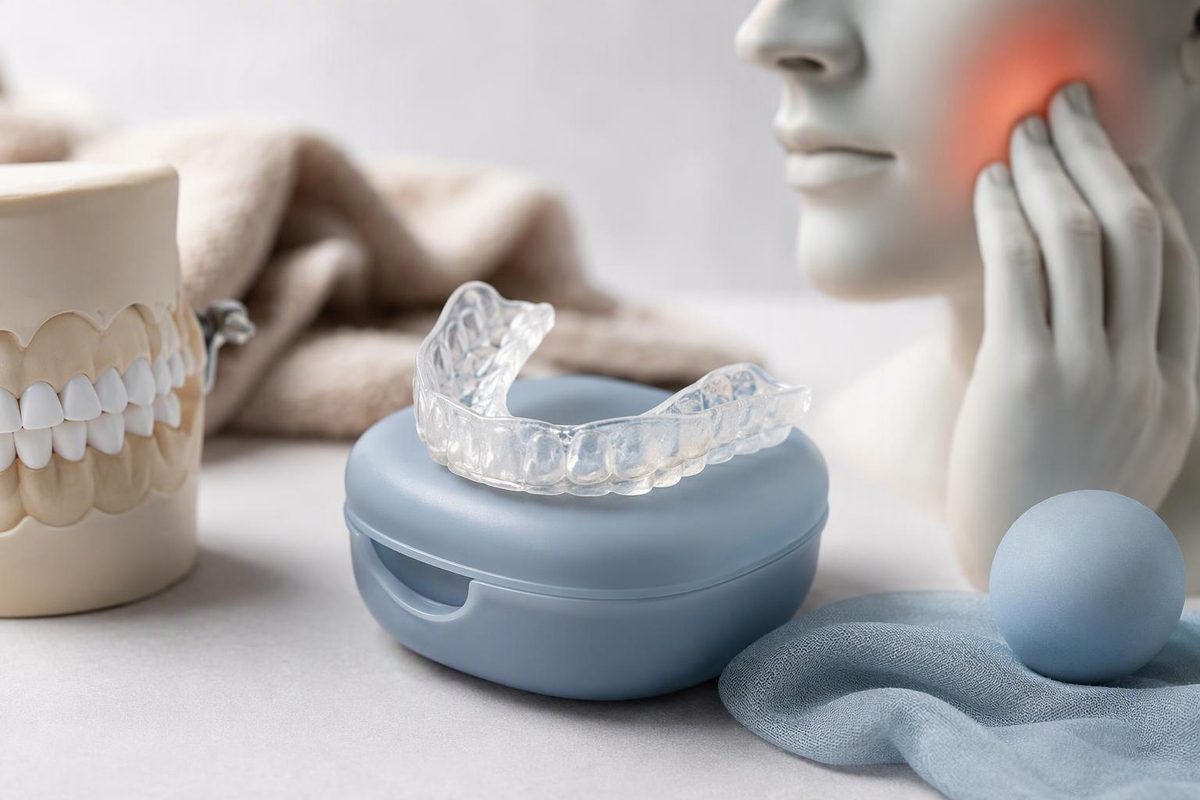
You may be able to reduce daytime clenching by noticing and interrupting the habit. Sleep grinding cannot be consciously switched off: management usually means addressing possible contributors and protecting your teeth from damage. A night guard may protect teeth, but it does not necessarily stop the jaw-muscle activity.
Choose the pattern and warning signs that fit; the tool shows your priority next step.
Find Your Priority Next Step
This guide separates habit retraining, dental protection, sleep assessment and warning signs. It cannot diagnose the cause.
Interrupt awake clenching
Use reminders to check your jaw, let your teeth separate gently and identify repeat triggers. Evidence is limited, but behavioral approaches may help awake bruxism.
Sources: international bruxism consensus report, NHS teeth-grinding guidance, NHLBI sleep-apnea symptoms, and the systematic reviews cited in the article.
Bruxism includes grinding or clenching the teeth and bracing or thrusting the jaw. Current expert consensus describes it as jaw-muscle behavior, not automatically a disorder. It generally needs management when it is damaging teeth, contributing to pain, or associated with another condition that needs attention (international consensus report).
Retrain Clenching That Happens While You Are Awake
At rest, your upper and lower teeth should generally be slightly apart rather than held together. Use a simple interruption routine:
- Check your jaw regularly. Notice whether your teeth are touching, your jaw muscles feel rigid, or you are pushing your jaw forward.
- Let the teeth separate gently. Relax your lips and jaw without forcing your mouth open.
- Use reminders. Set several quiet phone alerts or place a small sticker where you work. Each cue means “check, release, continue.”
- Look for repeat triggers. Concentrated computer work, driving, exercise or stress may coincide with clenching. Record when it happens for a week instead of trying to monitor yourself constantly.
- Reduce unnecessary jaw loading. If your jaw is sore, pause gum chewing and temporarily limit very hard or chewy foods.
Evidence for awake-bruxism treatment remains limited. A 2026 systematic review found only nine studies with 165 participants, but the results generally suggested benefits from behavioral approaches such as reminders, habit reversal, biofeedback and counseling with self-management (BMC Oral Health).
For a gentle reset that does not force your bite, see how to fix resting teeth position.
For Sleep Grinding, Address Possible Contributors
Sleep bruxism happens while you are asleep, so willpower is not the solution. The following steps may address factors associated with grinding, although none guarantees that it will stop:
- Keep a regular sleep schedule and use a calm wind-down routine.
- Cut back if you consume large amounts of caffeine or alcohol, particularly if they interfere with sleep.
- Avoid tobacco.
- Use sustainable ways to manage stress, such as exercise, relaxation breathing or counseling when appropriate.
The NHS links teeth grinding with stress and anxiety, sleep problems, smoking, and substantial alcohol or caffeine intake. It recommends relaxation, better sleep habits and regular dental checks, while noting that treatment is not always required (NHS guidance). These habits are not a proven cure for sleep bruxism.
Also consider when the grinding began. If grinding or jaw tightness started soon after you began taking a medicine or changed its dose, tell the prescriber. Some antidepressants and stimulant drugs have been associated with bruxism, although it is not always clear whether a drug caused or worsened the behavior (NCBI Bookshelf). Do not reduce or stop a prescribed medicine on your own.
A Night Guard Protects Teeth but May Not Stop Grinding
A dentist may recommend a night guard or stabilization splint when there is harmful tooth wear, sensitivity, fractured teeth or damaged dental work. Its main purpose is to put a protective layer between the teeth.
That distinction matters: a guard can limit damage even if the jaw muscles remain active. Evidence that oral appliances consistently reduce sleep-bruxism episodes is uncertain, and larger, longer, better-designed trials are needed (systematic review). See night guard benefits and downsides for realistic expectations.
Have the fit checked if a guard causes new pain, gum irritation, tooth movement or a change in how your teeth meet. Poorly fitting appliances can cause tooth or gum problems, and some people clench or grind more with a soft splint, according to Leeds Teaching Hospitals NHS Trust.
A guard should not be used to reposition your jaw permanently unless it is part of a clinician-directed plan. If you already wear one, assess dental protection and symptoms rather than expecting grinding noises to disappear. Night guard before-and-after results explains what improvement can realistically look like.
Check for Sleep Apnea When the Pattern Fits
Sleep bruxism can occur alongside obstructive sleep apnea. Ask a healthcare professional about assessment if grinding accompanies:
- frequent loud snoring;
- breathing that stops and restarts;
- gasping during sleep; or
- marked daytime sleepiness or fatigue.
These are recognized sleep-apnea symptoms, and a sleep study may be needed (National Heart, Lung, and Blood Institute). Do not assume an ordinary night guard treats an airway problem. Sleep-apnea oral appliances have a different purpose and require appropriate assessment and fitting.
Arrange a Dental Evaluation for Damage or Persistent Symptoms
Book a dental visit if you have visible tooth wear, a chipped or cracked tooth, new sensitivity, damaged fillings or crowns, persistent morning jaw soreness, or grinding reported by a sleep partner.
A dentist can assess your teeth and jaw and consider whether the findings reflect current bruxism, old wear, tooth decay, gum disease or another problem. Tooth wear alone does not establish that you are currently grinding.
Morning jaw fatigue alone does not prove sleep bruxism, and jaw pain does not automatically mean a temporomandibular disorder. Sleep bruxism versus TMJ symptoms explains where the patterns overlap.
Get Prompt Care for Swelling, Trauma or a Stuck Jaw
Seek prompt care for facial swelling with fever, significant dental or facial trauma, trouble swallowing or breathing, or a jaw that becomes stuck open or closed. These problems need assessment rather than a home bruxism routine.