
Why Does My Jaw Hurt? Causes and What to Do Next
Compare jaw-joint, muscle, dental, sinus and nerve-pain clues, with safe short-term relief and warning signs that need urgent care.
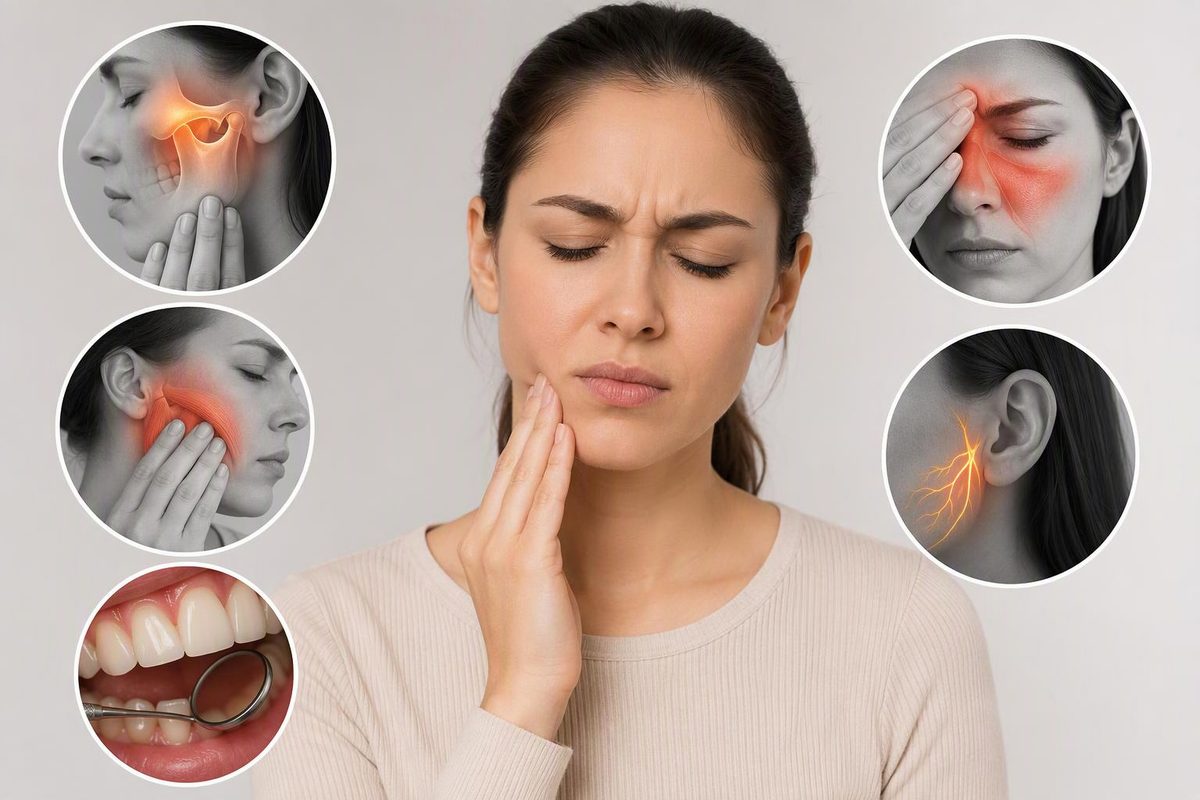
Your jaw may hurt because of a problem in the chewing muscles, jaw joints, teeth or gums—or because pain is coming from a nearby area. Jaw pain does not automatically mean a TMJ disorder. Where it hurts, what triggers it and which other symptoms appear help a dentist or doctor narrow the possibilities; none of those clues confirms a diagnosis by itself. NIDCR explains why other causes must be ruled out.
First, check whether you need urgent help
Get emergency help now if:
- Jaw discomfort comes with chest pressure, shortness of breath, a cold sweat, nausea or lightheadedness. Jaw pain can be a heart-attack warning sign, and shortness of breath can occur without chest discomfort. Call your local emergency number rather than driving yourself. American Heart Association
- Mouth or neck swelling makes breathing, swallowing or speaking difficult, or you have extensive mouth swelling. A suspected dental infection with a swollen or painful eye, eyesight changes, or marked difficulty opening your mouth also needs emergency assessment. NHS dental-abscess guidance
- Your mouth is stuck open and you cannot close it, or you suspect a broken or dislocated jaw after an injury. Do not try to push it back into position. MedlinePlus
Seek same-day dental or medical assessment for jaw pain with fever or facial swelling, a jaw that locks or will not open normally, or difficulty eating or drinking. A suspected dental abscess needs urgent dental treatment; use emergency care instead if the signs above apply. NHS dental-abscess guidance and TMD guidance
Jaw pain while eating or talking with a new severe headache, temple or scalp tenderness, or vision changes also needs urgent medical assessment. This combination can suggest giant cell arteritis, an inflamed-artery condition that can threaten sight. Vision symptoms require same-day specialist assessment. NHS
If pain is centered inside the ear, discharge or a new hearing change calls for urgent medical assessment too. NHS ear-infection guidance
What the pain pattern may suggest
Use these patterns to decide what to report—not to diagnose yourself.
| Pattern you notice | A possibility to consider |
|---|---|
| Aching around the jaw, ear or temple, worse with chewing; stiffness or painful clicking | Temporomandibular disorder (TMD): pain or dysfunction involving the jaw joints or chewing muscles. TMJ is the name of the joint, not the disorder. NHS and NIDCR |
| A tired or sore jaw alongside clenching, grinding or tooth damage | Bruxism: clenching or grinding while awake or asleep can cause jaw pain, tiredness and headache. You may not be aware it is happening. NIDCR |
| Tooth or gum pain, pain on biting, hot/cold sensitivity, a bad taste or swelling | A dental problem: decay, a damaged tooth, gum disease, wisdom-tooth infection or an abscess can be responsible. NHS toothache guidance and abscess guidance |
| Cheek pressure or toothache with a blocked/runny nose and reduced smell, often after a cold | Sinusitis: inflamed sinuses can cause facial pain and toothache. Nasal symptoms are important context when pain feels like an upper-jaw problem. NHS |
| Pain centered inside the ear, with discharge, fullness or a hearing change | An ear problem: these features warrant checking the ear rather than assuming the nearby jaw joint is responsible. NHS |
| Mouth pain and swelling that flare around meals | A blocked salivary gland: a salivary stone can cause intermittent swelling and intense mealtime pain. NHS |
| Brief, severe electric-shock-like attacks in the jaw, teeth or gums, often triggered by light touch, brushing or eating | Trigeminal neuralgia: a facial-nerve pain condition that needs medical evaluation, with dental causes considered too. NHS |
Timing matters, but it is not proof. A morning ache alone does not establish sleep grinding; a dentist considers your history and examination, and sometimes sleep testing. Painless clicking alone is common and does not need treatment. NIDCR bruxism guidance and TMD guidance
For more focused comparisons, see jaw pain on waking or jaw pain when chewing.
What you can do while arranging care
If the discomfort is mild, you can eat and drink, and none of the warning signs above applies, short-term measures for sore jaw muscles or joints include:
- Choose softer foods and avoid gum, tough foods and very wide yawning.
- Notice daytime clenching and let your teeth rest apart rather than holding them together.
- Try a comfortably warm or cold pack with a cloth barrier—whichever feels better.
- If you normally can take an over-the-counter pain reliever, follow its label. Ask a pharmacist if you are unsure about suitability or interactions.
These are conservative comfort measures, not treatment for every cause of jaw pain. NIDCR and NHS
Do not assume you need a night guard just because your jaw hurts. Guards can protect teeth in bruxism, but evidence that they improve TMD pain is limited. For suspected TMD, avoid treatments intended to permanently change your bite; discuss simpler, reversible options first. NIDCR bruxism guidance and TMD guidance
Who should assess it?
Start with a dentist when tooth or gum symptoms are present. Toothache lasting more than two days, or not relieved by painkillers, should be checked—do not wait that long if urgent signs apply. A dentist can also examine the jaw joints, muscles and signs of grinding. NHS and NIDCR
A medical clinician is appropriate when ear, nasal or nerve-like symptoms dominate, or facial pain persists after dental causes have been excluded. If apparent muscle or joint pain is not improving with simple measures, arrange an assessment rather than continuing self-care indefinitely. Tell the clinician when the pain began, its exact location, whether chewing or touch triggers it, and whether opening your mouth has changed. Those details help guide the examination and any further testing. NIDCR and NHS neuralgia guidance