
Jaw Pain While Opening Your Mouth: Causes and Next Steps
Painful opening can involve jaw muscles, the joint or a dental infection. Compare the clues, safe short-term steps and signs that need urgent care.
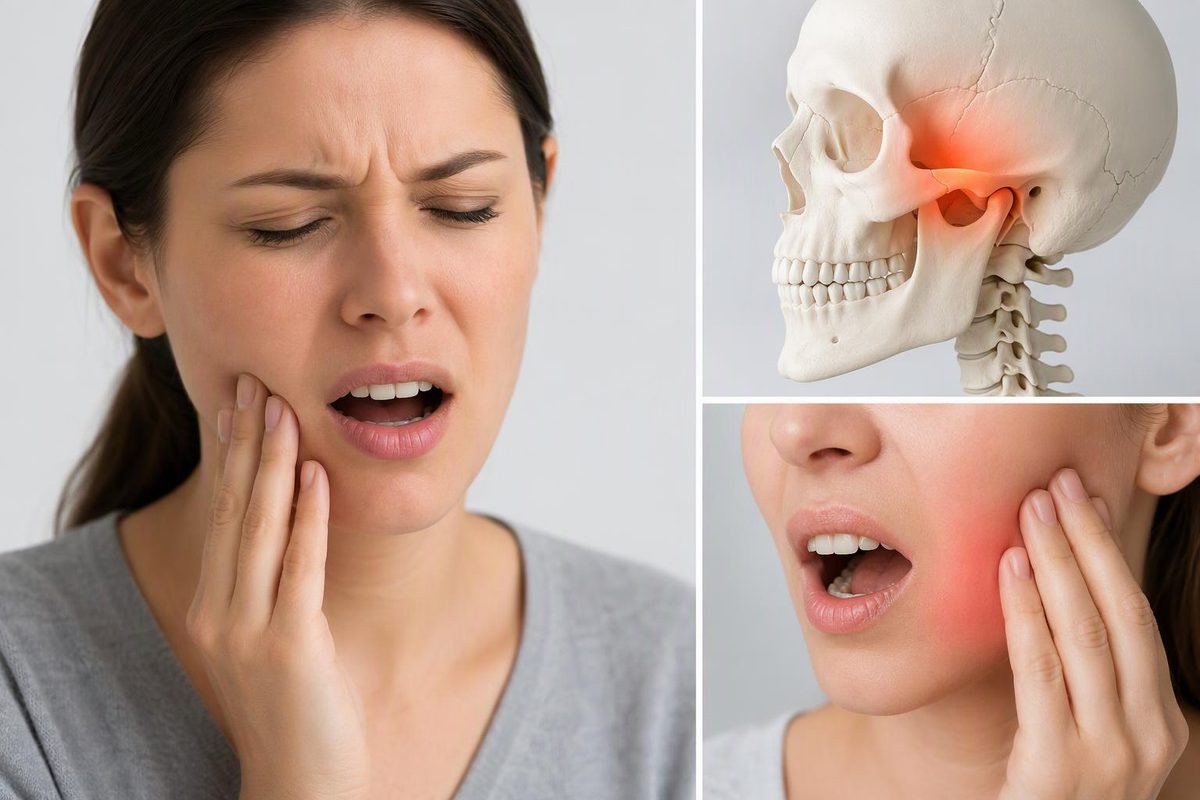
Opening your mouth makes the jaw joints rotate and slide while the surrounding muscles coordinate movement. Pain during that movement can come from the muscles or joints. Johns Hopkins Medicine
Dental infection can also make opening painful or difficult. A useful distinction is whether opening hurts through your usual range, or your mouth no longer opens as far as usual. Pain and restricted opening can occur together; neither confirms a diagnosis by itself. NHS dental-abscess guidance, NIDCR
When not to wait
- Get emergency care for difficulty breathing, speaking or swallowing; substantial mouth swelling; or severe difficulty opening alongside signs of dental infection. NHS dental-abscess guidance
- If your mouth is stuck open and cannot close, seek urgent in-person care now. A dislocated jaw can follow very wide opening and needs professional treatment; do not try to push it back yourself. MSD Manual, MedlinePlus
- Seek prompt assessment for newly restricted opening or difficulty eating or drinking. Pain after a jaw injury needs urgent assessment, especially with swelling, bleeding or a changed bite. Fever, facial swelling, pus, or tooth or gum pain with a bad taste warrants urgent dental assessment. Cleveland Clinic, MedlinePlus, NHS
What different opening patterns may suggest
You can open, but your cheek or temple muscles ache
Muscle-related temporomandibular disorders, or TMDs, are one possibility. Excessive strain, including clenching or grinding, can contribute to jaw-muscle pain. Some people also notice morning soreness or discomfort spreading into the neck. Johns Hopkins Medicine
Pain when opening wide does not automatically mean the joint is damaged: clinicians assessing muscle-related TMD check whether opening reproduces the person’s usual muscle pain. They also examine the muscles for tenderness. DC/TMD diagnostic recommendations
Pain feels concentrated just in front of the ear
This is where the temporomandibular joint—the TMJ—sits. Joint-related TMD can involve joint pain, disc disorders or arthritis. Painful clicking, stiffness or restricted movement may accompany it. Muscle and joint conditions can coexist, so location alone cannot separate them. NIDCR, Johns Hopkins Medicine
A painless click is common and generally needs no treatment. A click that hurts, or occurs with a change in opening ability, is a different situation. NIDCR
Opening hurts near the back teeth or swollen gums
Consider a dental source rather than assuming TMD. A dental abscess can cause difficulty opening along with toothache, temperature sensitivity, swelling or a bad taste. NHS
Inflammation around a partly erupted wisdom tooth, called pericoronitis, can also cause back-tooth pain, swollen gums and restricted opening. These symptoms need a dentist’s examination; jaw-rest measures do not treat an underlying infection. Cleveland Clinic
Your mouth opens less than it used to
Restricted opening is not the same as discomfort only at the widest part of a yawn. Muscle tightness or spasms can limit opening—a condition called trismus. It can occur with TMD, infection, injury or after dental surgery. Joint-disc problems can also restrict movement. Cleveland Clinic, DC/TMD recommendations
After wisdom-tooth removal, some jaw soreness and stiffness can be expected. Follow your surgical team’s instructions rather than forcing movement. See jaw pain after dental work for that specific recovery context. NHS
Safe short-term steps for mild pain without warning signs
Temporarily choose soft foods and small bites, avoid gum, and reduce clenching. Avoid very wide yawns or repeatedly testing how far you can open. A wrapped warm or cold pack may help; use whichever feels more comfortable. These are conservative comfort measures, not a way to establish the cause. NIDCR, NHS TMD guidance
If opening is restricted or the cause is unclear, ask a clinician about appropriate exercises rather than starting forceful stretches yourself. Prescribed rehabilitation may help, but it should fit the problem. Cleveland Clinic
What to tell the dentist or doctor
If pain persists, returns or is not improving, arrange an assessment. Describe where it hurts, whether pain starts with a small opening or only a wide one, whether your opening range has changed, and any recent dental procedure, injury, tooth symptoms or swelling. Do not force your mouth open to measure it.
The clinician can examine the teeth, gums, muscles and joints and decide whether imaging is useful. Opening-triggered pain is a clue—not a home test for TMD or a displaced disc. NIDCR