
Pain in the Lower Jawbone: Is It Bone, Tooth or Muscle Pain?
Pain along the mandible may come from teeth, muscles or bone. Learn what raises concern for bone injury or disease and how a dentist checks the source.
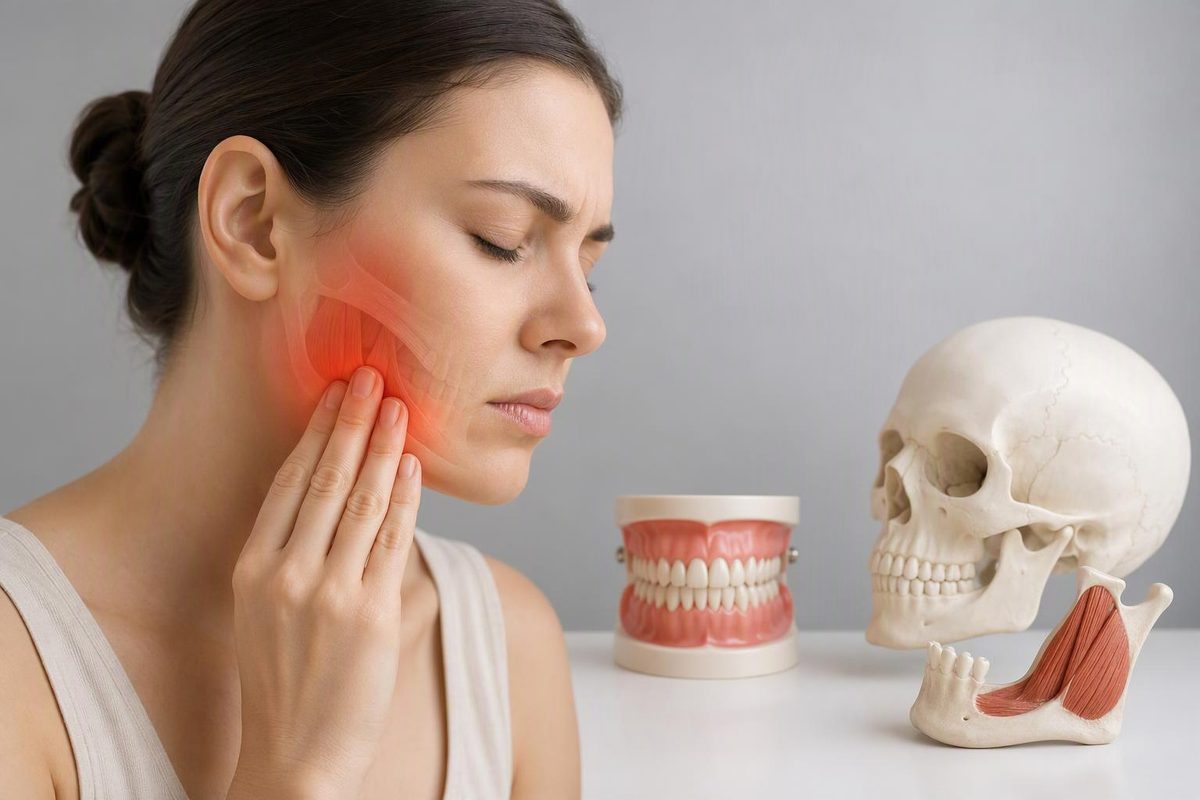
Pain that feels deep in the lower jawbone—the mandible—does not necessarily originate in bone. Nearby teeth, chewing muscles and jaw joints can cause pain in the same region. The depth or location of an ache cannot establish the source; a dentist or doctor may need to rule out other conditions before calling it a temporomandibular disorder, or TMD. NIDCR explains this overlap.
The useful distinction is between pain felt along the jawbone and a problem affecting the bone itself. Injury, infection within bone and impaired bone healing require different care from muscle soreness.
When not to wait
- Get emergency help for trouble breathing, speaking or swallowing, extensive swelling inside the mouth, or severe difficulty opening it. A swollen or painful eye or sudden vision problems alongside suspected dental infection also needs emergency care. NHS dental-abscess guidance
- Seek immediate medical assessment after a facial injury if your bite no longer fits normally, your lower lip becomes numb, you have mouth bleeding, or you cannot open or close your jaw normally. A suspected broken or dislocated jaw needs prompt care; do not try to reposition it yourself. MedlinePlus
- Request urgent dental care for suspected infection, particularly pain with jaw or gum swelling, fever or a bad taste. NHS
- Call your local emergency number for new jaw discomfort accompanied by chest pressure, shortness of breath, cold sweating or lightheadedness. Jaw pain can be part of a heart attack, and chest discomfort is not always present. American Heart Association
What can feel like lower-jawbone pain?
A tooth or gum problem: Hot or cold sensitivity, intense toothache, gum pain, a bad taste and swelling support checking for a dental source. A dental abscess is an infection-related collection of pus beneath a tooth or gum; it is not automatically an infection throughout the jawbone. Treatment may involve drainage, root canal treatment or tooth removal. NHS
Chewing-muscle or joint pain: Jaw stiffness, painful movement, locking and pain spreading into the face or neck can occur with TMD. The jaw joints sit just in front of the ears, but TMD also includes disorders of the chewing muscles—not just the joints. These features suggest a possible source, not a diagnosis. NIDCR
Pain when chewing does not settle the distinction: a fracture, dental infection and TMD can all make jaw use uncomfortable. For a closer comparison of movement-related symptoms, see jaw pain when chewing.
When the bone itself may be involved
A mandibular fracture
A blow, fall or other facial injury can break the mandible. Beyond pain and swelling, clues include teeth that suddenly meet differently, loose or damaged teeth and numbness—particularly of the lower lip. Pain alone cannot show whether a fracture is present. MedlinePlus
Osteomyelitis: infection within bone
Bacterial jaw osteomyelitis often develops from an adjacent dental infection; trauma or dental procedures can also precede it. It affects the mandible more often than the upper jaw. Pain, swelling and pus drainage are characteristic findings, but their severity varies. A review of jaw osteomyelitis
Persistent pain or drainage after dental treatment deserves reassessment rather than an assumption that it is muscle strain. Confirmed bone infection may require antibiotics and treatment of the infection source, sometimes with removal of dead tissue. A review of chronic jaw osteomyelitis
Osteonecrosis: death of jawbone tissue
Relevant history includes certain bone-affecting medicines, such as bisphosphonates or denosumab. Medication-related osteonecrosis is rare with osteoporosis treatment; the risk is higher with the doses used for cancer involving bone. Head-and-neck radiation can cause a related condition called osteoradionecrosis. A nonhealing area of exposed bone, loose teeth, swelling, drainage or a numb or “heavy” jaw warrants dental assessment. Bone damage does not always hurt. NIDCR and Cleveland Clinic
Do not wait for exposed bone to persist for weeks before asking for help. Do not stop prescribed bone medicines yourself; any change should be coordinated with the prescriber. Cleveland Clinic and NIDCR
How a dentist checks whether the pain comes from bone
For unexplained or persistent lower-jaw pain without emergency signs, arrange a dental examination. The assessment can compare the teeth and gums with jaw tenderness, movement and bite, while considering your medical history. NIDCR
If bone disease is suspected, a panoramic X-ray can assess the teeth and jaw. A normal initial X-ray does not always exclude early osteomyelitis. Depending on the findings, CT or MRI may help evaluate bone destruction, inflammation or nearby soft tissues; suspected infection may also require laboratory or tissue testing. These are selected investigations, not scans everyone with jaw pain needs. Jaw-imaging review and chronic osteomyelitis review
Bring a medication list and mention recent extractions, implants, injuries, prior head-and-neck radiation, drainage and any change in sensation. While awaiting dental care, soft foods and a suitable over-the-counter pain reliever taken according to its label may ease symptoms. Ask a pharmacist if you are unsure what is safe for you. These measures do not treat an abscess or establish that the bone is healthy. NHS