
Michigan Splint: Design, Evidence, Uses, and Risks
Understand what defines a Michigan splint, how it differs from a night guard, what TMD pain evidence shows, and which warning signs need review.
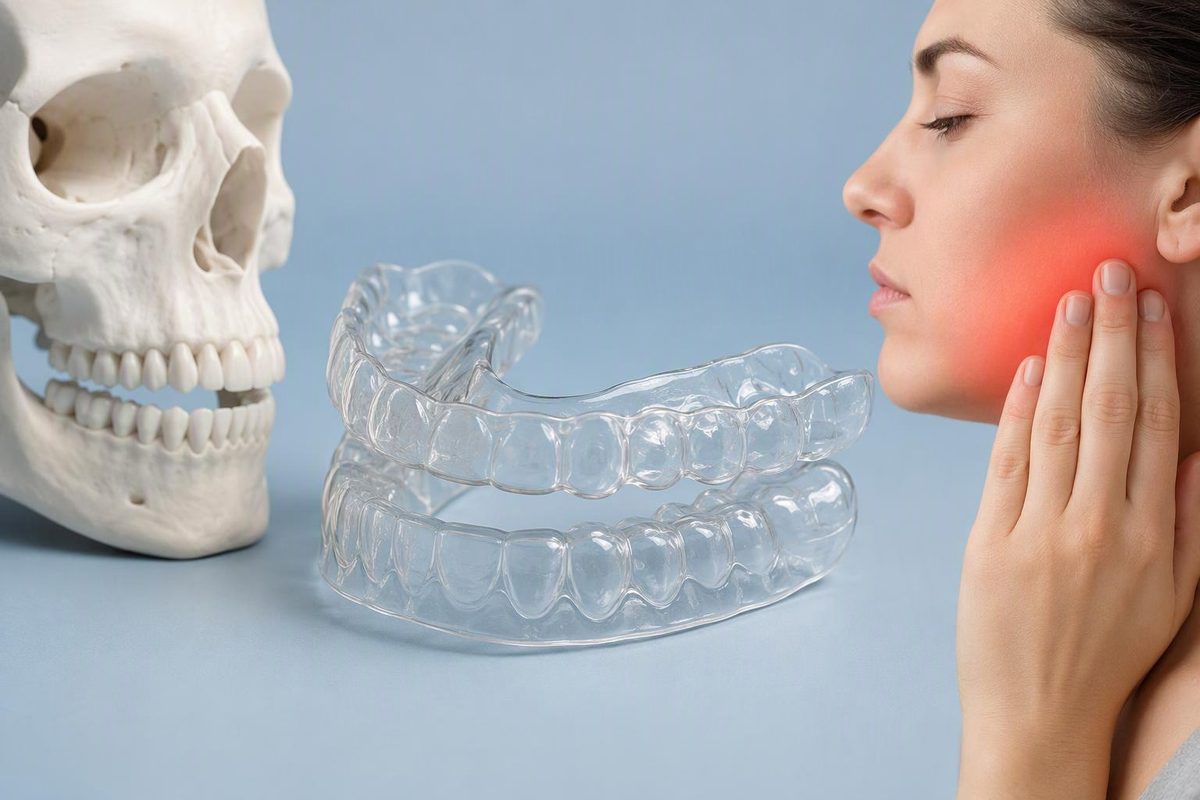
A Michigan splint is a custom, full-coverage appliance for the upper teeth with a hard, carefully adjusted biting surface. Dentists may prescribe this type of stabilization splint for selected temporomandibular disorders (TMDs) or to separate the teeth during clenching and grinding, but pain relief is not assured and the appliance should not permanently change the bite.
It is also called a flat-plane splint. Its purpose, wearing schedule and follow-up plan should come from the prescribing dentist after an assessment—not simply from the fact that it is commonly worn at night.
Choose your situation to see the appropriate next step and evidence caveat.
Michigan Splint Decision Check
Select the closest match. This does not diagnose the cause of jaw pain.
Define the goal before treatment
Evidence for TMD pain relief is mixed. Ask what diagnosis the splint addresses, whether the aim is symptom relief or tooth separation, and how improvement will be measured.
Sources: NIDCR; 2023 BMJ chronic-pain guideline; Royal College of Surgeons of England; MedlinePlus; NHS. The three-month threshold applies to the cited chronic TMD pain guideline.
A Michigan Splint Has Full Coverage and a Hard Surface
A traditional Michigan splint has three defining features:
- Full upper-arch coverage: It covers every upper tooth rather than contacting only the front or back teeth.
- Rigid construction: It is generally made from hard acrylic or another rigid dental material, not a soft, flexible sheet.
- An adjusted biting surface: Opposing teeth contact the splint across both sides. The surface may be contoured to guide the jaw during forward and side-to-side movement.
A 2026 umbrella review describes the stabilization splint—also called the Michigan splint—as the most frequently used occlusal-splint design (Journal of Oral Rehabilitation). A UK clinical guideline likewise identifies “Michigan splint” as the upper-arch form of a hard stabilization splint and recommends full coverage with equal contact on both sides of the opposing arch (Royal College of Surgeons of England).
The word Michigan identifies the design, not where the appliance must be made. It is not a brand name, and not every hard night guard is a Michigan splint.
A Michigan Splint Is More Specific Than a Night Guard
“Night guard” is a broad label. It can refer to a soft guard, a boil-and-bite product, a partial-coverage appliance or a custom hard splint. A Michigan splint is specifically a full-coverage stabilization design.
Although it is often worn during sleep, its schedule should come from the prescriber. Do not assume that more wear will produce a better result.
A Michigan splint also differs from an anterior repositioning splint. A stabilization splint provides a biting surface without deliberately holding the lower jaw forward or backward. A repositioning appliance changes jaw position and has different risks, particularly with extended use. See the broader comparison of TMJ mouth splint types.
The splint keeps the natural upper and lower teeth from grinding directly against each other, but it does not necessarily stop clenching or grinding. Lower teeth can still press against the appliance, and some people report increased clenching while wearing one. The TMJ Association advises stopping use and contacting the prescriber if this occurs (The TMJ Association).
The Treatment Goal Should Be Defined Before Fitting
A dentist might recommend a Michigan splint to:
- place a barrier between the upper and lower teeth;
- provide stable, distributed contacts across the opposing arch;
- conduct a reversible trial to see whether jaw-muscle or joint symptoms change;
- supplement education, exercises or other conservative care for selected painful TMDs.
Evidence that splints prevent bruxism-related tooth wear is limited. A systematic review of randomized trials found that none of its included bruxism trials measured tooth wear, so it could not determine whether splints reduce it (British Dental Journal). A dentist may still use an appliance to prevent direct tooth-to-tooth contact, but that mechanical rationale is not proof that grinding will stop or that future damage is guaranteed to be prevented.
A splint should follow an assessment rather than serve as a self-diagnosis. TMD is an umbrella term for different jaw-joint and muscle conditions, and dental or other problems can cause similar pain. The National Institute of Dental and Craniofacial Research says there is no single standard test for TMD; assessment generally includes the symptom history and an examination of the head, neck, face and jaw (NIDCR).
Painless clicking alone is not a reason to get a splint. NIDCR considers painless jaw sounds common and says they do not require treatment.
Evidence for TMD Pain Relief Is Mixed
Studies often combine different TMD diagnoses, appliance designs and comparison treatments. Symptoms may fluctuate or improve over time, while splints are frequently used alongside advice, exercises or medication. This makes it difficult to attribute a change to the appliance alone.
The 2026 umbrella review included 21 systematic reviews and concluded that occlusal splints generally had small beneficial or neutral effects. Four reviews comparing splints with other conservative treatments reported effective pain reduction, three did not, and five found insufficient evidence for or against splints over other active treatments (Journal of Oral Rehabilitation). These findings cover multiple splint designs, not Michigan splints alone.
An earlier review of 37 randomized trials found no demonstrated reduction in TMD pain when all diagnoses and splint types were pooled. It rated the evidence very low certainty because studies varied substantially in diagnosis, appliance design and outcome measurement (British Dental Journal). NIDCR therefore says there is not much evidence that intraoral appliances improve TMD pain.
For chronic TMD pain lasting at least three months, a 2023 BMJ guideline conditionally recommended against reversible occlusal splints, whether used alone or with other interventions, because the expected benefits were uncertain relative to the burdens. The recommendation does not apply to acute TMD pain (The BMJ).
This evidence does not establish that no individual will improve. It means a trial should have a defined purpose and be judged by outcomes that matter, such as pain, comfortable mouth opening, chewing ability and any intended protective role.
Fitting Should Include a Follow-Up Plan
A custom Michigan splint is made from impressions or digital scans. At delivery, the dentist should confirm that it seats securely, does not rock or press painfully on the teeth or gums, and contacts the opposing teeth as intended.
Ask the prescriber:
- What diagnosis or problem is the splint addressing?
- Is the goal symptom relief, separating the teeth, or both?
- Is this a stabilization design or a jaw-repositioning design?
- When should it be worn, and when is the first review?
- What improvement would justify continuing?
- What is the next step if symptoms do not improve?
Follow the prescribed schedule and attend adjustment visits. The Royal College of Surgeons guideline recommends reviewing fit, contact stability, effectiveness and tolerability during dental follow-up.
Track the same measures before and during a therapeutic trial: morning pain, pain with chewing, comfortable opening, headache frequency and pain-medicine use. The guide to TMJ splint before-and-after assessment explains why symptom and function records are more useful than appearance alone.
Pain, Persistent Bite Changes, and Poor Fit Need Review
Full coverage and balanced contacts are intended to reduce the tooth-movement and bite-change risks associated with partial or uneven coverage. They do not eliminate every potential problem.
Remove the splint and contact the prescriber if:
- pain clearly increases or new pain begins;
- the bite remains different after the appliance has been out for a while;
- one or more teeth stay sore or sensitive;
- the splint rocks, becomes unusually tight or repeatedly falls out;
- it causes persistent gum irritation, ulcers or sharp edges;
- clenching or morning muscle fatigue noticeably worsens.
NIDCR advises that an intraoral appliance should not be designed to change the teeth or bite permanently and that it should be stopped if it causes pain. A plan to use a splint to create a “new bite” before crowns, tooth grinding or orthodontics deserves particular caution and, when appropriate, an independent second opinion.
Clean the device according to its material and the dentist’s instructions. Hot water and unsuitable chemicals can damage some appliances. See daily mouth-splint cleaning and deep cleaning.
Some Jaw Problems Require Prompt Care Instead
A routine splint adjustment is not the appropriate response to every new jaw problem. A mouth stuck open can indicate a dislocated jaw and needs prompt medical attention; do not try to force it back yourself (MedlinePlus). Significant facial trauma also requires prompt assessment.
Seek urgent dental or medical help for jaw or facial swelling with fever. Get emergency help if swelling makes it difficult to breathe, speak or swallow (NHS).