
The Possible Link Between Jaw Problems and Feeling Dizzy
Available evidence has no validated symptom pattern or self-test that confirms the jaw as the source. A study links TMD with vertigo but cannot prove cause.
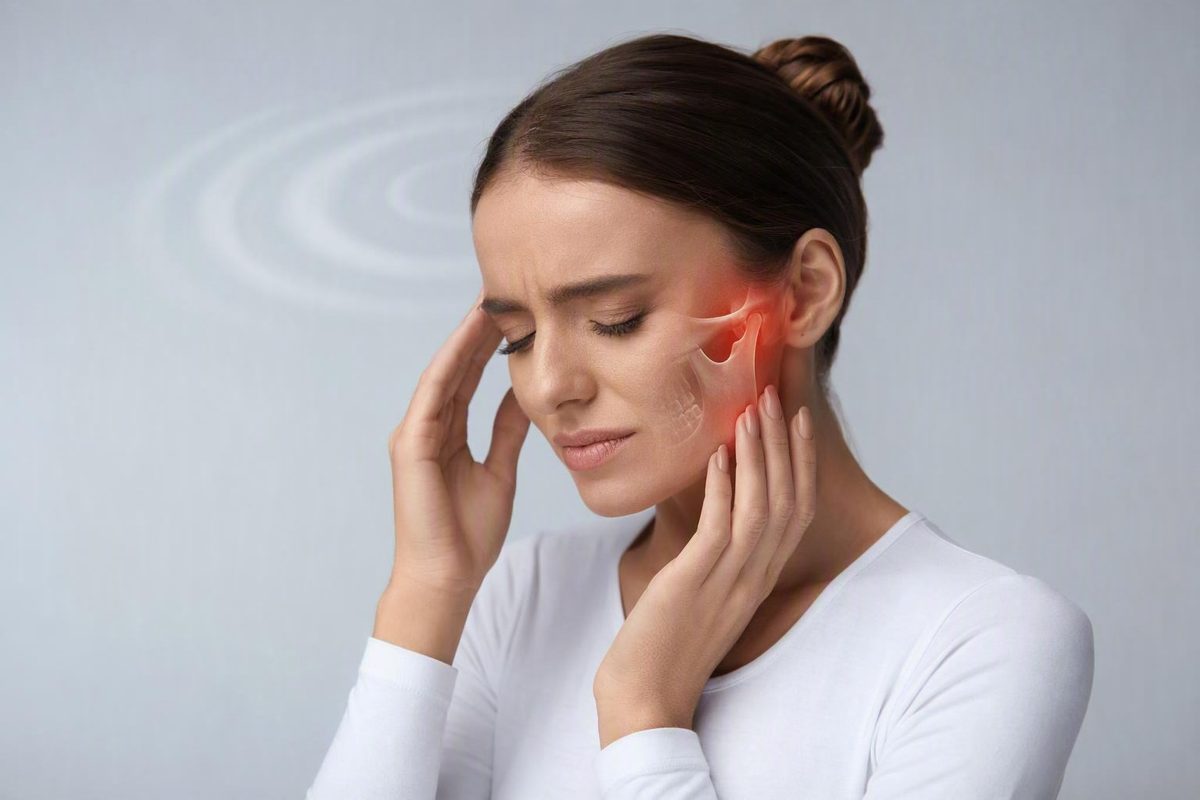
The short answer: TMD and dizziness can occur together
People diagnosed with a temporomandibular disorder may also experience dizziness or vertigo. The available evidence shows that these problems can occur together, but it does not prove that a jaw disorder causes the balance symptom.
The temporomandibular joint, or TMJ, connects the lower jaw to the skull and supports speaking, chewing, and swallowing. A problem affecting the joint, nearby muscles, or surrounding structures is generally called a temporomandibular disorder, commonly shortened to TMD. Although people often say they “have TMJ,” everyone has temporomandibular joints; TMD refers to a disorder affecting that area. An oral-health overview describes dizziness and vertigo among the symptoms reported by people diagnosed with TMD while emphasizing that the relationship is not fully understood (overview of TMD and dizziness).
The most accurate answer to “can TMJ cause dizziness?” is therefore qualified:
- TMD and dizziness or vertigo may occur together.
- Their co-occurrence does not establish that TMD caused the balance symptom.
- Jaw pain, tenderness, joint sounds, or restricted movement can make TMD worth evaluating.
- Unexplained dizziness should still be assessed rather than automatically attributed to the jaw.
The relationship remains incompletely understood. When two symptoms occur together, timing alone cannot show which came first or whether another factor contributed to both. There is also no validated symptom pattern or self-test in the available evidence that can confirm the jaw as the source of dizziness.
A primary-care clinician or dental professional can assess the jaw findings and help determine whether TMD deserves further attention. That evaluation may identify a jaw disorder, but it cannot necessarily explain the dizziness.
This article provides general education rather than an individual diagnosis. Its clinical evidence is limited, consisting primarily of a commercial oral-health overview and one cross-sectional study in older adults. The conclusions should therefore remain narrow and cautious.
What “dizziness” may feel like in reports about TMD
“Dizziness” is a broad everyday description rather than one precise sensation. One person may mean lightheadedness, another may mean unsteadiness, and someone else may be describing vertigo—a whirling or perceived-motion sensation, such as feeling that the person or surrounding objects are moving when they are not.
Experiences listed in material discussing TMD and vertigo include:
- Lightheadedness
- Difficulty balancing
- Feeling as though one might fall
- Perceived movement of surrounding objects
- Disorientation or confusion
- Nausea
- Vomiting when symptoms are intense
This list describes reported experiences; it is not a diagnostic checklist or a basis for assuming that TMD is responsible. In particular, potentially concerning symptoms should not be normalized simply because they appear in a discussion of vertigo. Their cause and significance cannot be determined from this article.
The vestibular system includes structures in the inner ear and nervous system involved in balance and eye movements. Disruption of balance pathways can produce combinations of perceived motion, unsteadiness, disorientation, and nausea, but the sensation alone does not identify what disrupted those pathways.
It is therefore useful to describe the experience more precisely than simply saying “I feel dizzy.” Details a clinician may find helpful include:
- Whether the sensation feels like spinning, faintness, or instability
- Whether it is continuous or occurs in episodes
- How long an episode lasts
- Whether standing or walking is affected
- Whether it occurs at the same time as jaw discomfort
These observations can improve communication, but they do not provide a do-it-yourself diagnosis. Even when dizziness and jaw pain start at the same time, that timing does not prove that one caused the other.
This distinction is especially important when interpreting the available research. The principal study discussed below examined a history of vertigo in older adults. Its findings should not automatically be extended to every person experiencing lightheadedness, imbalance, disorientation, or a near-fainting sensation.
Jaw symptoms that make TMD worth evaluating
A possible TMD connection becomes more relevant when dizziness occurs alongside an identifiable jaw complaint. Features described in TMD guidance include:
- Pain in the jaw or temporomandibular joint
- Tenderness around the joint or surrounding muscles
- Clicking, popping, or grating during jaw movement
- Difficulty opening the mouth
- Difficulty closing the jaw normally
- Restricted or uncomfortable jaw movement
These findings can justify having the jaw assessed. Someone experiencing dizziness together with persistent jaw tenderness and restricted movement has a clearer reason to discuss TMD than someone who has dizziness without any jaw symptoms.
However, jaw pain, tenderness, sounds, and movement restrictions do not confirm that TMD is causing the dizziness. An evaluation may find that TMD is present while leaving the balance symptom unexplained. Two genuine conditions can coexist without one being responsible for the other.
Joint sounds require similar caution. Clicking or popping may draw attention to the TMJ, but a sound by itself cannot explain dizziness. Its significance depends on the broader picture, including pain, tenderness, movement, function, and symptom history.
That observation is worth mentioning during an appointment, but the available evidence does not validate it as proof of a jaw cause. Symptoms can vary together without a demonstrated causal mechanism.
Ear-related complaints—including tinnitus, ear pain, fullness, and hearing loss—have also appeared in TMD research. Their inclusion means researchers have considered possible associations; it does not establish TMD as their cause. A cross-sectional paper discussing these complaints characterizes the wider relationship between TMD and vestibular or ear symptoms as controversial (peer-reviewed study and discussion).
A practical way to prepare for an assessment is to describe the jaw and dizziness symptoms separately:
- Where is the jaw pain or tenderness?
- Is opening or closing restricted?
- Does the jaw lock?
- Are there clicking, popping, or grating sounds?
- What exactly does the dizziness feel like?
- When does each symptom occur?
- Do they consistently occur together, or do they vary independently?
Keeping the descriptions separate reduces the risk of forcing both problems into one explanation before either has been properly assessed.
How the jaw and balance symptoms might be connected
Researchers have proposed several explanations for why TMD and balance-related complaints may occur together. The starting point is anatomical proximity: the TMJ sits near structures of the ear. That proximity makes a relationship reasonable to investigate, but it does not prove that dysfunction in the jaw disrupts balance.
Proposed mechanisms include:
- Mechanical connections between the TMJ region and structures of the middle ear
- Irritation involving nearby nerves
- Hyperactivity or altered function of jaw muscles
- Inflammation that might affect vestibular signaling
- Possible effects on eustachian-tube function
These are hypotheses rather than clinically demonstrated pathways. The available study did not test or confirm any of them, and its authors described the TMD–vertigo relationship as controversial.
Plausible anatomy is not the same as demonstrated causation. Two structures can be close together without a disorder in one necessarily disrupting the other. Likewise, identifying a theoretically possible muscular, neural, mechanical, or inflammatory pathway does not show that it produced a particular person’s symptoms.
Mechanism-based explanations can sound more certain than the evidence warrants. Statements such as “jaw inflammation disrupts your balance system” or “the TMJ presses on the ear” turn proposed explanations into established conclusions. The available evidence does not support that certainty.
Several possibilities therefore remain open. A direct relationship has been proposed but remains unproven; another factor might contribute to both symptoms; or the jaw disorder and dizziness might be present independently. A proposed biological mechanism cannot determine which explanation applies to an individual.
What the research does—and does not—show
One frequently cited piece of evidence is a cross-sectional study of 199 independently living older adults with a reported mean age of 69.23 years. Researchers assessed TMD through dental examination, palpation, and evaluation of joint noises. Vertigo was identified from participants’ audiological medical histories rather than from a reported objective vestibular diagnosis.
Of the 141 participants classified as having TMD, 54 reported vertigo. Among the 58 participants without TMD, 12 reported vertigo. The reported odds ratio was 2.3793, with a 95% confidence interval of 1.1577–4.8900 and a p-value of 0.0256. In direct terms, the study found higher estimated odds of reported vertigo in the TMD group (full cross-sectional study).
That result supports an association. It does not demonstrate that TMD caused vertigo.
Several limitations matter:
-
The study was cross-sectional. It assessed TMD and a history of vertigo at a particular stage rather than following participants from before either problem developed. It cannot show whether TMD came first, vertigo came first, or another characteristic contributed to both.
-
Vertigo was identified through medical history. The study did not report confirming every case through a standardized objective vestibular diagnosis.
-
The participants were older and physically independent. Their reported mean age was 69.23 years, so the result may not apply to younger adults, dependent older adults, or every clinical population.
-
The study concerned vertigo, not every form of dizziness. Its result should not automatically be extended to vague lightheadedness, faintness, or general imbalance.
-
The association was not statistically significant when women and men were analyzed separately. That does not negate the overall result, but it prevents confident subgroup conclusions.
-
The report contains an apparent count inconsistency. It states that there were 127 women and 73 men, which totals 200, even though the stated sample was 199. This may be a reporting error, but it supports careful interpretation.
The odds ratio should not be converted into a claim about how often TMD causes vertigo. It describes an association within this study’s comparison groups; it is not an individual causal probability.
The study also did not test whether treating TMD eliminates vertigo. It therefore cannot establish that reducing jaw pain, changing jaw function, or completing a TMD treatment will improve balance symptoms.
The fairest conclusion is narrow: this study gives researchers and clinicians a reason to consider a possible relationship between TMD and vertigo in older adults. It does not prove causation, identify a settled mechanism, establish a diagnostic test, quantify how often the jaw causes dizziness, or show that TMD treatment resolves it.
What a professional evaluation may involve
There is no evidence-based rule in the available material requiring everyone with jaw symptoms and dizziness to begin with the same type of clinician. A primary-care clinician or dental professional can help assess whether TMD deserves consideration. The practical starting point may depend on which symptoms are most prominent and what care is accessible.
A TMD assessment may involve:
- Reviewing the location, duration, and pattern of jaw symptoms
- Asking about pain, tenderness, locking, joint sounds, and movement difficulty
- Observing how the mouth opens and closes
- Examining the temporomandibular joints
- Feeling the surrounding muscles for tenderness
- Listening or feeling for clicking, popping, or grating during movement
These findings may support an assessment of TMD. They still cannot show, by themselves, that the jaw disorder is the source of dizziness.
X-rays are usually unnecessary in an uncomplicated TMD evaluation, although imaging may be considered when the clinician suspects an underlying problem such as arthritis. Imaging is therefore neither automatically required nor categorically unnecessary. No X-ray can establish by itself that a jaw finding caused a balance symptom (description of TMD assessment and imaging considerations).
Before an appointment, it may help to record:
- The quality of the dizziness, such as spinning, lightheadedness, or imbalance
- The duration and frequency of episodes
- Whether standing or walking is affected
- The location and pattern of jaw discomfort
- Whether the jaw locks or has restricted movement
- Whether tenderness or joint sounds are present
- Whether the jaw and dizziness symptoms consistently begin or improve together
A symptom record is a communication tool, not a diagnostic test. If the symptoms seem to track together, that information may guide questions. If they vary independently, that is useful information too.
The key is to avoid an either-or assumption. A jaw examination can evaluate suspected TMD while the dizziness is considered on its own merits. Finding TMD should not automatically end the assessment of unexplained dizziness.
Conservative jaw care without promising a dizziness cure
While arranging an evaluation, some people may choose low-burden measures described for reducing strain on a painful or irritated jaw. These are options for managing TMD symptoms, not proven treatments for dizziness.
Conservative measures described in oral-health guidance include:
- Temporarily choosing softer foods that require less forceful chewing
- Avoiding chewing gum
- Avoiding unusually wide opening or extreme jaw movements
- Trying heat or ice as tolerated
- Practicing relaxation or stress reduction
- Becoming aware of clenching and trying to reduce it
Choosing softer foods does not necessarily mean adopting a permanently restricted diet. The purpose is to reduce demanding chewing while jaw symptoms are active. Avoiding extreme movement means not forcing the jaw through painful or unusually wide motions; it does not mean holding the jaw immobile.
That should not be interpreted as a claim that either TMD or dizziness is “just stress.” The practical goal is to reduce avoidable jaw strain.
Some TMD guidance also mentions over-the-counter medication. Because individual suitability varies, questions about whether to use a particular medicine should be directed to a clinician or pharmacist. No nonprescription medicine should be assumed to be appropriate for every person.
Most importantly, the evidence does not establish that softer foods, reduced clenching, heat, ice, or other conservative jaw measures will resolve dizziness. Improvement in jaw discomfort would not by itself prove that the jaw caused the balance symptom. Symptoms may change together, change independently, or fluctuate over time.
The current evidence also does not justify presenting oral appliances, bite adjustment, chiropractic care, physical therapy, or proprietary treatments as established remedies for dizziness attributed to TMD. Any treatment decision should follow an individual assessment and use realistic goals for the jaw condition.
When safety and clinical assessment matter
Dizziness can affect balance and increase the risk of falls and related injury. That makes professional assessment important when balance is affected, particularly when the cause is unclear.
The available evidence does not support assuming that dizziness comes from the jaw, even when TMD symptoms are present. Nor does it provide a comprehensive guide to dizziness emergencies, differential diagnosis, or specialist referral. This article should not be used to decide that an unexplained or concerning symptom can safely be ignored.
Jaw symptoms may also warrant prompt attention. Pain Catalog’s own educational notice advises contacting a clinician promptly for jaw locking, trauma, or jaw pain accompanied by fever. That notice is a publisher statement rather than independent clinical evidence, and the site describes its content as educational rather than diagnostic (Pain Catalog’s educational notice).
A cautious dual-track approach is appropriate:
- Have unexplained dizziness assessed rather than assuming it is jaw-related.
- Have clear jaw pain, tenderness, locking, joint sounds, or restricted movement assessed as possible TMD.
- Use conservative jaw measures only for symptom management, not as proof or treatment of a presumed dizziness mechanism.
- Do not treat improvement in jaw discomfort as confirmation that the dizziness has been explained.
TMD is worth evaluating when dizziness occurs with recognizable jaw dysfunction. That combination makes a possible relationship reasonable to consider, but it does not prove causation. Professional assessment is more reliable than trying to identify the source from jaw sounds, symptom timing, or an internet checklist.
Can TMJ cause vertigo as well as dizziness?
People with TMD may report vertigo as well as other sensations described broadly as dizziness. Vertigo generally refers to a whirling or perceived-motion sensation, while dizziness may also describe lightheadedness or imbalance.
One study of older adults found an association between TMD and a history of vertigo, but it did not establish that the jaw disorder caused the vertigo. Its findings should not automatically be applied to every kind of dizziness or every age group.
How can I tell whether my dizziness is coming from my jaw?
There is no validated symptom pattern or self-test in the available evidence that can confirm the jaw as the source. Jaw pain, tenderness, joint sounds, locking, or restricted movement can make TMD worth evaluating, but none proves causation.
Even if dizziness seems to change with chewing, clenching, or jaw movement, treat that timing as information to share with a clinician rather than as a diagnosis.
Will treating TMD make dizziness go away?
The available evidence does not establish that treating TMD reliably improves or resolves dizziness. The main study showing an association did not test treatment outcomes.
Conservative care may reduce jaw strain or discomfort, but the dizziness still deserves assessment. Improvement in both symptoms at the same time would not conclusively prove that TMD caused the balance problem.
What does a clinician check during a TMD evaluation?
A clinician may review jaw pain, tenderness, locking, restricted movement, and joint sounds. The examination may include observing opening and closing, feeling the joints and nearby muscles, and checking for pain or sounds during movement.
Those findings can support an assessment of TMD. They cannot, on their own, confirm that TMD caused dizziness.
Do I need an X-ray for suspected TMD and dizziness?
Not necessarily. X-rays are usually unnecessary in an uncomplicated TMD evaluation. A clinician may consider imaging when the history or examination suggests an underlying joint problem such as arthritis.
Imaging can contribute to assessment of the jaw’s structure, but it cannot by itself establish that a jaw disorder is responsible for dizziness. The decision should be based on the individual jaw assessment rather than the presence of dizziness alone.