
Can an Ear Infection Cause Jaw Pain?
An ear infection can cause pain near the jaw, but TMD and dental problems can feel similar. Compare the clues and learn when to seek prompt care.
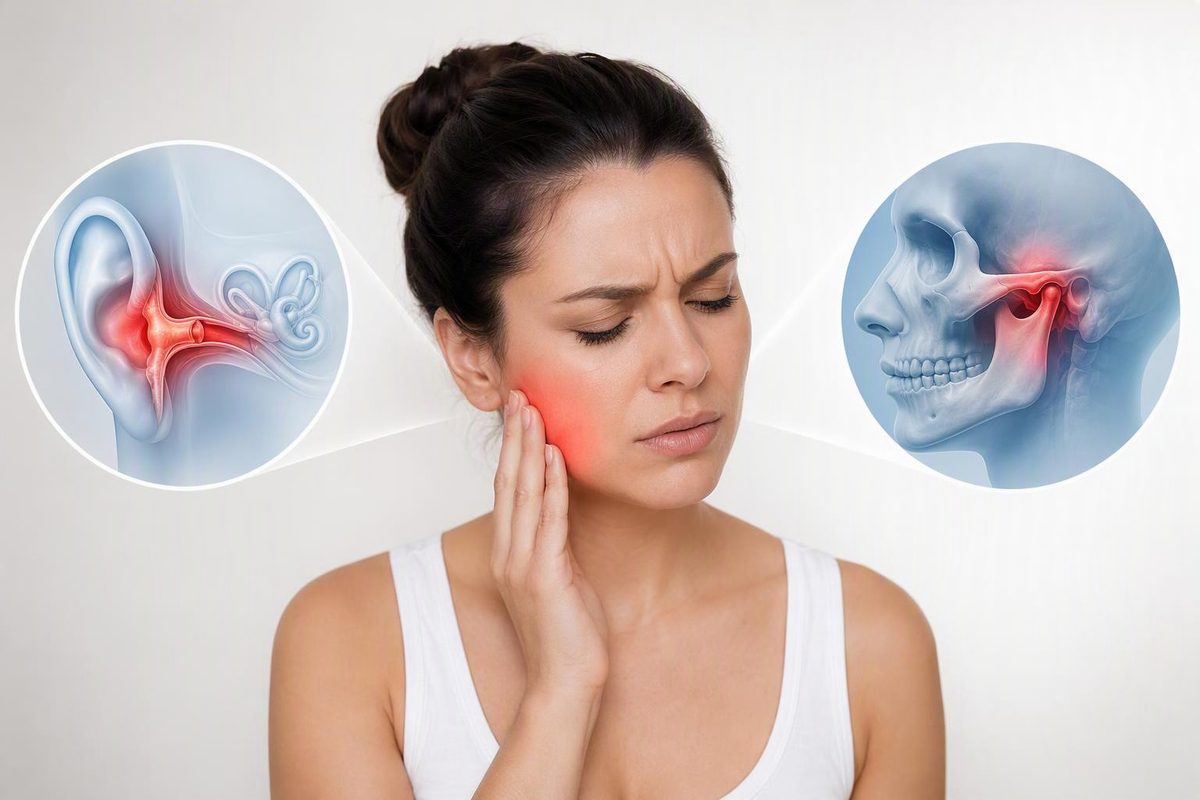
Yes. An ear infection can cause pain that feels as though it is in or beside the jaw. This is particularly recognized with otitis externa, an inflamed or infected outer ear canal: moving the jaw while chewing or speaking may be uncomfortable. Outer ear inflammation can also cause itching, discharge, canal swelling and reduced hearing (Guy’s and St Thomas’ NHS Foundation Trust).
Jaw pain alone, however, cannot confirm an ear infection. Temporomandibular disorders (TMD), dental disease and throat problems can all cause pain near the ear. An examination of the ear—and sometimes the teeth and jaw—is usually needed to identify the source.
Which type of ear infection is more likely to hurt the jaw?
Outer ear infection (otitis externa or “swimmer’s ear”) has the clearest connection to pain with jaw movement. Typical clues include:
- pain when chewing or tugging the earlobe
- tenderness around the ear-canal opening
- itching inside the ear
- fullness or muffled hearing
- watery or other discharge
- recent swimming, trapped water or irritation from putting an object in the ear
The American Academy of Otolaryngology–Head and Neck Surgery lists pain with chewing food or tugging the earlobe among common symptoms of acute otitis externa (AAO-HNS).
A middle ear infection (otitis media) more often causes pain or pressure inside the ear, sometimes with fever, impaired hearing or fluid draining from the ear. Inflammation and pressure behind the eardrum produce the pain (CDC). That discomfort may be described as being near the jaw, but pain on chewing is less specific for a middle ear infection.
Ear infection, TMD or a tooth problem?
These patterns can help you choose where to seek care, but they are not self-tests.
| Pattern | What it may point toward |
|---|---|
| Itching, discharge, canal tenderness, muffled hearing or pain when the outer ear is moved | Outer ear infection |
| Deep ear pressure or pain following a cold, with fever or reduced hearing | Middle ear infection |
| Jaw-joint or chewing-muscle tenderness, stiffness, locking, or symptoms tied to clenching | TMD |
| One sensitive tooth, pain on biting, temperature sensitivity, gum swelling or a bad taste | Dental disease |
TMD can produce pain close to or inside the ear because the jaw joint sits just in front of it. The National Institute of Dental and Craniofacial Research describes TMD symptoms as pain in the chewing muscles or jaw joint, spreading facial or neck pain, jaw stiffness and limited movement or locking (NIDCR). Read more about why TMJ problems can cause ear pain.
Chewing pain does not settle the question: both outer ear inflammation and a jaw disorder can hurt when the jaw moves. Likewise, the location of an ache in the jaw near the ear does not identify its cause. A clinician can inspect the ear canal and eardrum with an otoscope; if the ear looks normal, evaluation may shift to the jaw, teeth, throat or other nearby structures. Ear pain can originate in the ear or be referred from the TMJ and other areas that share nerve pathways (MSD Manual).
What to do next
Arrange an assessment with primary care or urgent care if you suspect an ear infection, particularly if pain is substantial, worsening or accompanied by discharge or a hearing change. A dentist is a reasonable first stop when the pain centers on a tooth, biting triggers it, or there is gum or facial swelling.
Until you are assessed:
- Keep the affected ear dry and avoid swimming.
- Do not insert cotton swabs, fingers or other objects into the ear.
- Do not use leftover or unprescribed ear drops. Treatment depends on which part of the ear is affected, and a possible perforated eardrum changes which drops are safe.
- If you can normally take them safely, an over-the-counter pain reliever such as acetaminophen or ibuprofen may help. Follow the label, and check with a pharmacist if you have medical conditions, take other medicines, are pregnant or are treating a child.
Uncomplicated outer ear infections are generally treated with topical ear preparations rather than oral antibiotics. Diabetes, immune suppression or a suspected hole in the eardrum can change management (AAO-HNS).
Get prompt medical care for warning signs
Seek prompt, same-day medical advice for severe or worsening pain, fever, fluid coming from the ear, new hearing loss, dizziness or vomiting, swelling around the ear, or if you have diabetes or a weakened immune system. NHS ear-infection guidance identifies these as reasons for urgent assessment (NHS).
Redness, tenderness or swelling behind the ear—especially if the ear begins to stick out—can indicate mastoiditis, a serious complication that needs rapid diagnosis and treatment (NHS).