
The Real Cost of an NTI-Related Bite Shift
Compare corrective-care estimates with advertised claim ranges, learn why coverage may fail, and preserve the records needed for clinical and legal review.
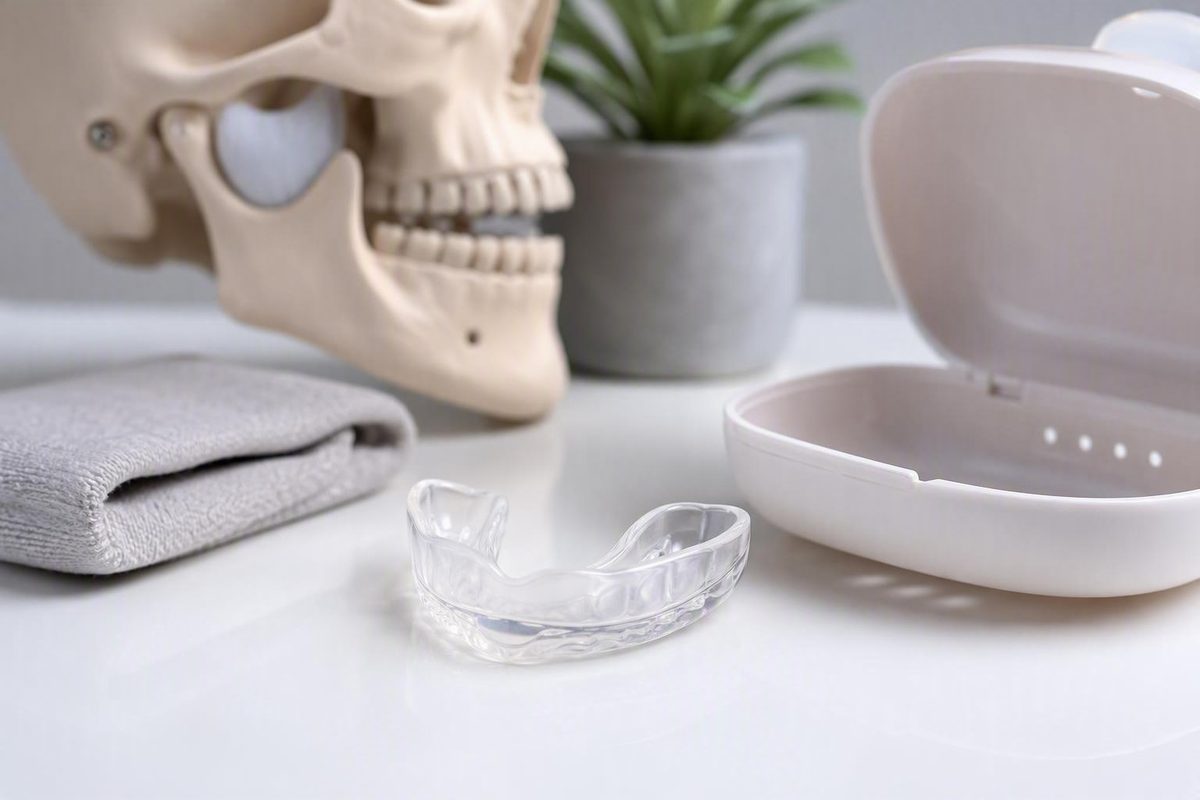
Correcting an alleged NTI-tss-related bite shift may cost about $1,500–$5,000 for a mild case and $25,000–$60,000 or more when severe condylar resorption requires surgery, according to a 2026 legal-site estimate. Yet the supplied sources do not provide the court records needed to verify an active class action, settlement, payout schedule, or free-replacement program. The practical verdict is therefore narrower than the lawsuit pages suggest: budget for treatment independently, verify insurance exclusions in writing, and treat any advertised recovery range as an unverified claim—not money available to pay the bill (LawFold).
This is not a verdict on whether the NTI-tss is safe or whether it caused any individual patient’s condition. New bite changes, tooth pressure, jaw pain, poor fit, or appliance damage require clinical assessment. The cost question begins only after a dentist identifies what, if anything, needs correction.
The Safety-First View Is Right About Clinical Assessment
The received view treats the NTI-tss dispute mainly as a product-safety question: whether an anterior appliance can cause open bite, tooth movement, tooth damage, condylar changes, or chronic jaw symptoms, and whether warnings were adequate. That framing is reasonable. Liability depends on defect, warning, causation, and jurisdiction-specific law—not merely on a treatment bill.
It is also right that many people who used an NTI without injury have no corrective-treatment cost to estimate. A commercial laboratory describes the NTI as a customized acrylic appliance worn over a small number of anterior teeth and discusses possible tooth movement, bite alteration, anterior open bite, dislodgement, and rare aspiration. It recommends regular dental monitoring, but its general cautions do not prove causation in a particular patient (Stomadent).
Where the safety framing falls short is after a bite change has already been documented. At that point, the immediate problem is the price of diagnosis and correction, who pays initially, and what evidence should be preserved. Those questions remain even if no lawsuit succeeds.
The supplied legal summaries allege product-liability, design-defect, failure-to-warn, negligence, consumer-protection, deceptive-marketing, and malpractice theories. They describe open bite, tooth displacement, condylar resorption, chronic jaw pain, chipped or cracked teeth, and difficulty chewing. These remain allegations, not adjudicated findings.
Corrective Care And Lawsuit Values Are Different Numbers
LawFold publishes treatment-cost and individual-claim ranges by severity. It does not provide a methodology, jurisdiction, insurance assumptions, medical records, settlement documents, or primary data supporting those figures. They are useful for understanding the scale asserted by that source, but not as guaranteed quotes or recoveries.
Choose the closest severity, enter your dentist’s quote and expected coverage, and compare your projected bill with the advertised claim range.
Compare a dentist's quote with the published treatment estimate and advertised claim range. Defaults model a moderate injury with a $15,000 quote and no plan payment because TMJ/occlusal work is commonly excluded.
| Severity | Corrective Treatment | Advertised Claim Range | Routine Coverage |
|---|---|---|---|
| Mild | $1,500–$5,000 | $5,000–$25,000 | Commonly excluded |
| Moderate | $10,000–$20,000 | $20,000–$75,000 | Commonly excluded |
| Severe | $25,000–$60,000+ | $75,000–$200,000 | Commonly excluded |
| Permanent disability | — not supplied | $150,000–$500,000+ | Commonly excluded |
“Plan pays” is applied to your entered quote for budgeting only. It does not model deductibles, allowed amounts, annual maximums, network rules, legal fees, or case expenses because the supplied sources give no universal figures.
Source: treatment estimates and advertised individual claim ranges reported by LawFold; litigation characterization cross-checked against LawGud. These secondary pages do not supply primary court records or guarantee coverage or recovery.
The source gives a $1,500–$5,000 corrective-treatment estimate for mild bite changes and $25,000–$60,000+ for severe condylar resorption requiring surgical correction. The topic materials place a moderate corrective bill at $10,000–$20,000. They do not supply a separate corrective-cost range for permanent disability, so that field must remain unknown rather than being inferred.
The same source reports individual claim ranges of $5,000–$25,000 for mild injury, $20,000–$75,000 for moderate injury, $75,000–$200,000 for severe injury, and potentially $150,000–$500,000+ for permanent disability. A claimed settlement range is not a settlement offer, net recovery, compensation fund, or prediction of what a patient will receive.
| Severity | Corrective-Care Estimate | Reported Claim Range |
|---|---|---|
| Mild | $1,500–$5,000 | $5,000–$25,000 |
| Moderate | $10,000–$20,000 | $20,000–$75,000 |
| Severe | $25,000–$60,000+ | $75,000–$200,000 |
| Permanent | Not supplied | $150,000–$500,000+ |
The ranges do not establish that corrective care costs are reasonable and necessary in a legal sense, that an NTI caused the condition, or that a defendant must pay. They also do not account for legal fees, case expenses, liens, uncovered follow-up care, or taxes; the supplied materials give no figures for those items.
This mismatch matters. A patient may owe a provider before liability is resolved, and the eventual recovery—if any—may not track the invoice. Litigation is therefore only a possible route to reimbursement, not a payment plan for current treatment.
Routine Coverage May Exclude The Corrective Work
The relevant work may include a new custom orthotic, a bite-reconstruction splint, adjustments, diagnostic records, or surgery. The topic materials identify CDT categories D9944–D9946 for occlusal guards and D7880 for an occlusal orthotic device. They state that dental and medical plans commonly carve out TMJ-related or occlusal procedures, including under the referenced Nevada coverage rules, but the draft supplies no primary plan document or Nevada regulatory link to verify a universal rule.
Accordingly, “commonly excluded” is the defensible statement; “never covered” is not. Coverage depends on the actual contract, diagnosis, code, clinical documentation, provider network, deductible, coinsurance, annual maximum, preauthorization rules, and replacement interval.
A consumer cost guide says some dental plans may pay around 50% of an allowable amount. It also gives examples of one guard every 36 months under one set of guidelines and one every five years under another. Those examples are not universal and may have changed. The guide also says eligible night-guard expenses may qualify for HSA or FSA reimbursement, subject to the account’s rules (GoodRx).
A nominal coverage percentage can mislead. If the procedure is excluded as TMJ or occlusal treatment, the percentage may never apply. If it is covered, the plan may calculate payment from an allowed amount rather than the dentist’s charge, then apply the deductible, coinsurance, annual maximum, network rules, or a frequency limit.
Before authorizing work, ask the office for the expected procedure codes and an itemized estimate. Ask the insurer whether each code is covered for the submitted diagnosis, whether a TMJ or occlusal exclusion applies, what the allowed amount is, and whether predetermination or preauthorization is required. Request the response in writing when available and keep the claim or call reference number.
An early replacement can create a separate denial even when ordinary guard benefits exist. Ask whether the plan has an exception for damage, poor fit, intervening dental work, tooth movement, or documented clinical need. Useful supporting records may include photographs, the original appliance date, a fit assessment, the prior claim or explanation of benefits, and the dentist’s explanation of why repair is unsuitable.
Replacement Cost Is Not Corrective-Treatment Cost
No reviewed source establishes a current appliance-only replacement price for an NTI-tss or NTI-tss Plus. The available numbers cover different transactions and should not be averaged.
| Cost Category | Reported Amount | What It Represents |
|---|---|---|
| Historical NTI purchase | About $400 | Patient report from Missouri in 2015 |
| Professional NTI treatment | $400–$700 | Commercial laboratory estimate |
| Dentist custom guard | About $300–$1,000 | General market context |
| Online or OTC guard | $50–$200 / $15–$50 | Different consumer categories |
The approximately $400 figure came from a patient’s account of a custom NTI purchase in Missouri in 2015, not a verified invoice or current replacement quote (Avvo).
The laboratory’s $400–$700 figure describes professionally prescribed NTI treatment, including prescribing and follow-up, rather than an appliance-only remake. General consumer ranges put dentist-provided guards at approximately $300–$1,000 and online custom guards at approximately $50–$200. A dental-practice comparison gives Chicago-area reference ranges of $300–$800 for dentist-provided guards, $100–$200 for mail-order custom guards, and $15–$50 for OTC products (Serenity Dental).
These products can differ in design, material, records, fitting, adjustment, monitoring, and intended use. A low-cost OTC or online guard is not established as a clinically equivalent substitute for a prescribed anterior NTI.
A replacement quote can mean either a duplicate made from usable records or a new assessment and treatment package. The latter may include an examination, bite assessment, imaging if clinically indicated, a scan or impression, laboratory fabrication, fitting, chairside adjustment, and follow-up. The source materials provide no standard price for those components.
Request a written quote naming the exact appliance, whether it is a duplicate, remake, or new prescription, every included clinical and laboratory service, the number of adjustment visits, additional-visit charges, and repair or remake terms. None of the reviewed materials establishes a universal NTI warranty or right to free replacement.
The Litigation Claims Remain Unverified By Primary Records
LawFold describes active 2026 product-liability litigation and publishes injury-cost and claim-value ranges. LawGud says a class action traces to 2013 and remains in discovery with no trial date set as of 2026 (LawGud). The two pages corroborate that lawsuit marketing and allegations are circulating; they do not independently establish the procedural status of a case.
Neither supplied page identifies the primary records needed to verify a certified class action, active mass tort, settlement, verdict, or claims program. The reviewed materials do not provide a case caption, docket number, court, file-stamped complaint, named plaintiff, class-certification order, dated docket activity, settlement agreement, judgment, claims administrator, or payout schedule.
The pages also identify different entities as the manufacturer. Without records tied to the appliance’s model, label, fabrication date, distributor, laboratory, and corporate history, it is not responsible to identify a definitive manufacturer or defendant.
That evidentiary limit does not prove that no individual lawsuit was ever filed. It means the broad litigation claims cannot be verified from the cited pages. Before relying on a purported case, ask for the caption, court, docket number, operative complaint, and current docket entries. Before relying on a settlement, ask for the agreement, approval order, judgment, or official administrator notice.
Regulatory status is separate. The supplied materials contain no underlying FDA communication establishing a recall or replacement benefit. Even a verified clearance, notification, recall entry, or adverse-event report would not by itself prove defect, inadequate warning, individual causation, malpractice, or entitlement to compensation.
New Bite Changes Need Care Before Cost Comparison
Contact a qualified dentist if the appliance is cracked, sharp, unusually tight or loose, easier to dislodge, unable to seat fully, or associated with new tooth pressure, pain, bite change, or worsening jaw symptoms. A dentist-authored practice guide advises removing a cracked guard with a sharp edge and contacting a dental office (Serenity Dental).
A dentist may determine that adjustment is sufficient, usable records permit a duplicate, new scans are required, or the same design is no longer appropriate. This article cannot determine which appliance or treatment is suitable for an individual.
Jaw locking, trauma, or jaw pain with fever warrants prompt clinical contact under Pain Catalog’s general safety guidance. That publisher guidance is not a diagnosis or a substitute for individualized professional care.
Preserve The Evidence That A Dentist Or Lawyer Will Need
Keep the appliance rather than discarding or altering it. Store its case, packaging, instructions, labels, and any model, lot, serial, or laboratory identifiers. Photograph its current condition from several angles and retain the original image files.
Collect the original receipt, invoices, payment records, consent forms, instructions, warnings, warranty or remake terms, dental charts, scans, impressions, models, imaging, adjustment notes, referrals, specialist records, insurance claims, explanations of benefits, and provider correspondence. Keep new treatment estimates and receipts as they arise.
Create a dated timeline covering recommendation, ordering, delivery, adjustments, wear, the first observed bite or symptom change, the date use stopped, and subsequent care. Separate what you personally noticed from what clinicians later documented.
Ask the treating dentist to record the appliance’s fit, tooth contacts, bite findings, symptoms, diagnosis, recommended treatment, alternatives, and expected procedure codes. If seeking another opinion, obtain the records before treatment changes the clinical picture where practical; do not delay necessary care merely to preserve evidence.
If significant documented injury or financial loss may support a claim, consult a qualified lawyer in the relevant jurisdiction promptly. The materials do not establish a universal filing deadline. A signed consent form is not categorically decisive either; its wording, surrounding discussions, treatment delivered, follow-up records, alleged injury, professional standards, and applicable law may all matter.
The cost problem has three separate tracks: obtain appropriate care, determine what the plan will actually cover, and verify any legal route through primary records. The published figures can frame the potential scale, but only an itemized dental quote establishes today’s bill, only the benefit contract establishes coverage, and only a documented legal process can establish recovery.